
Leveling of lathe - has any one used these ?

Newton

AzB Silver Member
Silver Member
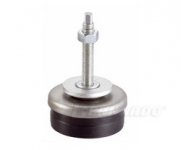
I'm preparing for my new lethe to arrive and I'm wondering if the pictured legs
was something to use ? I would most likely use 6 of them in case.

The lathe is fairly heavy 1667LBS so I'm not sure how these rubber thingys
would work.

Has any of you used these with luck or do you use just normal bolts ?

Kent
 

Attachments

  • Leg.jpg
    Leg.jpg
    32.7 KB · Views: 952
I'm preparing for my new lethe to arrive and I'm wondering if the pictured legs
was something to use ? I would most likely use 6 of them in case.

The lathe is fairly heavy 1667LBS so I'm not sure how these rubber thingys
would work.

Has any of you used these with luck or do you use just normal bolts ?

Kent

Hey Newton. I have a 40" Jet. I bought leveling feet with the neoprene pads. The rubber pads are no good for precisely leveling a heavy lathe. I jacked the lathe back up, pulled the pads off, and leveled it again without the pads and am very glad I did.

I do recommend leveling feet though. I ordered mine online. Not cheap, but not crazy expensive...had to find some with the same thread as my stand.
Kelly
 
Kelly,

Sounds like we have similar lathes - mine is also 40".
So I guess the rubber is no good for this app. I was wondering in respect of
noise reduction and the like, but in another way I understand the rubber would
not be accurate enough.

Did you leave the metal cup on the end intact then and use these as the base
against the floor ?

Was also reading that even if I level the lathe according to the tables top
(my lathe has a integrated heavy stand), the lathe might be out of level
anyhow. I'm supposed to put small shims in-between the table and the
lathe base and measure on the bed it self. Did you do this as well ?

Thanks for the feedback :)

Kent
 
Kelly,

Sounds like we have similar lathes - mine is also 40".
So I guess the rubber is no good for this app. I was wondering in respect of
noise reduction and the like, but in another way I understand the rubber would
not be accurate enough.

Did you leave the metal cup on the end intact then and use these as the base
against the floor ?

Was also reading that even if I level the lathe according to the tables top
(my lathe has a integrated heavy stand), the lathe might be out of level
anyhow. I'm supposed to put small shims in-between the table and the
lathe base and measure on the bed it self. Did you do this as well ?

Thanks for the feedback :)

Kent

On every lathe you need to level both the stand and the lathe. You first level the stand as close as possible with leg levelers, if you have them. If not, then shims. You then set your lathe onto the stand and level the lathe bed with shims between the lathe and the stand. You could go crazy trying to level a lathe that is bolted down twisted to stand using the shims or pads on the stand.

The need for the lathe to be level is that it is the best way to insure that the bed is not twisted. A lathe way out of level can still not have a twisted bed but when the lathe bed at both ends are level it's much easier to determine where a problem exists (head not aligned, tail stock offset and so forth).

Dick
 
On every lathe you need to level both the stand and the lathe. You first level the stand as close as possible with leg levelers, if you have them. If not, then shims. You then set your lathe onto the stand and level the lathe bed with shims between the lathe and the stand. You could go crazy trying to level a lathe that is bolted down twisted to stand using the shims or pads on the stand.

The need for the lathe to be level is that it is the best way to insure that the bed is not twisted. A lathe way out of level can still not have a twisted bed but when the lathe bed at both ends are level it's much easier to determine where a problem exists (head not aligned, tail stock offset and so forth).

Dick

Thanks Dick.

The lathe is mounted on the stand from the factory and is all mounted on a
pallet. I think my solution would be to use legs pictured - possibly rip of the
rubber and level the stand as good as possible.
Then I would open the screws holding the lathe to the table and do the same
with the leveler parked on the bed - using shims.

Does this sound like a reasonable way of doing this ?

I'm not sure how to get it in place, but splitting the lathe from the table would
for sure make this whole thing very much harder for me....

But the goal is to hopefully have no twist in the bed so it could keep it's
precision while it's doing it's duty :)

Kent
 
You'll fair better using something without any rubber thingys on the bottom.


<~~~IMHO.........................
 
I used carriage bolts

On my metal lathes stand, installed four under each stand and used nuts and washers. So eight bolts altogether. Cheap yet works great. The rubber is not a good idea. MY lathe sits on the heads of the carriage bolts and most importantly use a machinist level to level it. A carpenter level is worthless. Yeah it is tough to level four points under each stand but after the first hour or three you get the hang of it. It took me all morning on my first one.
 
On my metal lathes stand, installed four under each stand and used nuts and washers. So eight bolts altogether. Cheap yet works great. The rubber is not a good idea. MY lathe sits on the heads of the carriage bolts and most importantly use a machinist level to level it. A carpenter level is worthless. Yeah it is tough to level four points under each stand but after the first hour or three you get the hang of it. It took me all morning on my first one.

Thanks for the tip.

I have heard similar stories about the pain in a certain place it could be to level these.... Not looking forward for that part:(

I'm heading for the mountains now, snow, no internet but relaxing so I would not be able to post for some days now :)
Lathe would possibly be here next week.

Happy Easter

Kent-J
 
I used carriage bolts

On my metal lathes stand, I installed four bolts, heads down, under each of the two bases, and used nuts and washers to raise and lower the lathe. So eight bolts altogether. Cheap, yet works great. The rubber is not a good idea. MY lathe sits on the heads of the carriage bolts on a cement floor. Most importantly: use a machinist level to level it. A carpenter level is worthless. Yeah it is tougher to level four points under each stand but after the first hour or three you get the hang of it. It took me all morning to level a lathe on my first one. I needed to move one of my lathes maybe 2 ft and just slid it on the carriage bolt heads to the new position. I only used 3/8" diameter bolts yet it is very rigid.
 
how important would it be to level a hightower deluxe and what method would be best

Just as important as any other lathe. Leveling is the surest way to see what is out of specs for turning and boring true. It is the best way to insure that the head stock is aligned with the bed, that the bed is not twisted from front to back, that the tail stock is aligned to the bed and that the cross slide is a perfect 90 deg. to the bed. It is much easier to do accurate work on accurate equipment.

Dick
 
I don't own a Delux, but it was in my scope for a long time.
I have the feeling that the Delux is built around the bed it self, where
the bed is the structure holding everything together.
The bed is directly bolted to the plate Chris supplies with his machine,
which makes the momentum of the legs very small.
In other words, on a large metal lathe the bed is bolted to a high stand
where some imbalance in the tables height could actually cause the
bed to twist which again could offset the headstock and cause other inaccuracies for a otherwise accurate machine.

Since the bed on a delux is the structure, has no 1,5m long legs, I doubt that
you would twist the bed, but keep the plate - which is bolted to the bed - clean
underneath and I'm sure you would be alright.


This is based on assumptions since I have never worked with a Delux, but I
have watched Chris doing his work on it :)

K
 
Kelly,

Sounds like we have similar lathes - mine is also 40".
So I guess the rubber is no good for this app. I was wondering in respect of
noise reduction and the like, but in another way I understand the rubber would
not be accurate enough.

Did you leave the metal cup on the end intact then and use these as the base
against the floor ?

Was also reading that even if I level the lathe according to the tables top
(my lathe has a integrated heavy stand), the lathe might be out of level
anyhow. I'm supposed to put small shims in-between the table and the
lathe base and measure on the bed it self. Did you do this as well ?

Thanks for the feedback :)

Kent

Sorry to not get back with you sooner.

The feet I bought were a little different style. They are hardened, and came with a specific weight rating for each piece, which totaled 1500 pounds I believe. My Jet is around 1000-1100.

I could have bought ones with the neoprene pads, or without, but the feet are probably the same, with a rubber pad glued on the bottom. When I pulled off the pad, I had just a solid metal foot, very stable.

I think I spent around $60 for 6 levelers, it has been a while. I can dig up the source for you if you are interested. I was happy with the service and product.

I did not level the stand and then the lathe, right or wrong. The lathe is bolted to the stands, and I only leveled the lathe with a machinist level, a wrench, and the 6 leveling feet. Once I got the rubber pads off and leveled again, I could turn a short 8" piece between centers with both ends of the piece holding diameter, then slide the tailstock back and turn a 30" piece between the same centers with the end diameters of the 30" piece within a thou or so. Once I got it to that point I was content and did not look back. Prior to removing the rubber pads, if I set the tailstock to hold diameter for short stock, turning a 30" piece was something like .003 variation from end to end, and vice versa.

Kelly
 
Last edited:
I may get blasted here

But a Cuesmith Deluxe needs a flat surface more than a perfectly level one. If the lathe is supported evenly it will not twist. The metal lathes can twist due to their enormous weight and gravity. I have the deluxe and several metal lathes. I level the metal lathes with a machinist level. But the Deluxe is on a counter leveled with a carpenter level. The top is 7 feet long and flat so the deluxe is supported well. It cuts nicely and fairly accurately. I also mounted the deluxe on a bed of straight 2x4's on edge, screws through the Deluxe plywood bed into the 2x4, and that assembly is screwed with side plates to my counter. I did that to raise the Deluxe higher for comfort and to allow room for easier access to controls without a counter surface in the way.
Naturally the metal lathes have more precision and repeatablity. But the Deluxe performs amazingly well for many tasks.
 
Sorry to not get back with you sooner.

The feet I bought were a little different style. They are hardened, and came with a specific weight rating for each piece, which totaled 1500 pounds I believe. My Jet is around 1000-1100.

I could have bought ones with the neoprene pads, or without, but the feet are probably the same, with a rubber pad glued on the bottom. When I pulled off the pad, I had just a solid metal foot, very stable.

I think I spent around $60 for 6 levelers, it has been a while. I can dig up the source for you if you are interested. I was happy with the service and product.

I did not level the stand and then the lathe, right or wrong. The lathe is bolted to the stands, and I only leveled the lathe with a machinist level, a wrench, and the 6 leveling feet. Once I got the rubber pads off and leveled again, I could turn a short 8" piece between centers with both ends of the piece holding diameter, then slide the tailstock back and turn a 30" piece between the same centers with the end diameters of the 30" piece within a thou or so. Once I got it to that point I was content and did not look back. Prior to removing the rubber pads, if I set the tailstock to hold diameter for short stock, turning a 30" piece was something like .003 variation from end to end, and vice versa.

Kelly

Thanks for the feedback Kelly.

My lathe is now arriving this friday so Christmas is coming early this year.

Regarding the legs; It seems like you have bought the exact same thing as
I have been looking at. The versions I have looked at had rubber pads which
was rated to certain weight classes so I thought these where in use by many.

As anything over here, I guess these are expensive so if the rubber things is
not working, I think I would end up with normal beefy screws,washers and nut's
which I guess the legs pictured actually is. Except for those metal cups on
the end, which I guess could be my first project making on the lathe - if needed.
The lathe would be placed on a concrete floor so the fundament should be
alright.

I would do the same test as you have done regarding the accuracy test,
it sounds like a good exercise :)
When it comes to the leveling, it might be that I would leave it on the pallet
for now due to time limitations, but I would buy a machinist level and get it
100% when I'm back to the shop.

Kent
 
Machinist level trouble..

I did a check on some of the most "well - kept" tool stores over here and
they do not seem to have anything close to the precision machinists levels
like the Starretts and the like.


Would a digital one do - like this :
http://www.axminster.co.uk/product....machinists+level&user_search=1&sfile=1&jump=0

Is 0.3' accuracy acceptable or are you able to dial it in closer with the Starretts?

I usually use a laser when leveling pool tables, but I'm not sure if that method
would work with the precision on the machine.

Was just wondering:confused:

Kent
 
bargain level

Try Enco online if you are not near a machine tool distributor that sells the import tools. You can get an 8 or 12 inch machinist level for well under $100. The Starret will run close to 300. If one leveled machines for a living the Starret would be the best choice.
 
Try Enco online if you are not near a machine tool distributor that sells the import tools. You can get an 8 or 12 inch machinist level for well under $100. The Starret will run close to 300. If one leveled machines for a living the Starret would be the best choice.


It would be interesting for me both the Enco and the Starrett.
However I'm over here in the cold north - Norway and delivery time and
S&H charges is of course a factor.

I found this http://littlemachineshop.com/products/product_view.php?ProductID=1846

and compared to a local version from Wuerth (attached) the local one has a
accuracy of 0.5mm/m and the Starrett 0.44mm/m.

I guess this might be splitting heirs but does the 0.06mm/m have that much
to say in the adjustment ?

The local one would work fine for leveling tables as well.

If the local one is OK, I would buy it tomorrow so I'm ready when the machine
arrives :)

Kent
 

Attachments

I think I bought my level from Grizzly for about $70.

Here is where I bought the levelers. These are the non skid. The only functional difference between the skid and non skid is the neoprene pad glued on the bottom. They are rather heavy duty, just pick what will match your thread in the bottom of your stand. I think I tested the tapped holes at the bottom of my stand with a bolt to make sure the thread. Also, I think the holes are tapped a bit undersized to reduce slop and yield a tight fit.

http://swmanufacturing.com/part_detail2.asp?PROD_ID=102&TYP_ID=1

I think I emailed them, and someone called me back and I ordered.

Kelly
 
Back
Top