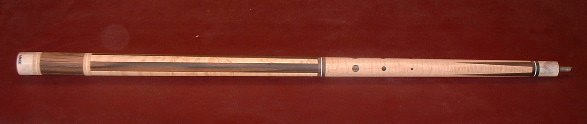
Inverse full splices

perspicaz

o-^-*-^-o
Silver Member
Besides aesthetics, what is the reason why full splices are almost always constructed with the heavy wood (ebony, cocobolo, rosewood, etc.) at the back and the light wood (maple) at the front?

Wouldn't a maple into ebony for example (as opposed to ebony into maple) have a more forward balance and less overall weight? (which seem to be characteristics desired by many players)

Thanks.
 
Last edited:
perspicaz said:
Besides aesthetics, what is the reason why full splices are almost always constructed with the heavy wood (ebony, cocobolo, rosewood, etc.) at the back and the light wood (maple) at the front?

Wouldn't a maple into ebony for example (as opposed to ebony into maple) have a more forward balance and less overall weight? (which seem to be desired characteristics by many players)

Thanks.


Do you mean like this:

http://forums.azbilliards.com/showthread.php?t=102899
 
perspicaz said:
Besides aesthetics, what is the reason why full splices are almost always constructed with the heavy wood (ebony, cocobolo, rosewood, etc.) at the back and the light wood (maple) at the front?

Wouldn't a maple into ebony for example (as opposed to ebony into maple) have a more forward balance and less overall weight? (which seem to be desired characteristics by many players)

Thanks.

One word ... Tradition!
That is the way they have been made for decades.
 
perspicaz said:
Besides aesthetics, what is the reason why full splices are almost always constructed with the heavy wood (ebony, cocobolo, rosewood, etc.) at the back and the light wood (maple) at the front?

Wouldn't a maple into ebony for example (as opposed to ebony into maple) have a more forward balance and less overall weight? (which seem to be desired characteristics by many players)

Thanks.

Heres one I made for a gentleman that had small reverse points.
 

Attachments

  • DSCF0041.JPG
    DSCF0041.JPG
    27.6 KB · Views: 249
Back
Top