New Cue Case Making Questions????

billiardshot

AzB Gold Member
Gold Member
Silver Member
With most of the Case Maker using tubes in their case. Here my question?
How many makers actually round off [file, sand, or shave] both the sharp outside and inside edges of tubes, before installing fabric sleeves?


With all the new cue case makers and questions. Why haven't AzHousePro started a Case Section?
 
i dont. i actually thought about doing that but the reason why i dont is because the fabric i am using you can't actually tell it has a sharp edge. im using worsted cloth that is mixed with wool
 
Last edited:
When will you be posting pictures of your new prototype case?

The Sharp edge might made the fabric wear out faster than round edge.
 
With most of the Case Maker using tubes in their case. Here my question?
How many makers actually round off [file, sand, or shave] both the sharp outside and inside edges of tubes, before installing fabric sleeves?


With all the new cue case makers and questions. Why haven't AzHousePro started a Case Section?

We do. We spend a lot of time deburring and smoothing the edges of all the tubes we use. In fact I make sure that there are no sharp edges or points anywhere that can tear the fabric or harm the cue or harm a finger or just give anyone an uneasy feeling.
 
Unless the fabric is harder than the tube the sharp edge of the tube WILL always cut the fabric over time. If the fabric is that tough then it's probably too abrasive for storing cues in my opinion.

Worsted wool is not tough enough to withstand sharp edges no matter how it "feels" to you.

All worsted means is that the strands are twisted before they are woven. This makes a more durable cloth but also a heavier one and it's generally not very soft. Makes great cloth for pool tables, game tables, etc... but not, in my opinion, for cue case interiors. I don't want the finish of my cue rubbing on cloth that is not suitable for it. History however has shown that people generally don't know and don't care enough to demand that the proper cloth be used as a liner. This is based on what I have seen over the years for materials used to line cue cases, from the low to high end.

To me once the cue is finished to a high gloss the case should do nothing to mar that finish in any way, no dulling, no scratching, no dimpling. And I have seen interiors that have in fact done all of these things to cues. Most people don't even realize it until much later when one day they notice fine scratches on their cue or dull spots or small depressions in the finish.

The interior is the most important part of a cue case and sadly the one that is most often neglected and treated as if it's a second class citizen. I have had many case makers tell me that they HATE to to do the interiors. I am now building interiors for several of them and you will see JB Case Interiors showing up inside other people's custom cases before long.
 
John, what is your opinion on the materials use in/on different Cue Vendor / Dealer Display cases/racks at Booths?

As a case maker what would be the best Vendor/Dealer Display case/rack for cues?
 
John, what is your opinion on the materials use in/on different Cue Vendor / Dealer Display cases/racks at Booths?

As a case maker what would be the best Vendor/Dealer Display case/rack for cues?

The best display for cases is the Cherry Wood lattice that I used to use for the Instroke booth. It's flexible, looks good, and smells good. Of course it's a pain in the butt to haul in and set up but boy does it work well.

Other than that grid wall works well and it's what most vendors use.

For cue display racks there are none better than the ones that Steve Schoenfelder built. They stand on table tops and have the cues at eye level. They fold up neatly and nest inside each other to go into rolling boxes that Steve custom built.

Besides those I built racks that consisted of 8ft 1x2 boards bolted to sawhorses with normal cue racks screwed to those and covered with cloth. Those work well.

Basically I prefer to have things at eye level and not laying on tables.
 
With most of the Case Maker using tubes in their case. Here my question?
How many makers actually round off [file, sand, or shave] both the sharp outside and inside edges of tubes, before installing fabric sleeves?


With all the new cue case makers and questions. Why haven't AzHousePro started a Case Section?

I think this is a great question. As JB has stated, if you don't sand the ends of the tubes, eventually the sharp edges will wear the fabric. Everyone is entitled to their own opinion, but it is my opinion that if corners like this are being cut, I have to wonder about the rest of the product.

It literally takes about 20 seconds for each end of the tube. For a 2x4 that is less than 5 minutes that is spent sanding the ends of the tubes. Considering how long a person expects a case to last, I think I can take 5 minutes extra to make sure that the tube fabric is going to last as long as the rest of the case.

The interior is the most important part of a cue case and sadly the one that is most often neglected and treated as if it's a second class citizen. I have had many case makers tell me that they HATE to to do the interiors. I am now building interiors for several of them and you will see JB Case Interiors showing up inside other people's custom cases before long.

That's a great idea. I actually didn't mind sewing the liners , cutting the tubes, etc. But to each there own. I'm sure you'll make quite a bit selling the pre-fabbed tubes.
 
With all the new cue case makers and questions. Why haven't AzHousePro started a Case Section?

It seems this question has been pretty much overlooked in favor of your first question and the discussion around it (which I'm really enjoying, as I'm looking at cases at the moment), but I think this is really an excellent idea. It's too hard to find most of the reviews and information about cases on the forums because they're spread out in a lot of different sections and mixed in with (and significantly outnumbered by) cue posts. Is there a place on the board to put website suggestions?
 
Thank everyone for your comments. We been asking in different posts for a Case Section, but not luck yet!!!!!!!!
 
I think this is a great question. As JB has stated, if you don't sand the ends of the tubes, eventually the sharp edges will wear the fabric. Everyone is entitled to their own opinion, but it is my opinion that if corners like this are being cut, I have to wonder about the rest of the product.

It literally takes about 20 seconds for each end of the tube. For a 2x4 that is less than 5 minutes that is spent sanding the ends of the tubes. Considering how long a person expects a case to last, I think I can take 5 minutes extra to make sure that the tube fabric is going to last as long as the rest of the case.


That's a great idea. I actually didn't mind sewing the liners , cutting the tubes, etc. But to each there own. I'm sure you'll make quite a bit selling the pre-fabbed tubes.

Actually I hope I don't make a lot of money selling the interiors. :-) If I turn into a case parts store then where does that leave us as a case maker? I am still on the fence about it but I figure that it's better to get our name out there through providing the interiors than nothing at all. And frankly I am flattered that some case makers trust us enough to do the most important part of their cases.

I will say this though, no interior is going in another case without a label letting everyone know that it's a JB Case interior.
 
Mr JB when did i ever say worsted cloth would be tougher then pvc? i never said that. and yes i do know what worsted means. I actually know a good amount of information when it comes to fabrics that deal with combinations with wool and nylon or polyester. Maybe I should file down the edge since everyone is doing it lol I really dont think it will make that much of a different... and a 21 oz weight cloth is pretty strong... no, not stronger than pvc but strong enough that putting a cue in and out will not rip like a sheet of paper...

And please explain why worsted cloth is not a good cloth to use. a worsted cloth with a polyester instead of a nylon like simonis?
 
Last edited:
It literally takes about 20 seconds for each end of the tube. For a 2x4 that is less than 5 minutes that is spent sanding the ends of the tubes. Considering how long a person expects a case to last, I think I can take 5 minutes extra to make sure that the tube fabric is going to last as long as the rest of the case.


Interesting i believe it will take more time then 5 minutes, because you have to use a file. pvc will not just rub off. this isnt wood. also making sure you take off the right amount every pipe is important or it will be uneven. Then again im a uneducated beginner...
 
I'll say this much...the interior of my everyday go-to Instroke case is still in 100% tip top shape after at least fourteen years. (The rest of the case is in great shape as well.)

John Barton has always provided a very high quality product at a very reasonable price. I think he could teach a thing or two, to some of the best in the the business.

Fats
 
Mr JB when did i ever say worsted cloth would be tougher then pvc? i never said that. and yes i do know what worsted means. I actually know a good amount of information when it comes to fabrics that deal with combinations with wool and nylon or polyester. Maybe I should file down the edge since everyone is doing it lol I really dont think it will make that much of a different... and a 21 oz weight cloth is pretty strong... no, not stronger than pvc but strong enough that putting a cue in and out will not rip like a sheet of paper...

And please explain why worsted cloth is not a good cloth to use. a worsted cloth with a polyester instead of a nylon like simonis?

I did not say that you said anything. I am merely telling you that a sharp edge on a pvc tube will cut the fibers on worsted wool cloth eventually.

I am glad you know so much about fabric. That's great. I don't know anything about fabric other than the fact that I have used a bunch of them INCLUDING worsted wool to line the tube of my tube cases. The fabric we use has been chosen using the trial and error method. Periodically I go to the fabric market, where there are about 100 stores selling just about every type of fabric known to man. Once there I spend about two hours going from store to store (obviously I skip the ones that have nothing I can use) and buy a yard or two of each type of fabric that I think I might like to try. Then I go back to the shop and we line a big tube and a little tube and test it with the cue to see how it feels. We run a strip of it over the plastic edge to see how it abrades and stretches, then I pour water on it to see how it reacts there.

This is a lot of stuff we do to determine whether I will use a fabric or not in our cases. I have determined that for my taste worsted wool is too coarse and too heavy to use as a liner. I am sure that some people will get off on it but I find it unsuitable for use as a cue case liner.

No one has said that the worsted wool you intend to use will wear out from normal use. I am sure it won't wear out from rubbing against the cue. The cue might develop some fine scratches but those can be polished out at some point.

As for worsted wool using nylon or polyester it doesn't really matter to me as I would probably find either one to coarse and too heavy. I prefer a lighter weight fabric with a higher percentage of man-made fibers, be they nylon or polyester, so that the moisture retention is lowered significantly. Wool absorbs water at a higher rate than cotton. I prefer fabric that doesn't absorb or retain water. Thus a cotton and synthetic blend works best for me to satisfy my requirements for keeping the interior nice and dry.

To be honest with you though I could care less what you use for liner. I have seen it all from electrostatic flocked plastic to goat leather. I know what works for me and what I feel comfortable allowing my customers to put $10,000 cues in. It really does not matter to me what you use because I am not the one who is responsible for anything that happens to a cue while it's in your case. Just don't come on here and act like you reinvented the wheel because you want to use 21oz worsted wool.

I have all the respect in the world for people who make things. I know what you newbie case makers are going through and I remember fondly the thrill with each case you make and the "improvements" and the "gonna change the world" enthusiasm. Keep that up but keep in mind that just maybe the people that have gone before you have been there and done that.

If you do something that is a genuine improvement then I will be the first to stand up and say way to go! Then I will knock it off. JUST KIDDING.

Really, I get it, do your thing, use the cloth you want to use and as long as it works for you then great. It's like arguing which is better chocolate or vanilla. Neither, they both rock.

 
It literally takes about 20 seconds for each end of the tube. For a 2x4 that is less than 5 minutes that is spent sanding the ends of the tubes. Considering how long a person expects a case to last, I think I can take 5 minutes extra to make sure that the tube fabric is going to last as long as the rest of the case.


Interesting i believe it will take more time then 5 minutes, because you have to use a file. pvc will not just rub off. this isnt wood. also making sure you take off the right amount every pipe is important or it will be uneven. Then again im a uneducated beginner...

Actually PVC sands very easily with low grit sandpaper. A file is not good to use because it cuts the pvc pretty quickly.

The way we do it is to de-burr the pvc with either a razor or a de-burring tool. I just bought a nifty one that you can run around the interior diameter in a jiffy - works great. Then we sand the edges by hand. Takes about a minute or so per tube although we probably spend a little more time because I insist that there be no sharp edges and you can easily create sharp points if you aren't paying attention.

As far as getting the pipe to be even, well there are few tricks there that you will learn with time. Basically though you should be starting with perfectly even tubes and not taking any length off at all. All you should be doing is shaping the ends not making the tube appreciably shorter.
 
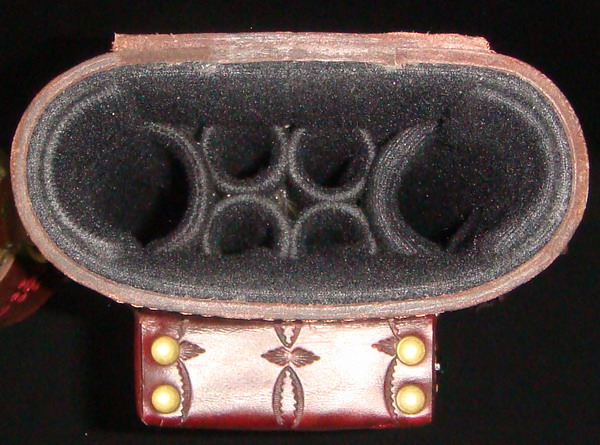
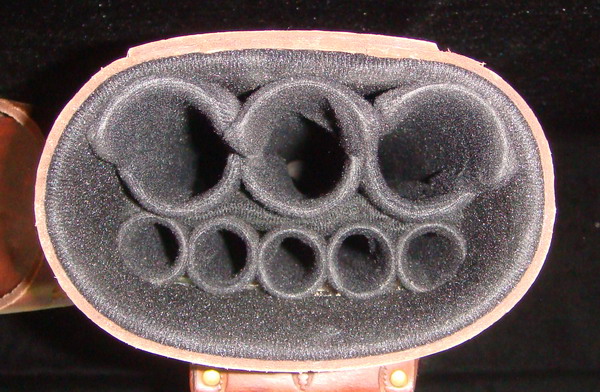
Here are some mystery questions for you all that are really cleverly disguised marketing? :-)

How do you think we do this type of butt tube? How much longer do you think it takes to do each one? And why do we do it?

2008-038t-INTERIOR.jpg


2008-013t-INTERIOR.jpg
 
With my very limited experience I would guess you use a regular liner and cut and fold around the edges and use glue to hold the edges down on the backside of the tube. It looks like a great way to keep the top edges of the case from flexing and/or folding over. Between cutting the tube and fitting the liner it would probably take an extra 30 min. per tube.
 
Back
Top