How do you install a steel joint?

brandoncook26

AzB Silver Member
Silver Member
I am not a cuemaker, but I like to learn. I play with a steel joint cue and am curious as to the different construction techniques used to install a steel joint.

If someone could explain the process I would be most appreciative. This is my nugget of knowledge for the day.

Thanks.

-Brandon
 
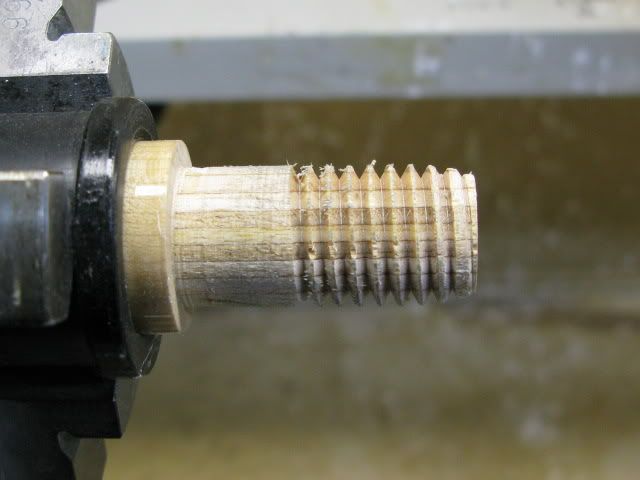
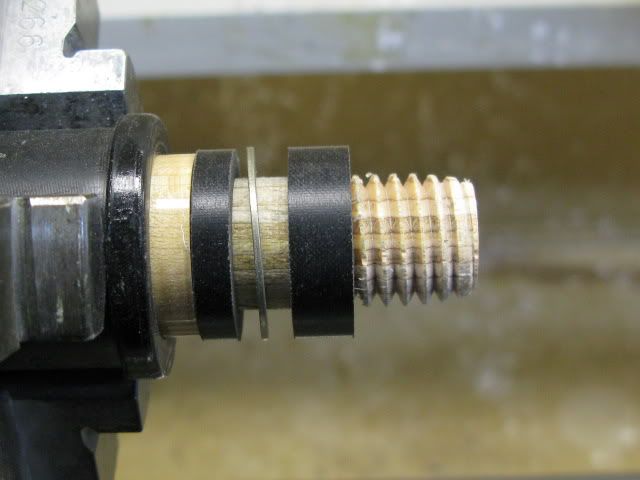
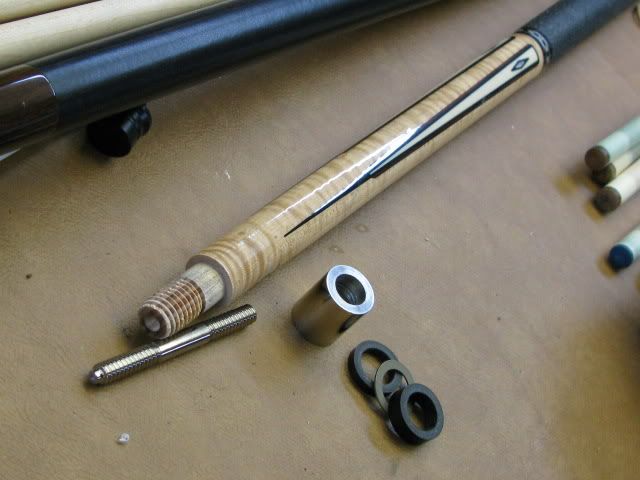
You cut a wood tenon on the end of the cue, then thread it with a tenon threader or thread milling bit. Epoxy the joint on and then turn it down to size, sand and polish to mirror shine. Pretty simple job.
 
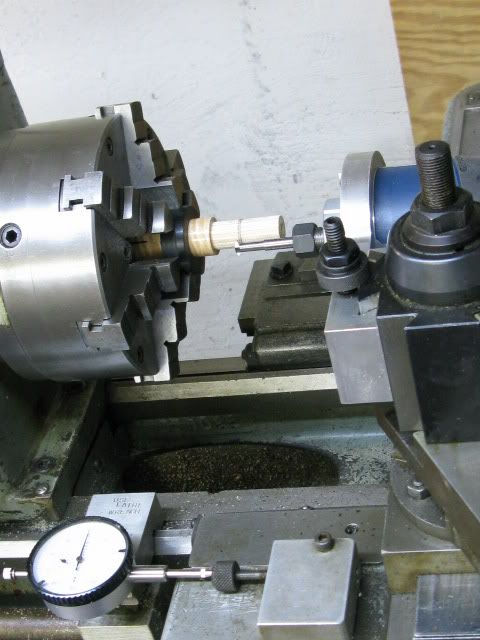
Here is one for you

Dialsettingonlathe018.jpg

Hopeisreal001.jpg

Hopeisreal002.jpg

Hopeisreal003.jpg

Hopeisreal004.jpg

Hopeisreal006.jpg

Hopeisreal005.jpg
 
How do you do it when you dont have live tooling .How undersize do u make the tenon when useing a compresstion die? Thanks Bill
 
How do you do it when you dont have live tooling .How undersize do u make the tenon when useing a compresstion die? Thanks Bill

You just have to experiment on a scrap piece. The tenon will need to be quite a bit more undercut, and so the threads will not be as deep as with live threading, how much to undercut may depend on the Die that you use. When You get It right, the joint will screw on without any feeling of slop, and you can tighten It down without the risk of stripping the threads. Live threading is the nicer method of the 2 methods, but the die will get the job done if the fit is just right.

Greg
 
How do you do it when you dont have live tooling .How undersize do u make the tenon when useing a compresstion die? Thanks Bill

Hi Bill
It depends on where you buy the stainless joint. Some of them have a bigger i.d. thread wall than others.
Ex.
The pre tapered one's that Atlas sells have to have at least a .610 to .615 tenon which makes using hand dies a little more work. Where the one's from Ct. Cue parts will fit well with a .590 to .600 tenon.
Chris Hightower sell a brass tenon threader that works very well. I personally like the brass as opposed to the aluminum one's that are sold. It just cuts better. But it is harder to use this with a larger tenon. For the .600 tenon, it cuts great. You can alos get a regular steel split die, open it all the way and use this holder http://www.wttool.com/index/page/category/category_id/14647/?utm_medium=cpc&utm_source=SiteChampion on a shank for the larger tenons. For all threading with hand dies, I use this lubricant,
http://www.woodcraft.com/Product/2000984/207/T9-Rust-Protectant-12-Ounce-Spray.aspx
Spray a little on a paper towel and apply it as needed, it helps a lot. Some also use wax.
If it's a new construction cue, leave the tenon for the pilot of the joint .002 larger that the pilot on the joint so it works for the alignment of the joint going on straight. Afterwards you can go in and bore it out and do your work to install your joint screw. Before you do any turning down of the tenon, make sure you indicate the joint sticking out of the lathe for accuracy. Hope this helps you.

 
Last edited:
Thanks Mike all the info is helpful .Do ya have a part # and company where i can buy the tooling to do live cutting ? Thanks Bill
 
Hi Bill
It depends on where you buy the stainless joint. Some of them have a bigger i.d. thread wall than others.
Ex.
The pre tapered one's that Atlas sells have to have at least a .610 to .615 tenon which makes using hand dies a little more work. Where the one's from Ct. Cue parts will fit well with a .590 to .600 tenon.
Chris Hightower sell a brass tenon threader that works very well. I personally like the brass as opposed to the aluminum one's that are sold. It just cuts better. But it is harder to use this with a larger tenon. For the .600 tenon, it cuts great. You can alos get a regular steel split die, open it all the way and use this holder http://www.wttool.com/index/page/category/category_id/14647/?utm_medium=cpc&utm_source=SiteChampion on a shank for the larger tenons. For all threading with hand dies, I use this lubricant,
http://www.woodcraft.com/Product/2000984/207/T9-Rust-Protectant-12-Ounce-Spray.aspx
Spray a little on a paper towel and apply it as needed, it helps a lot. Some also use wax.
If it's a new construction cue, leave the tenon for the pilot of the joint .002 larger that the pilot on the joint so it works for the alignment of the joint going on straight. Afterwards you can go in and bore it out and do your work to install your joint screw. Before you do any turning down of the tenon, make sure you indicate the joint sticking out of the lathe for accuracy. Hope this helps you.

Good stuff Mike, Appreciate You sharing your experiences on the subject. sounds like you have tried many of the other things that I have been wondering about. I only have the aluminum die, but I have a brand new steel die, and was thinking about using one of the die holders you linked to. I've been meaning to ask if anyone has done them that way. On the lubricate, I may need to give that a try. Tapping shafts on the brain with this one, but I use wax sometimes, I have also used something else you mentioned to me one time, as well as an aluminum lubricate that I found locally, and they both worked for me. The aluminum stuff works well for shaft threads, and It has no silicons, but I still don't know if It could be trusted on areas that get glue.

Greg
 
Good stuff Mike, Appreciate You sharing your experiences on the subject. sounds like you have tried many of the other things that I have been wondering about. I only have the aluminum die, but I have a brand new steel die, and was thinking about using one of the die holders you linked to. I've been meaning to ask if anyone has done them that way. On the lubricate, I may need to give that a try. Tapping shafts on the brain with this one, but I use wax sometimes, I have also used something else you mentioned to me one time, as well as an aluminum lubricate that I found locally, and they both worked for me. The aluminum stuff works well for shaft threads, and It has no silicons, but I still don't know if It could be trusted on areas that get glue.

Greg


You'll have no trouble with the T-9. Maybe one of the suppliers who make the brass and aluminum dies could add to their line by adding a larger starting die and make it a 2 pc. set, so the tenons could be larger. This would be a nice feature for guys who don't do live threading.
 
You'll have no trouble with the T-9. Maybe one of the suppliers who make the brass and aluminum dies could add to their line by adding a larger starting die and make it a 2 pc. set, so the tenons could be larger. This would be a nice feature for guys who don't do live threading.


Cool Thanks Mike, I'll give it a try. I could use it for other things around the shop anyhow. Yeah If your referring to a 2 stage die setup, Then yes I agree that would be a good idea, and I'd like to see such a set available for this.
 
Back
Top