💯What kinds of wood in these hundred-year old cue sticks? 💯

Paul Bell

Well-known member
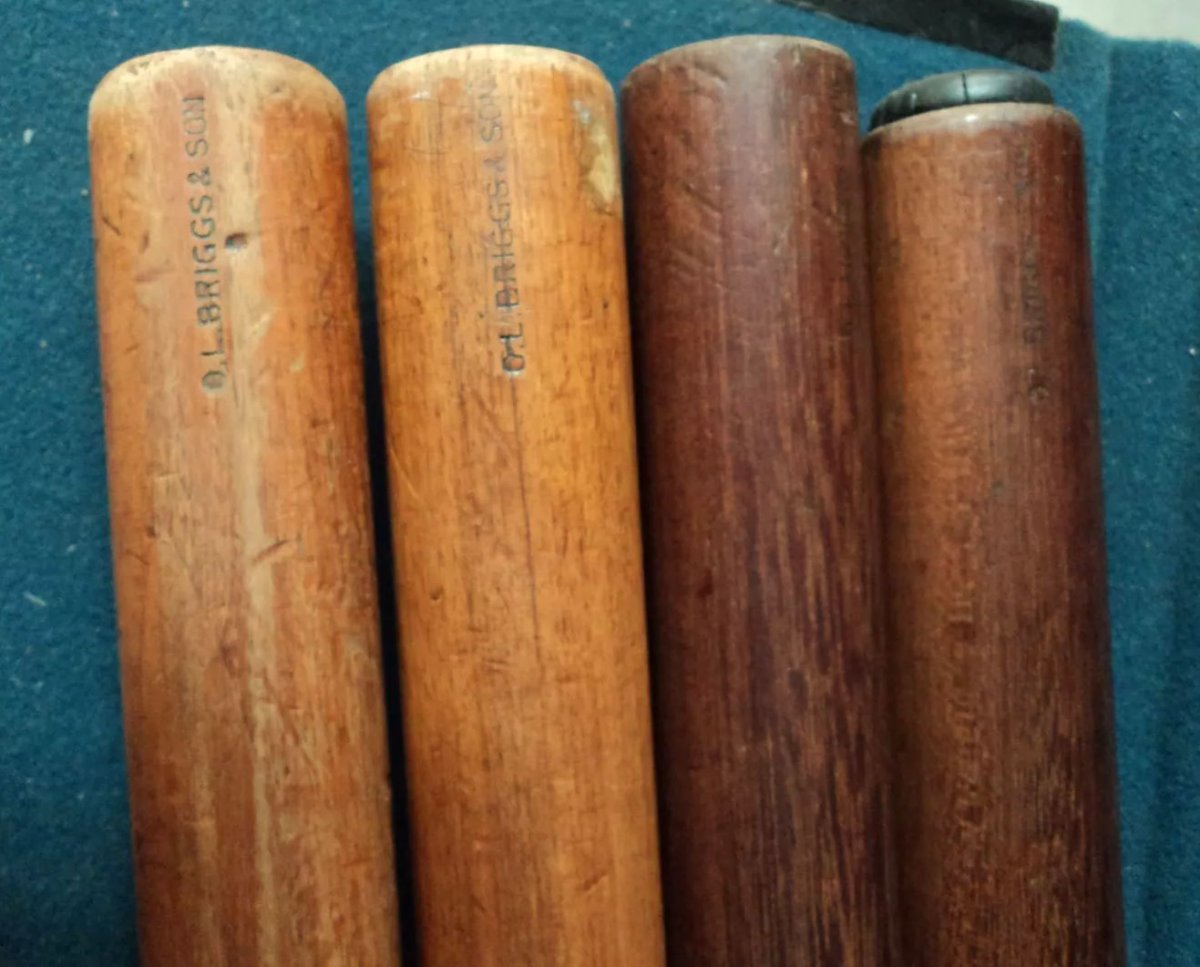
I have Briggs one-piece cue sticks made sometime between 64 and 125 years ago. This was the period in which the O.L. Briggs & Son company was in business in Boston.

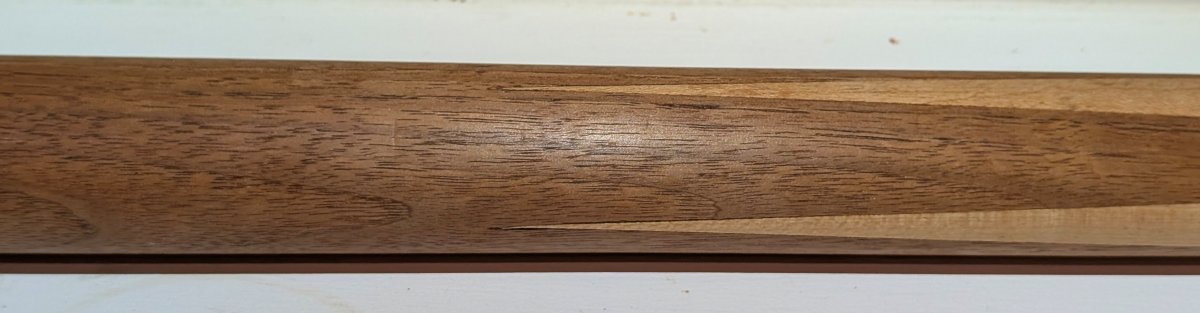
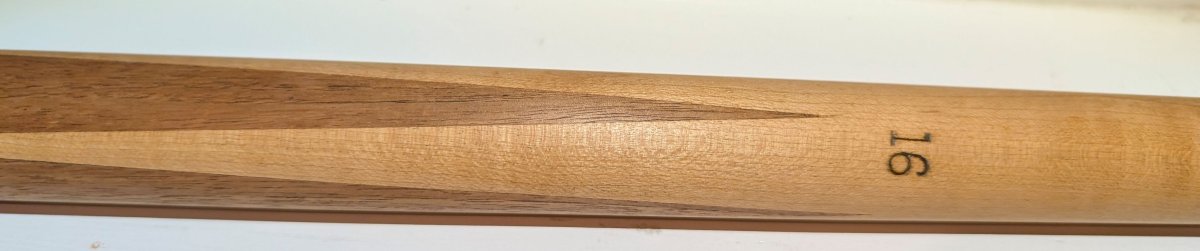
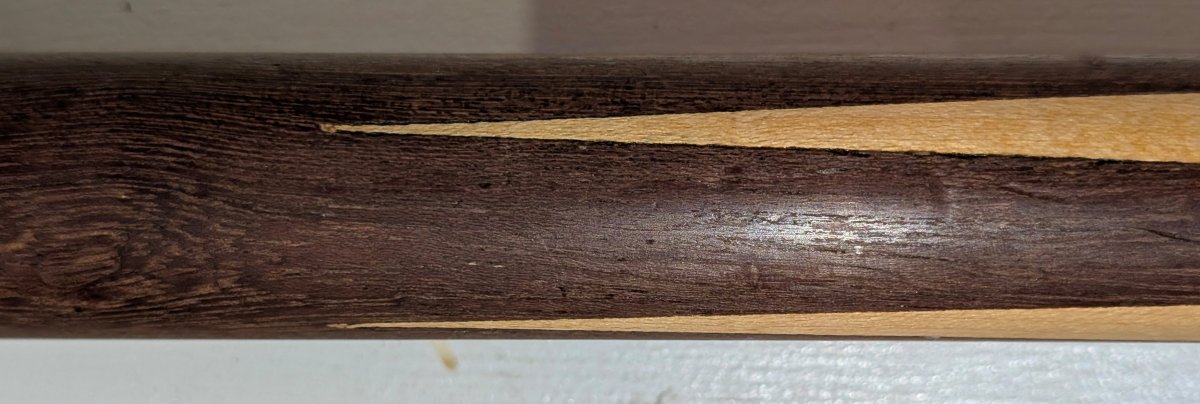
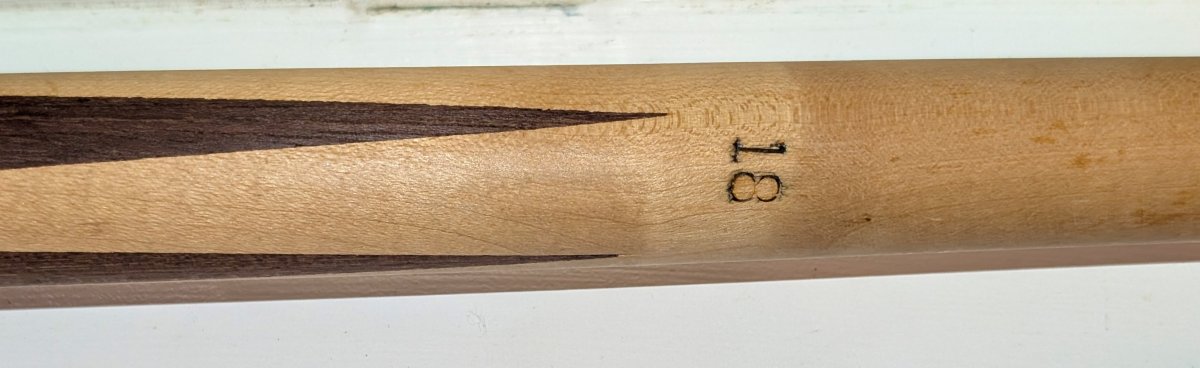
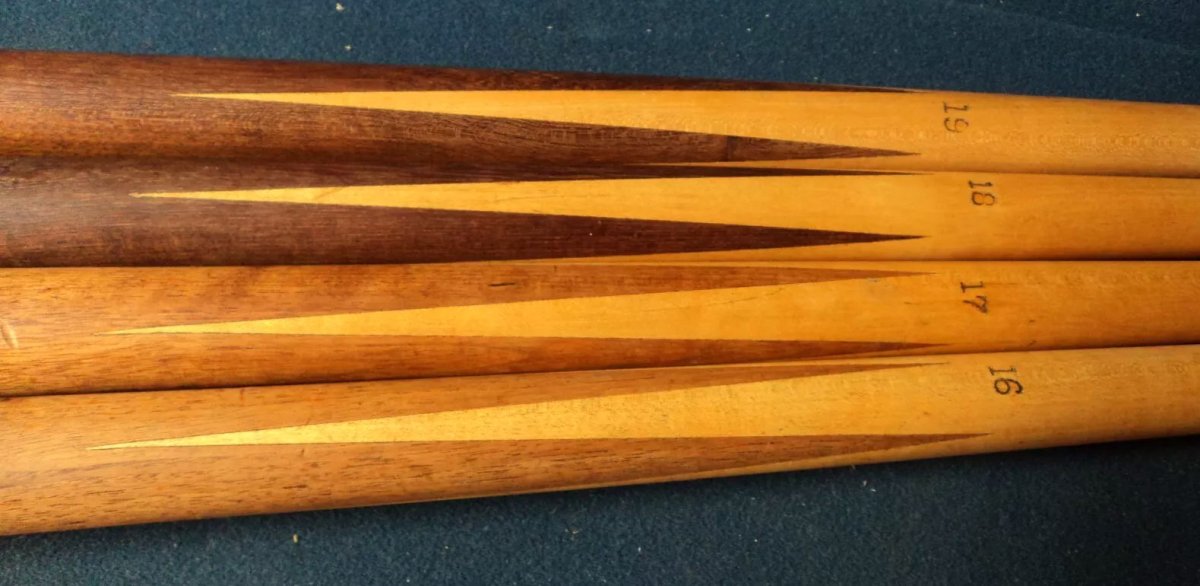
Can you tell me what kind of wood was used from looking at photos?

The wood at the butt is darker in the 18 and 19-ounce cues than that in the 16 and 17-ounce cues. See photos
briggs4.jpg
briggs5.jpg
__
Lighter at splice.jpg
16 oz closer.jpg
Heavier at splice 2.jpg
18 oz.jpg
 
What are their lengths are they still straight?
Lengths of the wood pieces are 57". There are no ferrules on the cues. The length is measured to tenon tip.
There is some wobble to the cues.

Butt widths for the 16, 17, 18, and 19 oz cues are 1.35", 1.37", 1.39", and 1.39" diameter, respectively.
Diameter below where ferrule would fit: 12.1, 12.3, 12.6, 12.5 mm, resp.
Tenon: 6.5 diam.x14.6mm length, 6.5x11mm, 6.2x13.1mm, 6.6x14mm, resp.
Diameter at the first splice on cue at about 12" from butt end: 1.22" for all cues.
 
Last edited:
My guess is all four cues have the same maple top splice.
Photos below comparing the Briggs lighter and heavier cues with the Players' maple shaft:
PXL_20260417_141750760.jpg
__
PXL_20260417_141825115.jpg
PXL_20260417_142004752.jpg
 
Last edited:
Lengths of the wood pieces are 57". There are no ferrules on the cues. The length is measured to tenon tip.
There is some wobble to the cues.

Butt widths for the 16, 17, 18, and 19 oz cues are 1.35", 1.37", 1.39", and 1.39" diameter, respectively.
Diameter below where ferrule would fit: 12.1, 12.3, 12.6, 12.5 mm, resp.
Tenon: 6.5 diam.x14.6mm length, 6.5x11mm, 6.2x13.1mm, 6.6x14mm, resp.
Diameter at the first splice on cue at about 12" from butt end: 1.22" for all cues.
Too much is made of a bit of wobble in cues no matter the age.

I started playing in the sixties with cues out of the rack on the wall. None of them were straight but a V lot of us shot some pretty good games with them. I was running 100 in straight pool with one when I was 18..

Used to love beating guys with a war club and they were great for hustling. Had a small piece of 120 grit sandpaper in my wallet to shape the tip and I was good to go…
 
16 oz showing flattened name.jpg

Too much is made of a bit of wobble in cues no matter the age
Amen!

You can't just roll the 16 ounce cue on a table to check for wobble. That butt is flattened just where the name, O.L. Briggs & Son, is imprinted.

I could put the cues on rollers and provide a video for those interested (they would be big files).
 
I have Briggs one-piece cue sticks made sometime between 64 and 125 years ago. This was the period in which the O.L. Briggs & Son company was in business in Boston.

Can you tell me what kind of wood was used from looking at photos?

The wood at the butt is darker in the 18 and 19-ounce cues than that in the 16 and 17-ounce cues. See photos


View attachment 897931View attachment 897930__View attachment 897932View attachment 897921View attachment 897924View attachment 897923


Just common woods for that time. Nothing special.
Generally used whatever they could buy a truck load for cheap back then.
 
Too much is made of a bit of wobble in cues no matter the age.

I started playing in the sixties with cues out of the rack on the wall. None of them were straight but a V lot of us shot some pretty good games with them. I was running 100 in straight pool with one when I was 18..

Used to love beating guys with a war club and they were great for hustling. Had a small piece of 120 grit sandpaper in my wallet to shape the tip and I was good to go…
Wobble makes zero difference in playability...
 
Back
Top