
The quickest path to a straight, repeatable stroke, and the best metric used to evaluate it.

jimstone

Registered
To those of you out there that have a straight , repeatable stroke, how would you define straight?
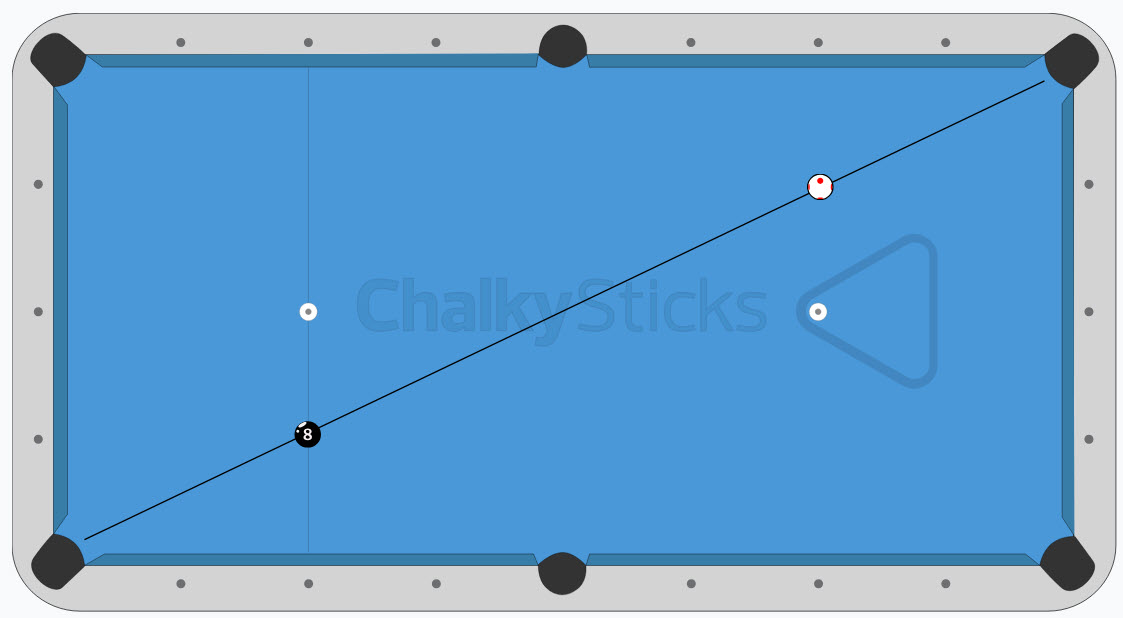
2026-06-22_16-32-38.jpg

I'm using this shot x 20, 50 or 100 times as my metric. How many times out of 20, 50, or 100 should I be able to pocket the 8 ball before I can call my stroke straight, and move on?
Is this the best path to attain this goal? Thank you
 
To those of you out there that have a straight , repeatable stroke, how would you define straight?
View attachment 912777
I'm using this shot x 20, 50 or 100 times as my metric. How many times out of 20, 50, or 100 should I be able to pocket the 8 ball before I can call my stroke straight, and move on?
Is this the best path to attain this goal? Thank you
Some say you should never move on. This can be used to show how straight your stroke is and as a check up as well.

Are you doing stop shots? Follow into the pocket? Draw back into the pocket. Is the tip finishing on a straight line to the pocket?

You can make the ball without a perfectly straight stroke. Cue ball needs to stay on that line as well.
 
Also, is the cue ball spinning? You can learn to make this shot with an off center cue ball hit and drill in an error in your sight picture! The perfect shot pockets the object ball and isn’t spinning! Bert Kinister likes to have the cue ball just replace the object ball as well to groove your speed and tip placement as well.
I don’t think you ever graduate from this shot!
 
There is only 180 degrees.
Those diagonal drills, besides being too cramped, only tempt the player into best average. That said, playing those cramped (jacked/elevated/inclined) shots is part of using a pool table. More useful would be a variety of shorter shots - IOW, less distance to agonize over. They would be quicker to set up, and work your visual acuity in practical zones as well.
 
... I'm using this shot x 20, 50 or 100 times as my metric. How many times out of 20, 50, or 100 should I be able to pocket the 8 ball before I can call my stroke straight, and move on?
Is this the best path to attain this goal? Thank you
That shot doesn't tell you if your stroke is straight. It just tells you that you can pocket a ball on a straight shot. There are players with crooked strokes who can make that shot consistently.
 
To those of you out there that have a straight , repeatable stroke, how would you define straight?
View attachment 912777
I'm using this shot x 20, 50 or 100 times as my metric. How many times out of 20, 50, or 100 should I be able to pocket the 8 ball before I can call my stroke straight, and move on?
Is this the best path to attain this goal? Thank you
You didn't say what you are doing with the cue ball. Making the ball is one thing, making it and drawing into the corner, or following into the corner is a whole different beast.
 
You didn't say what you are doing with the cue ball. Making the ball is one thing, making it and drawing into the corner, or following into the corner is a whole different beast.
Also, and not just to be annoying :ROFLMAO:, that's well into advanced terrain. You have to arrive at drills of that nature fully prepared; if only not to destroy your future with the ensuing quick fixes. No, the drill isn't toxic. Getting ahead of yourself _ might be.
 
I practice this stunning the OB into the top pocket or following the the OB with the CB. My draw shot needs plenty of work. I also try it one handed and with eyes closed for a little fun.
 

Attachments

  • 20250105_154604.jpg
    20250105_154604.jpg
    228.6 KB · Views: 21
another good check is to put the cb on the spot, shoot at center diamond and have cb come straight back to your tip. if your not straight you'll see it quick.
Again, that doesn't tell you that your stroke is straight, it just tells you that whatever swoop is in your stroke, you happen to hit the ball in the center and in the right direction. He needs to video record his shots from the point of view of the target, if he really wants to know if his stroke is straight.

Lots of pretty good players have some swoop/swerve in their stroke, including Irving Crane and Nick Varner. Consistency is the key.
 
Again, that doesn't tell you that your stroke is straight, it just tells you that whatever swoop is in your stroke, you happen to hit the ball in the center and in the right direction. He needs to video record his shots from the point of view of the target, if he really wants to know if his stroke is straight.

Lots of pretty good players have some swoop/swerve in their stroke, including Irving Crane and Nick Varner. Consistency is the key.

I think the "Swoop" that you are referring to here has been a problem for me for many years.
 
Again, that doesn't tell you that your stroke is straight, it just tells you that whatever swoop is in your stroke, you happen to hit the ball in the center and in the right direction. He needs to video record his shots from the point of view of the target, if he really wants to know if his stroke is straight.

Lots of pretty good players have some swoop/swerve in their stroke, including Irving Crane and Nick Varner. Consistency is the key.
HUGE difference in a theoretical 'perfectly straight' stroke and a functionally straight stroke. If i can hit that center diamond and the cb comes straight back then i'm good. The VAST majority of good/great players have functionally straight strokes, they aren't concerned with perfect. Consistency or 'ownership' of YOUR game is the key i agree.
 
I practice this stunning the OB into the top pocket or following the the OB with the CB. My draw shot needs plenty of work. I also try it one handed and with eyes closed for a little fun.

I did this ^^^ and it helped me tremendously to find my stroke issues. The first time I spent hours making 10-20% until I found my issues.

Another thing that helped was to see if I was even addressing the ball correctly. Aim looks good, get in position and the tip is hitting center, then... miss! Why? because the cue wasn't falling on the aim line. It looks good but isn't.

Here is the check I used. Ball on the spot. Aim to hit the diamond. Get down on the ball, then just look down at the cue. Is it directly over the diamond? I was slightly off which meant it looked like I was right, but the stroke was slightly angled. Then do the shoot back to the tip as Garczar said. Then move to the long back rail.

Aim Alignment.png
 
I did this ^^^ and it helped me tremendously to find my stroke issues. The first time I spent hours making 10-20% until I found my issues.

Another thing that helped was to see if I was even addressing the ball correctly. Aim looks good, get in position and the tip is hitting center, then... miss! Why? because the cue wasn't falling on the aim line. It looks good but isn't.

Here is the check I used. Ball on the spot. Aim to hit the diamond. Get down on the ball, then just look down at the cue. Is it directly over the diamond? I was slightly off which meant it looked like I was right, but the stroke was slightly angled. Then do the shoot back to the tip as Garczar said. Then move to the long back rail.

View attachment 912870
With follow thru to make both balls I'd say the stroke is pretty good and accurate. I line up the shot, take 4-5 waggles (strokes) then close my eyes and take 3-4 more waggles before hitting the CB. I can feel the cue/arm being relaxed and smooth.
 
A long time ago a player told me to stroke through the mouth of the coke bottle laid on the table, to touch the bottom without touching the mouth or sides. An interesting Challenge that can help develop a straight follow through.
 
I perform the Mighty X drill a lot.

I have an issue, though, and have been trying to figure out why.

I shoot an entire rack (8 in one direction and 8 on the other diagonal; I use the Rempe training ball the set came with as my 16th) with a short backstroke low cue speed. I can shoot all 16 in the heart of the pocket, right down the center. The shot is soft enough for the CB to follow about 7-8” and stay on the table.

Then I shoot a rack with more speed intending to follow the CB into the pocket. I can usually make all 16 OBs but not all CBs. Of course this is with a slightly longer backstroke and slightly faster cue speed.

The next 16 are stop shots. I can often make 15 or 16 but most have the CB moving a little left or right. Only a very few result in a dead stop, CB not spinning. And of course these are with an even slightly longer backstroke and a little more cue speed (no, I’m not wailing on it, just enough to have the CB sliding all the way.)

Forget about draw, if I can’t get better stop shots.

Working on it. A lot.
 
another good check is to put the cb on the spot, shoot at center diamond and have cb come straight back to your tip. if your not straight you'll see it quick.
I also use a stripe ball for this. Place a stripe ball 8 to 12 inches away from the CB and shoot it straight down table so it returns and strikes the cue ball. You don't want the stripe to rotate. Work on this until you can shoot it with the stripe rolling smoothly with no wobble. You want the stripe running vertical, parallel to the shot.
 
I practice this stunning the OB into the top pocket or following the the OB with the CB. My draw shot needs plenty of work. I also try it one handed and with eyes closed for a little fun.
Following it into the pocket and drawing can give you an idea of how straight you are. No movement or spin on the CB after contact is what you're looking for on the stop shot.
 
  • Like
Reactions: bbb
That shot doesn't tell you if your stroke is straight. It just tells you that you can pocket a ball on a straight shot. There are players with crooked strokes who can make that shot consistently.
This comment reminds me of a story from Harvey Penick's Little Red Book. Sure, that was about golf, but I think it still applies.

A player Penick was advising won his first match in a tournament easily. He then called Penick to say he was confident about the next opponent:
“The guy I play tomorrow I can beat easily. He has a bad grip and also a bad swing.” The player lost that next match.

Penick said:
“The lesson to be learned,” I told my golfer later, “is don’t be afraid of the player with a good grip and a bad swing. Don’t be afraid of a player with a bad grip and a good swing. The player to beware of is the one with the bad grip and the bad swing. If he’s reached your level, he has grooved his faults and knows how to score.”
 
Back
Top