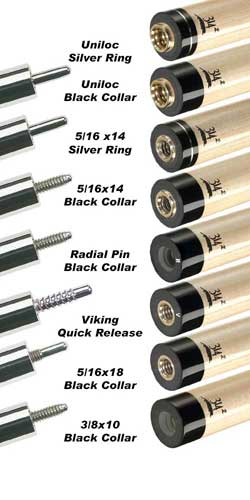
Steel Joint vs. non-steel Joint (Phenolic / Juma / Elforyn / Ivory) – Which Do You Prefer?

july9x

AzB Silver Member
Silver Member
I'm curious to hear from players who have tried both steel and non-metal joints such as Phenolic / Juma / Elforyn / Ivory (white or black hard plastic typed meterial)

Which do you prefer, and why? I'm interested in differences in hit feel, feedback, balance, and overall playability.

Does one feel stiffer or provide better feedback than the other, or is the difference mostly personal preference?

For those who have owned or played with both, which would you choose for your playing cue?
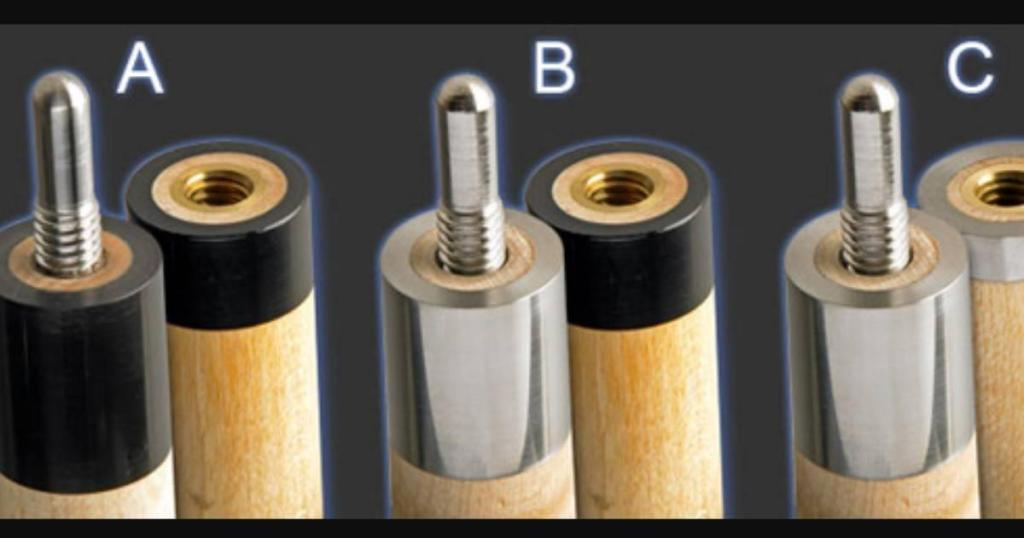
1791936897046.png
1791937107332.png

1791937024435.png
1791937080562.png
 
Last edited:
I'm curious to hear from players who have tried both steel and non-metal joints such as Phenolic / Juma / Elforyn / Ivory (white or black hard plastic typed meterial)

Which do you prefer, and why? I'm interested in differences in hit feel, feedback, balance, and overall playability.

Does one feel stiffer or provide better feedback than the other, or is the difference mostly personal preference?

For those who have owned or played with both, which would you choose for your playing cue?
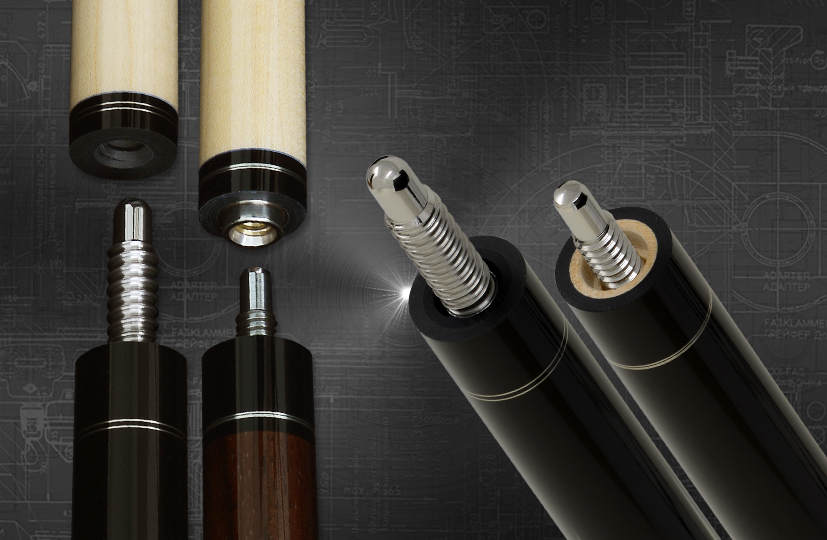
View attachment 937083 View attachment 937087
View attachment 937085 View attachment 937086
Always thot piloted 5/16-14 would be my go to, but lately I've been experimenting with 3/8-10 wood to wood.
My take on it is this, implex joints, wood to wood, always seemed to have a softer hit and excellent feedback. One pocket.
The SS joints felt more solid and packed more punch, so to speak. Consistent solid power. 9 ball.
I learned how to play on SS jointed cues. I couldn't play with McDermott or any of the implex jointed cues during those first years. The exception being a Meucci that was uncontrollable.😉
I'm sure there will be guys saying that's all bs and in your head, etc, but all good players are known for their tactile awareness.
Hope that helps.
I prolly should have read thru the comments B4 posting this. Will I never learn??😂
 
Blind tests have been done and players could not tell what the joint is. Its really has no effect on a cue's hit. The old 'this joint hits like this and that joint hits like that' are nothing but pool's version of old wive's tales. I've hit soft hitting steel and hard as fk ivory/phenolic big pin cues. Too many factors that DO affect the hit.
Shaft wood, ferrule and tip being 3 biggies.
 
If given ten cues with their joints covered how many do you think you could identify? Be surprised if anyone could pick three. Back when Mchesney did that test one player was a Meucci staff player and the cue he like the best turned out to be a steel joint Helmsetter. Stiffest cue i ever hit was a SW with that parabolic taper. Damn near unplayable imo. Back to the OP and i'm sticking with what i said: the joint has very little influence on how a cue plays.
I'll take that bet if they all have the same length, tip and ferrule.😉
 
I have a Dzuricky 4-pointer (ivory joint collar) and a Bob Frey Sneaky Pete (cocobolo) with black phenolic(?) joint collars. Both have 3/8x10 pins. I cannot confidently distinguish between the Dzuricky and Frey shafts by hit/feel, but I can easily tell the difference between the butts. The Frey feels like the Frey, no matter the shaft I try. The Dzuricky feels like the Dzuricky, no matter which shaft is attached. When I tried this experiment, all shafts were fitted with Moori medium tips. There's probably a subtle difference in the hit/feel between shafts, but it takes too much time to switch out shafts to feel that difference.
Always thot I could tell a Scruggs. I'm sure it's all in my head. Not much else up there, so lonely thot.😉
 
  • Haha
Reactions: bbb
he doesn’t mean to be grumpy. thats just the standard cadence for a lot of the regulars on here. after so many years of azbing every day, they forgot that there are other humans that dont live like that.

dont let it bother you and you’ll do alright.

i love garczars posts lol
Walking wikipedia. Has his bad days however, like most of us.
 
it's more than weight and balance, it's more than the joint pin or the joint collar.
Take two simple Plain Jane maple cues, with the same joint type, with the same weight and balance and compare with the exact same shaft, and you might feel a difference in the hit. Not all woods are the same, not all cue makers treat the wood the same, not all cues are constructed the same. just like old growth maple shaft feels different and plays different from fresh Chinese maple shaft (even it both are with the same taper, ferrule material and tip).
The joint type is part of the butt and between two equal butts (as much as possible) on terms of construction and specs it will make a noticeable difference.
i still dont think you could tell me what type of joint is on which cue if tested blind
not can you pick out your favorite cue from this batch
i do think you could say i like the hit of this one
we can agree to disagree
 
My feeling is that blind test done years ago is somewhat meaningless if all the cues had their own shafts on them.
It just would show who's cue you like the feel of, not what joint was better.
Not sure it's actually possible to say one joint is better than another with all the other variables.
The only possible way might be for a carbon cue maker to make a full carbon cue in different joints, but even then there would be different weight ballances and feel.
Then again top cue makers have their preferences, but that still doesn't mean one is better.
I have Schons in 5/16x14, Jacobys in radial, Mcdermots in 3/8x10, and a DZ in 3/8x10 modified and am just getting started in making cues and will probably do 3/8x10 modified but really like my Schons and Jacobys. The only joint I won't use to make a cue is a standard 3/8x10.
Also the hardest hitting cue by far that I have is a bar cue that I made into a two piece cue just to try doing it. I just put a triangle tip on it, as that was what I was using to fix about ten or so of their other cues. The owner told me to keep a couple for my troubles and I kept one to try and make a two piece out of it. Really shoots good and makes me wonder what all this fuss is about layered tips when these triangles work so good.
1000008359.jpg
 
Im 78 years old and have played pool foe 70 yrs. After owning many great cues the cue maker builds thier cues with different hits and shaft taper and tip ferrul plus a good tip have always been the standard for me. My Samboti had the best hit with very little deflection with a medium triangle and my Black Boars all hit similar to my Samboti. My southwest all hit great but i prefered the pro butt and pro taper on the shafts. Once again the med. triangle tip of choice. Having a cue that delivers the feel in your hand and hit you desire is whats important as you learn learn what to expect in performance. Ive had cues that were so well built and had the right combinations built into them that they almost felt magical with ss joints or flatface. Ive tried many layered tips but still like med triangles and good milk duds. My best hitters were Samboti. Black Boar, Southwest, Gina,Mcdermott, Meucci Hustler Origina 1980s, Aldrin, Tad radial pin, and my current cue Jflowers with smo shafts and milk dud tips.
 
I've played with steel joints for years (Schon and Joss). I still love Schon and Joss cues (I have several in my stash of cues), but for play I have recently switched to the basic Meucci cue. I really like the hit and feel. I have two new Meucci cues now - a gambler (with the Joker cards) and a wild pink plain Meucci as a backup. They feel and play virtually identical.
 
If given ten cues with their joints covered how many do you think you could identify? Be surprised if anyone could pick three. Back when Mchesney did that test one player was a Meucci staff player and the cue he like the best turned out to be a steel joint Helmsetter. Stiffest cue i ever hit was a SW with that parabolic taper. Damn near unplayable imo. Back to the OP and i'm sticking with what i said: the joint has very little influence on how a cue plays.
On the new Southwest that I had delivered years ago (after a 16 year wait) I had one of the shafts made with the pro taper, and I liked that one much better.
 
I'm curious to hear from players who have tried both steel and non-metal joints such as Phenolic / Juma / Elforyn / Ivory (white or black hard plastic typed meterial)

Which do you prefer, and why? I'm interested in differences in hit feel, feedback, balance, and overall playability.

Does one feel stiffer or provide better feedback than the other, or is the difference mostly personal preference?

For those who have owned or played with both, which would you choose for your playing cue?
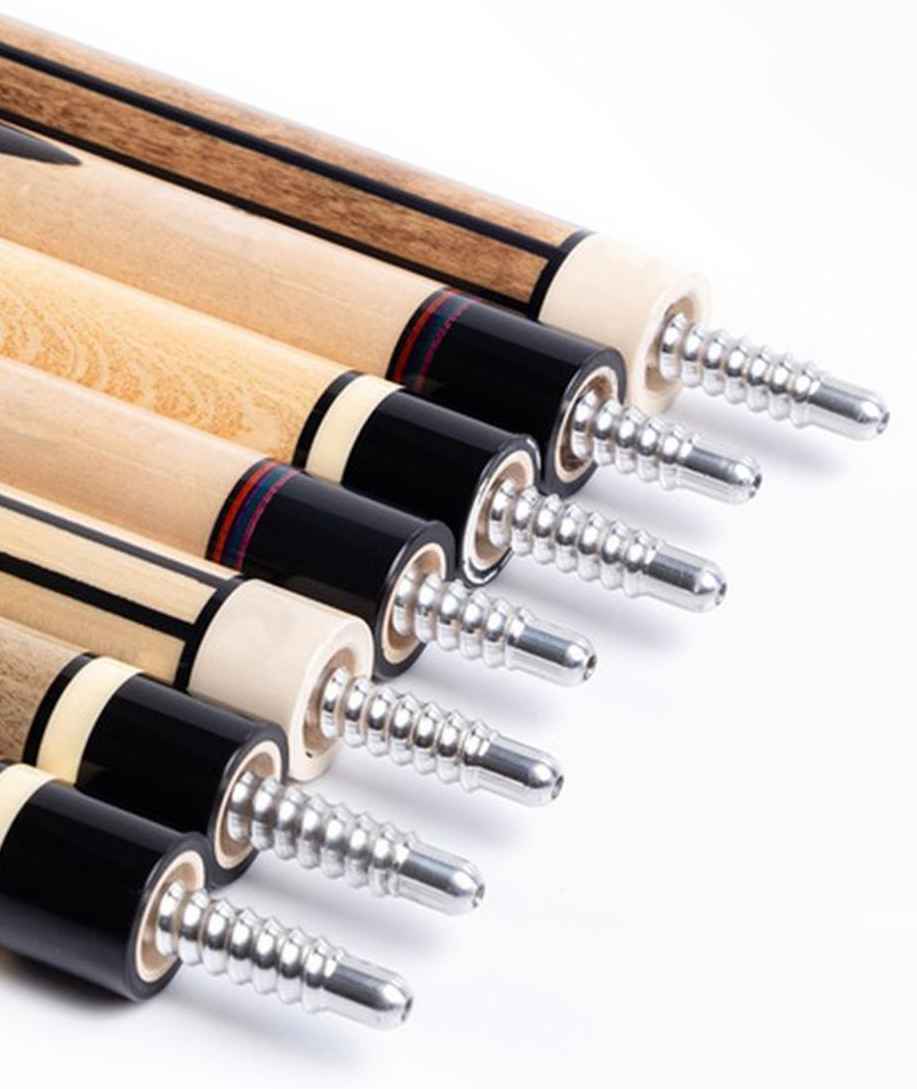
View attachment 937083 View attachment 937087
View attachment 937085 View attachment 937086
I prefer piloted steel joints. I've had Players cues, 2 Mizeraks, a Meucci, no name, and 2 Joss. I prefer the feel of the Joss.
 
I've played with steel joints for years (Schon and Joss). I still love Schon and Joss cues (I have several in my stash of cues), but for play I have recently switched to the basic Meucci cue. I really like the hit and feel. I have two new Meucci cues now - a gambler (with the Joker cards) and a wild pink plain Meucci as a backup. They feel and play virtually identical.

How do you like the extra long Meucci pro taper?
 
Well, I’ve heard and know about “all the studies and tests” that reflect people supposedly not being able to tell the difference in the joint, which would seemingly indicate there is no difference.

Then on the other hand, I have cues that are 5/16x14 piloted steel joints, and also 1 cue that is a 5/16x14 piloted solid ivory joint, there’s no sleeve. I can mount the same shafts on both cues and there is a very distinct difference in the hit, sound and feel between the steel and ivory piloted joints with the same shafts. Soooooo, explain that then. 🤷🏻‍♂️
No one is saying different cues don't play/feel different. The question is: if given,say, ten cues with the joint covered up could you tell what joint was in each cue? I'm saying that 'maybe' 30% of a test group could. What you described has some knowledge bias in it. You already know the shaft/butt well, that's not he same as a totally blind test. The '91 test,iirc, involved 70 players and over 800 tests. 70% were either unable to tell or guessed wrong. Funny thing is of the 70 testers 55 liked the hit of what turned out to be two wood-to-wood sneaky's and more than half thought that those two cues had a steel joint. One tester was a Meucci staff player and the cue he liked the best turned out to be a steel joint Helmstetter. This test wasn't super scientific but it still proved a point. Done here, you cats can have it out. Got pool to play today.
 
Last edited:
I have an old Predator Z shaft that fits my Schon and my Titlist, even though both are metal joints the feel, feedback, and sound is completely different with that Z shaft on different butts.
 
Every cue will have subtle differences.
There are many factors that determine how it will feel.
Joint and pin materials are going to vary the feel the most depending on weight.
The material used or number of threads, etc. is a very minor factor, arguably not noticeable to the vast majority of players.
 
Back
Top