Aim Visualization Techniques

dr_dave

Instructional Author
Gold Member
Silver Member
FYI, I just posted a new video that discusses and demonstrates various visualization techniques that can help you improve your aiming skills in pool, allowing you to pocket balls more effectively and more consistently. Check it out:


Contents:
0:00 - Intro
1:06 - Contact Point
2:22 - Ghost Ball
3:58 - Parallel Lines
5:44 - Cue Visualization
7:38 - Double Distance
8:48 - Ball Overlap
11:28 - Ball-Hit Fraction
14:20 - More Info

Supporting Resources:
As always, I look forward to your feedback, comments, questions, complaints, and requests.

Enjoy!
 
Skimming the video now. In the parallel lines section, one added thing I do is extend the contact line through both balls. This yields what I call reciprocal sections and figuratively, the actual "cut".
 
Skimming the video now. In the parallel lines section, one added thing I do is extend the contact line through both balls. This yields what I call reciprocal sections and figuratively, the actual "cut".
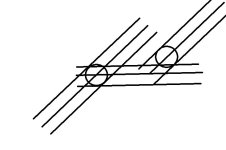
I used to use a technique I called railroad tracking, where I would visualize three lines going through the ob to the pocket, one through the center of the ball and one on either edge, then three parallel lines through the cueball. Then three lines intersecting the two sets of lines. It's EXTREMELY accurate but also mentally taxing to do for hours at a time.
 
I used to use a technique I called railroad tracking, where I would visualize three lines going through the ob to the pocket, one through the center of the ball and one on either edge, then three parallel lines through the cueball. Then three lines intersecting the two sets of lines. It's EXTREMELY accurate but also mentally taxing to do for hours at a time.
I suppose you could push the envelope on enduring that too. To me one should embrace one's method - as the path, so to speak. Beats all the pressure they want you to crumple under.

Can you diagram that triple cross (:ROFLMAO:) method? Anything to look for in the grid?
 
I suppose you could push the envelope on enduring that too. To me one should embrace one's method - as the path, so to speak. Beats all the pressure they want you to crumple under.

Can you diagram that triple cross (:ROFLMAO:) method? Anything to look for in the grid?

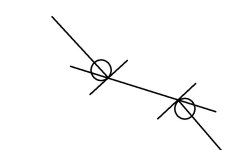
sure, attached is a diagram. It's still all based on parallel shift cp to cp alignment. Another method I used, I called the T joining method. Which utilizes the center ball parallel lines with the tangent line attached and you just visualize an intersecting line between the T joints.


The ideal is to do this in practice and get to where you can make every shot when you follow your preshot and aiming methods and once you've made enough balls in enough differing conditions, you can just visualize the entire shot and just know where to aim.
 

Attachments

  • rrTracking.jpg
    rrTracking.jpg
    30.2 KB · Views: 15
  • T_join.jpg
    T_join.jpg
    17.9 KB · Views: 16
Last edited:
I used to use a technique I called railroad tracking, where I would visualize three lines going through the ob to the pocket, one through the center of the ball and one on either edge, then three parallel lines through the cueball. Then three lines intersecting the two sets of lines. It's EXTREMELY accurate but also mentally taxing to do for hours at a time.

Sort of like this, from the Contact-Point-to-Contact-Point and Parallel-Lines Aiming Systems resource page:

aiming_parallel_lines_aiming_system_more_lines-1.png
 
I'm thinking the "sections" are the overlapped edges, "cut" at the contact point between them? (y)

pj
chgo
Right. This was one of my first attempts at CPG. The way I looked at it (and showed off to friends lol) was bisecting the OB with the pocket line and then paralleling that to the CB. That provided the contact points and shot direction/cut sections. In the shooting position the section line becomes vertical and very "distinctly" partitions the cut section.
 
sure, attached is a diagram. It's still all based on parallel shift cp to cp alignment. Another method I used, I called the T joining method. Which utilizes the center ball parallel lines with the tangent line attached and you just visualize an intersecting line between the T joints.


The ideal is to do this in practice and get to where you can make every shot when you follow your preshot and aiming methods and once you've made enough balls in enough differing conditions, you can just visualize the entire shot and just know where to aim.
The tangent depiction is good for any shot. I set those in my mind with the edge of my hand or just a couple fingers.

The triple lines start generating an interference pattern. :ROFLMAO:
 
FYI, I just posted a new video that discusses and demonstrates various visualization techniques that can help you improve your aiming skills in pool, allowing you to pocket balls more effectively and more consistently. Check it out:


Contents:
0:00 - Intro
1:06 - Contact Point
2:22 - Ghost Ball
3:58 - Parallel Lines
5:44 - Cue Visualization
7:38 - Double Distance
8:48 - Ball Overlap
11:28 - Ball-Hit Fraction
14:20 - More Info

Supporting Resources:
As always, I look forward to your feedback, comments, questions, complaints, and requests.

Enjoy!
You determine the CB contact point by drawing a line thru the CB to the pocket Dave. This will show you exactly where the CB contact point should strike the OB contact point. No visualization or estimation required.
 
You determine the CB contact point by drawing a line thru the CB to the pocket Dave. This will show you exactly where the CB contact point should strike the OB contact point. No visualization or estimation required.

That's not true. See the diagram in the video and on the contact-point-to-contact-point resource page. The line through the required contact point on the CB is parallel to the OB line to the pocket. Therefore, the line through the center of the CB and the CB contact point can't possible point at the pocket (unless the shot is straight). Now if the CB is close to the OB and both balls are far from the pocket and the cut angle is small, the line through the center of the CB to the pocket will be close to the required contact point on the CB.
 
The line through the required contact point on the CB is parallel to the OB line to the pocket.
To visualize this, think of the cue ball frozen to the object ball as it makes contact to make the shot (the ghost ball position) - the line from the pocket passes through both balls’ centers and contact points at the same angle (parallel). The line to the pocket from the cue ball’s starting position would be different.

pj
chgo
 
To visualize this, think of the cue ball frozen to the object ball as it makes contact to make the shot (the ghost ball position) - the line from the pocket passes through both balls’ centers and contact points at the same angle (parallel). The line to the pocket from the cue ball’s starting position would be different.

pj
chgo
Yeah another method I tinkered with was visualizing the outside line from the pocket along the outside edge of the OB, and then the outside of the cb in line with the shot and then visualizing the cb staying within the boundaries of those two lines intersecting and the cb touching the ob at the contact points.

Any more I just see the shot. Sometimes I'll visualize the CB to the OB to the pocket, back to the OB back to the cb and then look at the centerline the first few inches on the shot line in front of the cb as I step into and get down on the shot, but for the most part I can just step into the shot and be on the correct line and see where to aim from millions of pocketed balls over the years.
 
To visualize this, think of the cue ball frozen to the object ball as it makes contact to make the shot (the ghost ball position) - the line from the pocket passes through both balls’ centers and contact points at the same angle (parallel). The line to the pocket from the cue ball’s starting position would be different.

pj
chgo
A simple visualization exercise I used to do is freeze 2 balls anywhere on the table, make note of where the line of centers and tangents point, then walk around the table observing as much as you can about the "look" of the shot.
Variations include not making note and guessing where the lines, or lining up the balls dead to a pocket to observe what the intersection actually looks like in 360 3D.
 
Back
Top