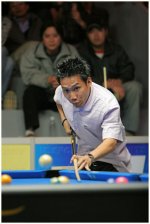
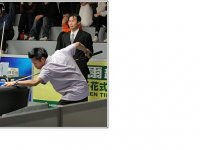
Clinic with Nick Varner

Cornerman

Cue Author...Sometimes
Silver Member
Nick Varner came into town yesterday to do a clinic. The advertising for this wasn't great, so the turnout wasn't good. And, a handful of people that were gung ho to come couldn't make it for one reason or another.

So, it was almost like a private session. Here are some thoughts on the day.

Lessons from a professional player

I'm a strong believer in getting lessons from a professional instructor (like the BCA instructors), as the curriculum is generally more organized for learning. But, I also believe in getting lessons from a professional in order to see how he plays, what he's thinking, and most importantly, see the possibilites that most non-professional instructors are unable to show. My advice to anyone is to get a healthy balance. Nick even says that he wants to take BCA instruction (for instruction, not for certification).


The game is physical.

This is something that I've always said, but until you spend time with a professional, it's too easy to say that it's a mental game. Nick's stroke looks so coordinated. Everything is done with ease, even the very firm shots. No wasted motion. Very effortless.

Nick just got LASIK surgery done, so he no longer has to wear gas permeable lenses. It's the lenses that he says made his game drop to the basement his final day at the 8-ball IPT in Orlando. He says that he feels wonderful now.

He's hired a personal trainer to keep in top shape for this tour. Personal trainers for pool players. Imagine that. He shared where he thought he needed to gain and maintain strength. Strength in pool. Imagine that.

Elevation

Again, another thing that I beat to death on these forums, so I can only report observations. Nick's standard stance and address for draw has the butt of his cue over 10" high, but not 15". So, that's somewhere in the neighborhood of 12-13° of elevation. That's just a report. I checked out Sigel at the IPT. He was about the same. Nick doesn't try for elevation. It just is what it is. His bridge hand doesn't drop for draw, so he raised the butt end to get the tip low. That's what many top players do without ever thinking about it.


The Break

Nick uses a couple (or more) of different breaks. One he calls the flat break "where you just turn the hand over." I love this kind of wording because it reminds me of other sports' instruction where the action may not mean anything in the scientific world, but it means something in the sports world. I really don't know what he really meant, but the cue travels in what would be close to a normal stroke path. I guess in his mind, to keep the stick flatter, you don't do certain motions with the hand (like super wrist snap) that you would with a more powerful break. The next paragraph explains.

His other break was what he simply called the power break. Nick sets up low, but he rises the tip. In fact, he said that he specifally want to "break up." I've heard other hard breakers say this. Like previous break thread discussion, he slowly draws his cuestick back, and then fires forward. What I didn't mention in the other break thread was something that I noticed Sarah Rousey doing, but didn't realize other people did. Nick breaks sidearm. That's right. For the powerbreak, he hitches his stroke to snap the wrist. And there's a tremendous wrist snap. It looks like when he does snap the wrist, his elbow cock/hitches to the inside (reverse or inside chicken wing) and he snaps the wrist forward. Sarah noticeably does this. I doubt she realizes it. I doubt Nick realizes it. Bustamante already has that inside chicken wing in his stroke so there's not much difference. However, I'm guessing he also brings that elbow farther inside on the snap portion. This seems to again point to the side armers of the past whom I say did not shoot sidearm just because they played as children. I think they fell into something that was advantageous, from a wrist snap perspective. In the end, if you're trying the wrist snap on the break, and you're trying to fight from having your elbow go to the inside, don't fight it. I think you're wrist wants your elbow to move to the inside.

Do I recommend this type of power break? Hell ya, as long as you realize that this power break is a different stroke altogether. People should master the standard flat break, but if you could master this power break as well, that's a hell of a weapon. Sometimes, if hitting them squarely and firm isn't quite doing it, it'd be nice to go into the bag for something else.

We ended up playing against Nick for several games in 8-ball letting him break every time. I thought it was important to watch him rather than try to beat him. He switched to the power break after his first break came up dry or barely leaked a ball in. He broke them harder than anyone I've seen on a bar box with simply superior control. Most people could run most of the racks that Nick broke, they were so wide open. And, he went through what was going on his mind in the runouts as well as the corrections he was making based on earlier shooting. By the end, if he really wanted to, I could see him break and running out 90% of the racks. His break just was so good. And when the rack wasn't all that runable, he still ran out.

Safety Play

Didn't discuss it much. We were focused in on bar box 8-ball. The players that were there were mostly offensive players, low to high B, and though he did mention safety play in passing and even shot a small amount of safety play, I think he knew intuitively that pattern play 8-ball runouts was more benefecial to the group.

Nick is ready for the IPT tour The guy is happy (he and Toni have a 21 month old son that Nick adores), healthy , and starting to love the game again. He doesn't like the big buckets and short race 9-ball tournaments as too many people can win, players that have no chance in longer races on tighter equipment. Read into that what you want, but the bottom line: players that you think can compete based on what you've seen on TV have less chance than you think .

So, 8-ball on tighter equipment is a welcomed change. He also looks to Allen Hopkins as one of the tougher players, once Allen gets back in gear. Strong words.

I'm sure there's more, but that's it for now.

Fred
 
Cornerman said:
Elevation

Again, another thing that I beat to death on these forums, so I can only report observations. Nick's standard stance and address for draw has the butt of his cue over 10" high, but not 15". So, that's somewhere in the neighborhood of 12-13° of elevation. That's just a report. I checked out Sigel at the IPT. He was about the same. Nick doesn't try for elevation. It just is what it is. His bridge hand doesn't drop for draw, so he raised the butt end to get the tip low. That's what many top players do without ever thinking about it.

Fred

Thank you for sharing all of it but especially the above for me.
It has been a sore spot for me recently and found that by slightly elevating my backhand I was getting better draw. However, I felt like I was doing something wrong.

Much appreciated,
Koop
 
Great post

Cornerman said:
Nick Varner came into town yesterday to do a clinic. The advertising for this wasn't great, so the turnout wasn't good. And, a handful of people that were gung ho to come couldn't make it for one reason or another.

So, it was almost like a private session. Here are some thoughts on the day.

Lessons from a professional player

I'm a strong believer in getting lessons from a professional instructor (like the BCA instructors), as the curriculum is generally more organized for learning. But, I also believe in getting lessons from a professional in order to see how he plays, what he's thinking, and most importantly, see the possibilites that most non-professional instructors are unable to show. My advice to anyone is to get a healthy balance. Nick even says that he wants to take BCA instruction (for instruction, not for certification).


The game is physical.

This is something that I've always said, but until you spend time with a professional, it's too easy to say that it's a mental game. Nick's stroke looks so coordinated. Everything is done with ease, even the very firm shots. No wasted motion. Very effortless.

Nick just got LASIK surgery done, so he no longer has to wear gas permeable lenses. It's the lenses that he says made his game drop to the basement his final day at the 8-ball IPT in Orlando. He says that he feels wonderful now.

He's hired a personal trainer to keep in top shape for this tour. Personal trainers for pool players. Imagine that. He shared where he thought he needed to gain and maintain strength. Strength in pool. Imagine that.

Elevation

Again, another thing that I beat to death on these forums, so I can only report observations. Nick's standard stance and address for draw has the butt of his cue over 10" high, but not 15". So, that's somewhere in the neighborhood of 12-13° of elevation. That's just a report. I checked out Sigel at the IPT. He was about the same. Nick doesn't try for elevation. It just is what it is. His bridge hand doesn't drop for draw, so he raised the butt end to get the tip low. That's what many top players do without ever thinking about it.


The Break

Nick uses a couple (or more) of different breaks. One he calls the flat break "where you just turn the hand over." I love this kind of wording because it reminds me of other sports' instruction where the action may not mean anything in the scientific world, but it means something in the sports world. I really don't know what he really meant, but the cue travels in what would be close to a normal stroke path. I guess in his mind, to keep the stick flatter, you don't do certain motions with the hand (like super wrist snap) that you would with a more powerful break. The next paragraph explains.

His other break was what he simply called the power break. Nick sets up low, but he rises the tip. In fact, he said that he specifally want to "break up." I've heard other hard breakers say this. Like previous break thread discussion, he slowly draws his cuestick back, and then fires forward. What I didn't mention in the other break thread was something that I noticed Sarah Rousey doing, but didn't realize other people did. Nick breaks sidearm. That's right. For the powerbreak, he hitches his stroke to snap the wrist. And there's a tremendous wrist snap. It looks like when he does snap the wrist, his elbow cock/hitches to the inside (reverse or inside chicken wing) and he snaps the wrist forward. Sarah noticeably does this. I doubt she realizes it. I doubt Nick realizes it. Bustamante already has that inside chicken wing in his stroke so there's not much difference. However, I'm guessing he also brings that elbow farther inside on the snap portion. This seems to again point to the side armers of the past whom I say did not shoot sidearm just because they played as children. I think they fell into something that was advantageous, from a wrist snap perspective. In the end, if you're trying the wrist snap on the break, and you're trying to fight from having your elbow go to the inside, don't fight it. I think you're wrist wants your elbow to move to the inside.

Do I recommend this type of power break? Hell ya, as long as you realize that this power break is a different stroke altogether. People should master the standard flat break, but if you could master this power break as well, that's a hell of a weapon. Sometimes, if hitting them squarely and firm isn't quite doing it, it'd be nice to go into the bag for something else.

We ended up playing against Nick for several games in 8-ball letting him break every time. I thought it was important to watch him rather than try to beat him. He switched to the power break after his first break came up dry or barely leaked a ball in. He broke them harder than anyone I've seen on a bar box with simply superior control. Most people could run most of the racks that Nick broke, they were so wide open. And, he went through what was going on his mind in the runouts as well as the corrections he was making based on earlier shooting. By the end, if he really wanted to, I could see him break and running out 90% of the racks. His break just was so good. And when the rack wasn't all that runable, he still ran out.

Safety Play

Didn't discuss it much. We were focused in on bar box 8-ball. The players that were there were mostly offensive players, low to high B, and though he did mention safety play in passing and even shot a small amount of safety play, I think he knew intuitively that pattern play 8-ball runouts was more benefecial to the group.

Nick is ready for the IPT tour The guy is happy (he and Toni have a 21 month old son that Nick adores), healthy , and starting to love the game again. He doesn't like the big buckets and short race 9-ball tournaments as too many people can win, players that have no chance in longer races on tighter equipment. Read into that what you want, but the bottom line: players that you think can compete based on what you've seen on TV have less chance than you think .

So, 8-ball on tighter equipment is a welcomed change. He also looks to Allen Hopkins as one of the tougher players, once Allen gets back in gear. Strong words.

I'm sure there's more, but that's it for now.

Fred


Great post- thanks for sharing. And I agree- working with a professional can take years off the learning curve.
 
Cornerman said:
What I didn't mention in the other break thread was something that I noticed Sarah Rousey doing, but didn't realize other people did.
Fred


Fred,
Very well written post.Information is presented in very organized manner.
Sarah,with respect to breaks,is George BreedLove`s protege`.
If you run into `Ginky` watch him break and tell me what u think of his fast whiplash type wrist action.:cool:
 
Great post Fred! It is these great informative thread that keeps me coming back to this forum again and again.

You bring up a very valid point about the inside cock of the chicken wing. I have been paying very close attention to local players that have a great breakshot. They do one or both of two things:

1) They have the chicken wing going on to snap the wrist.
2) They lift the backhand 12 inches in a pumphandle like motion to snap the wrist.

Examples like pictures of Alex
 

Attachments

  • BK-AP-04.jpg
    BK-AP-04.jpg
    51.6 KB · Views: 587
Last edited:
Another picture of Alex:
 

Attachments

  • Alex.JPG
    Alex.JPG
    22 KB · Views: 587
Last edited:
Good stuff there Fred!

I think many of us are looking forward to seeing some of the past greats like Allen, Mike Sigel and Nick (even though Nick's been pretty active in recent years), getting back into form and matching up with the new generation.
 
Thanks Fred...that's the most interesting thread I've read here in a while...

I've had the opportunity to watch Nick play quite a bit. I believe he is one of the best (if not THE best) all around players ever. I'm glad to hear he is in good health and excited about the game again. I love to watch him play.
 
Thanks Fred, interesting stuff.

I'm curious about the lasik surgery. Is that the same thing Efren had or is there more than one type of laser eye surgery?

Thanks
 
Great stuff, Fred, thanks for sharing it. When Nick lived in Orlando, I had the good fortune of hanging out in the same room as he did, watched him play a lot and was always amazed at the dedication and respect he still has for our game, even after all these years. One of the best lessons I got: watching him practice for hours and NEVER goofing off...shooting each shot like it was a U. S. Open hill-hill final, always with laser concentration. He started playing a lot with Charlie Williams, and Charlie's game immediately jumped up noticeably. Nick is a ferocious competitor who shouldn't be counted out of any event he enters, and he's also one of the nicest, classiest people in the pool world and I'm pulling for him to do well in the IPT.
 
Fred was there a Charge to see Nick in you part of the County? When he was in PHX it was FREE, and he was selling his Cues @ discount that day...
 
PoolSleuth said:
Fred was there a Charge to see Nick in you part of the County? When he was in PHX it was FREE, and he was selling his Cues @ discount that day...

Nick has come up through here several times to do exhibitions and such at no charge to the spectators (though someone may have paid him something). This wasn't an exhibition. It was semi-private lessons. Nobody could come into the room unless they paid to watch or paid to get hands on instructional.

We (four of us including Nick) went out to dinner afterwards. We (Nick and I) had a lot of conversation about the IPT and his career in general. Nick is one of the big reasons why I even play this game.

Fred
 
Cornerman said:
This wasn't an exhibition. It was semi-private lessons. Nobody could come into the room unless they paid to watch or paid to get hands on instructional.


Fred

May I ask how long the Session lasted? What the FEE was to attend? Last the MAX Number allowed to sign up?
 
renard said:
Another picture of Alex:

Interesting, never really noticed that before - From those 2 photos you can clearly see his break stroke starts out with his forearm extended away from his body ("outside chicken wing"?) and then it must get pulled across his body as he swings as his grip hand ends up by his chest. ("iinside chicken wing"?)
 
Fred, thanks for the awesome report. This is great information.

Pool room owners don't know how to advertise very well. The leagues would be glad to put a pro player's clinic date and time in their pool league envelopes if given enough time, especially if the pool room has league play at their establishment.

When Nick breaks is power break (side arm), does he set up the normal way with head low or head high?

Secondly, is his side arm action the result of his body moving to the side as he is pulling back or moving forward. Or does he set up side arm from the beginning.

A year ago just before he passed on, I had this elderly former pool hustler tell me that you should come from the outside-in, as it give you a more powerful break. His name was Clinton Bailey. It sounds like Nick's break is similar to what Mr. Bailey was trying to teach me. Mr. Bailey never said to break side-arm but i guess you kind of do that if you come from the outside in. I believe you can do that by moving the body slightly to the side or as you go back with the final stroke you can move your right should back, keeping your left shoulder in the front and create a twisting motion that if you do it with power will automatically make you swing side-armed.

Please let me know if you observed Nick setting up side-arm or if it is something that happens after he starts his final stroke.

And what did you mean/he mean about "break up"?
Sorry for all of the questions but I really like Nick Varner's style, except for his infamous super safety play that extends a one pocket game for an hour or more.
THANKS!
jOEYa

Cornerman said:
Nick Varner came into town yesterday to do a clinic. The advertising for this wasn't great, so the turnout wasn't good. And, a handful of people that were gung ho to come couldn't make it for one reason or another.

So, it was almost like a private session. Here are some thoughts on the day.

Lessons from a professional player

I'm a strong believer in getting lessons from a professional instructor (like the BCA instructors), as the curriculum is generally more organized for learning. But, I also believe in getting lessons from a professional in order to see how he plays, what he's thinking, and most importantly, see the possibilites that most non-professional instructors are unable to show. My advice to anyone is to get a healthy balance. Nick even says that he wants to take BCA instruction (for instruction, not for certification).


The game is physical.

This is something that I've always said, but until you spend time with a professional, it's too easy to say that it's a mental game. Nick's stroke looks so coordinated. Everything is done with ease, even the very firm shots. No wasted motion. Very effortless.

Nick just got LASIK surgery done, so he no longer has to wear gas permeable lenses. It's the lenses that he says made his game drop to the basement his final day at the 8-ball IPT in Orlando. He says that he feels wonderful now.

He's hired a personal trainer to keep in top shape for this tour. Personal trainers for pool players. Imagine that. He shared where he thought he needed to gain and maintain strength. Strength in pool. Imagine that.

Elevation

Again, another thing that I beat to death on these forums, so I can only report observations. Nick's standard stance and address for draw has the butt of his cue over 10" high, but not 15". So, that's somewhere in the neighborhood of 12-13° of elevation. That's just a report. I checked out Sigel at the IPT. He was about the same. Nick doesn't try for elevation. It just is what it is. His bridge hand doesn't drop for draw, so he raised the butt end to get the tip low. That's what many top players do without ever thinking about it.


The Break

Nick uses a couple (or more) of different breaks. One he calls the flat break "where you just turn the hand over." I love this kind of wording because it reminds me of other sports' instruction where the action may not mean anything in the scientific world, but it means something in the sports world. I really don't know what he really meant, but the cue travels in what would be close to a normal stroke path. I guess in his mind, to keep the stick flatter, you don't do certain motions with the hand (like super wrist snap) that you would with a more powerful break. The next paragraph explains.

His other break was what he simply called the power break. Nick sets up low, but he rises the tip. In fact, he said that he specifally want to "break up." I've heard other hard breakers say this. Like previous break thread discussion, he slowly draws his cuestick back, and then fires forward. What I didn't mention in the other break thread was something that I noticed Sarah Rousey doing, but didn't realize other people did. Nick breaks sidearm. That's right. For the powerbreak, he hitches his stroke to snap the wrist. And there's a tremendous wrist snap. It looks like when he does snap the wrist, his elbow cock/hitches to the inside (reverse or inside chicken wing) and he snaps the wrist forward. Sarah noticeably does this. I doubt she realizes it. I doubt Nick realizes it. Bustamante already has that inside chicken wing in his stroke so there's not much difference. However, I'm guessing he also brings that elbow farther inside on the snap portion. This seems to again point to the side armers of the past whom I say did not shoot sidearm just because they played as children. I think they fell into something that was advantageous, from a wrist snap perspective. In the end, if you're trying the wrist snap on the break, and you're trying to fight from having your elbow go to the inside, don't fight it. I think you're wrist wants your elbow to move to the inside.

Do I recommend this type of power break? Hell ya, as long as you realize that this power break is a different stroke altogether. People should master the standard flat break, but if you could master this power break as well, that's a hell of a weapon. Sometimes, if hitting them squarely and firm isn't quite doing it, it'd be nice to go into the bag for something else.

We ended up playing against Nick for several games in 8-ball letting him break every time. I thought it was important to watch him rather than try to beat him. He switched to the power break after his first break came up dry or barely leaked a ball in. He broke them harder than anyone I've seen on a bar box with simply superior control. Most people could run most of the racks that Nick broke, they were so wide open. And, he went through what was going on his mind in the runouts as well as the corrections he was making based on earlier shooting. By the end, if he really wanted to, I could see him break and running out 90% of the racks. His break just was so good. And when the rack wasn't all that runable, he still ran out.

Safety Play

Didn't discuss it much. We were focused in on bar box 8-ball. The players that were there were mostly offensive players, low to high B, and though he did mention safety play in passing and even shot a small amount of safety play, I think he knew intuitively that pattern play 8-ball runouts was more benefecial to the group.

Nick is ready for the IPT tour The guy is happy (he and Toni have a 21 month old son that Nick adores), healthy , and starting to love the game again. He doesn't like the big buckets and short race 9-ball tournaments as too many people can win, players that have no chance in longer races on tighter equipment. Read into that what you want, but the bottom line: players that you think can compete based on what you've seen on TV have less chance than you think .

So, 8-ball on tighter equipment is a welcomed change. He also looks to Allen Hopkins as one of the tougher players, once Allen gets back in gear. Strong words.

I'm sure there's more, but that's it for now.

Fred
 
JoeyA said:
When Nick breaks is power break (side arm), does he set up the normal way with head low or head high?
Looked very similar to his regular setup, but maybe his head was a little higher.

Secondly, is his side arm action the result of his body moving to the side as he is pulling back or moving forward. Or does he set up side arm from the beginning.
He sets up normal, with the forearm perpendicular to the floor. The sidearm comes during the final stroke. He brings the cue back, then sort of cocks the trigger, so to speak. That's when the wrist turns sideways, the elbow goes in, and he snaps the wrist forward, almost with the palm facing downwards. I think if you watched Sarah's break closely, she does the exact same thing, although Sarah's is much more pronounced. They almost make a little circle with their hand at the back of their final stroke.

And what did you mean/he mean about "break up"?
The tip starts low because he addresses low (right to the base of the ball). In order to actually hit the ball in the center or a hair high of center (in order to stop the ball in the center of the table), the elbow has to drop. When the elbow drops, the tip goes up. He knows this, and actually says he's trying to break up (upwards).

Fred
 
Nick Varner

Thanks for sharing Fred...always enjoy your posts...Nick was here in The ATL awhile back in conjunction with one of The APA Regional Qualifiers I participated in...or maybe It was Our Captains Tournament???...anyway, got a chance to chat with him and watch him put on a little exhibition type clinic and it was great...everyone one enjoyed it and he was very accomadating...he was also showing his new line of Cue's etc...
 
Back
Top