how or when to seal ivory

Dave38

theemperorhasnoclotheson
Silver Member
I have come across some ivory slabs that are real nice for a real good price. My question is how should I seal them or should I seal them as I won't be using them for another few months at least. I'm in the northeastern US and we will be having a lot of humidity, and just don't want to lose these to cracking etc. any thought are great.
Dave B.
 
Dave38 said:
I have come across some ivory slabs that are real nice for a real good price. My question is how should I seal them or should I seal them as I won't be using them for another few months at least. I'm in the northeastern US and we will be having a lot of humidity, and just don't want to lose these to cracking etc. any thought are great.
Dave B.

Just spray or brush some lacquer on them to be safe.

Dick
 
I have ivory that's been sitting around for years and it doesn't change, crack or anything...it's also 40 years old too...you shouldn't have any problems....
 
. . . . . .
 

Attachments

  • ivory2.jpg
    ivory2.jpg
    61.1 KB · Views: 243
Last edited:
barkcinnamon said:
. . . . . .

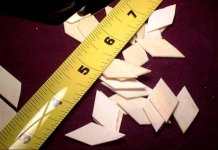
Those look like cut up piano keys which are not nearly thick enough for anything other than the smallest, shallow inlays. I have used full length piano keys, cut lengthwise into strips and stood on edge as white filler in deco-rings however. These are to short for that procedure though.

Dick
 
Dave38 said:
I have come across some ivory slabs that are real nice for a real good price. My question is how should I seal them or should I seal them as I won't be using them for another few months at least. I'm in the northeastern US and we will be having a lot of humidity, and just don't want to lose these to cracking etc. any thought are great.
Dave B.

Slabs should be OK sealed with shellac brushed or sprayed on. Get yourself a rattle can of "Bullseye". Tusk sections I keep just the ends sealed with a layer of elmers white glue...or wood glue.
Best to keep them in a 50-60% humidity range. The higher humidity range isn't as bad as the lower. In the winter months in the colder sections of states when artificial heat is introduced and the humidity drops below 20% is the most critical time to make sure you have the ivory in a stable condition.
When it dries out too fast is when it will crack.

Good luck...
 
rhncue said:
Those look like cut up piano keys which are not nearly thick enough for anything other than the smallest, shallow inlays. I have used full length piano keys, cut lengthwise into strips and stood on edge as white filler in deco-rings however. These are to short for that procedure though.

Dick
It says in the item description that they are piano keys...they would be good for smaller diamonds and such...anything narrow...price is too high on those though....
 
BarenbruggeCues said:
Slabs should be OK sealed with shellac brushed or sprayed on. Get yourself a rattle can of "Bullseye". Tusk sections I keep just the ends sealed with a layer of elmers white glue...or wood glue.
Best to keep them in a 50-60% humidity range. The higher humidity range isn't as bad as the lower. In the winter months in the colder sections of states when artificial heat is introduced and the humidity drops below 20% is the most critical time to make sure you have the ivory in a stable condition.
When it dries out too fast is when it will crack.

Good luck...
http://www.zinsser.com/product_detail.asp?ProductID=11
Dat one?
thnx
 
http://www.zinsser.com/product_detail.asp?ProductID=31

I like the shellac. Buy a gallon and just dip the ivory, lay on wax paper till dry.
Check the ends of your ivory rounds with black leather dye before installing on cues. It will show the most minute checks that can not be seen with a magnifier sometimes.
I brush the shellac on exotics when they come into my shop also.
 
Last edited:
Back
Top