Mixing Epoxy

Cue Crazy

AzB Silver Member
Silver Member
Just wondering If anyone has any tricks for keeping the bubbles down when Mixing epoxy sealers. I'm not really wanting to use any flame or anthing like that, but rather wondering what other steps I could take to minimize the bubbles in the first place. I think I'm coming to the conclusion that the tougue deppressors are causing more of them, so also looking for advice on stirring sticks that are cheap in cost, but not made from anything spoungy or porus like the wood that could add to them.
I thought about maybe heating the mix up before applying, but even if that didn't effect the curing, it would still require a metal mixing cup, and i would rather use throw aways, then something i have to clean everytime. BTW I use those Solo plastic cups that they use to serve takeout sauces, and condiments in. They work really well and can just toss them afterwards if you buy them By the hundreds or more. You can save alot on the caps and Buy just the cups, and they are much cheaper that way. seems like the lids cost almost as much as the cups theirself.
I can mix slower and get less bubbles, although would like even less, and that's taking a chance that the 2 parts don't get combined well. I like to make sure finish epoxy Is mixed well, or it won't sand out as easily, and can cause other problems.

Anyway I know this issue has been discussed a long time back, just wondering if there's been any new discoveries since then, or get a refresher on the subject of nothing else.:) Thanks Guys, Greg
 
Cue Crazy said:
Just wondering If anyone has any tricks for keeping the bubbles down when Mixing epoxy sealers. I'm not really wanting to use any flame or anthing like that, but rather wondering what other steps I could take to minimize the bubbles in the first place. I think I'm coming to the conclusion that the tougue deppressors are causing more of them, so also looking for advice on stirring sticks that are cheap in cost, but not made from anything spoungy or porus like the wood that could add to them.
I thought about maybe heating the mix up before applying, but even if that didn't effect the curing, it would still require a metal mixing cup, and i would rather use throw aways, then something i have to clean everytime. BTW I use those Solo plastic cups that they use to serve takeout sauces, and condiments in. They work really well and can just toss them afterwards if you buy them By the hundreds or more. You can save alot on the caps and Buy just the cups, and they are much cheaper that way. seems like the lids cost almost as much as the cups theirself.
I can mix slower and get less bubbles, although would like even less, and that's taking a chance that the 2 parts don't get combined well. I like to make sure finish epoxy Is mixed well, or it won't sand out as easily, and can cause other problems.

Anyway I know this issue has been discussed a long time back, just wondering if there's been any new discoveries since then, or get a refresher on the subject of nothing else.:) Thanks Guys, Greg
Warm each part of the epoxy with a heat lamp or 150 watt bulb for a few minutes. Then mix it and I have better results. Just my .02 cents.
 
billiardbum said:
Warm each part of the epoxy with a heat lamp or 150 watt bulb for a few minutes. Then mix it and I have better results. Just my .02 cents.


Thanks Jim, I'll try It out on the next one, I just did 2 cues from a batch I'm on now, and have 2 more to do so I'll see how well it works on those. It's not too bad, and I'm really only using it for grain filler anyhow, so it will be leveled off anyway, and I don't so much have to worry about them, fisheyes, or any of that, but I'd still like to keep as many out as possible just the same.

I have done almost exactly what your talking about before, It was recomended By someone else for another thing I was doing, but that was after mixing, and for a different purpose. I haven't thought of trying It beforehand yet, but It makes sense, so I believe I need to give it a shot, and try It out.;) Thanks for the suggestion.:)
 
Cue Crazy said:
Thanks Jim, I'll try It out on the next one, I just did 2 cues from a batch I'm on now, and have 2 more to do so I'll see how well it works on those. It's not too bad, and I'm really only using it for grain filler anyhow, so it will be leveled off anyway, and I don't so much have to worry about them, fisheyes, or any of that, but I'd still like to keep as many out as possible just the same.

I have done almost exactly what your talking about before, It was recomended By someone else for another thing I was doing, but that was after mixing, and for a different purpose. I haven't thought of trying It beforehand yet, but It makes sense, so I believe I need to give it a shot, and try It out.;) Thanks for the suggestion.:)
Are you using West systems? I do not have that problem due to it being very thin...
 
billiardbum said:
Are you using West systems? I do not have that problem due to it being very thin...


No Sir, I'm still using System 3 clear cote, and haven't made the switch to west yet. It's probably alittle thicker, and I suppose that makes It harder for the trapped air to escape to the top of the mix. Still Something I did on the last batch helped, and I had hardly any bubbles at all, just forgot what I did different:o :D I may have used the light, and just forgot. Actually the more I think about it, the more it seems like that's what I did, but after the mixing I think. I have one of those clamp on lights and run 75to100 watt bulbs in It, so It puts off a good bit of heat for what It is. It does seem to be going on alittle thicker then the last time, so maybe that's the difference. I didn't have any problems the last time, and the finish came out beautifull after being sprayed and finished. I gotta start writing things down on paper I suppose:D
 
Michael Webb said:
Party store, Popsicle sticks.


Whats the difference in them Mike? Are they coated or something? The ones I get are the wide ones for crafts. I Buy them in packs of 100ct. Is that they same kind? Thanks
 
Wouldn't heating it up after it was mixed make it set-up faster thus being thicker and harder to work with? Or am I way off base on this? (it's been known to happen :) )


Cue Crazy said:
No Sir, I'm still using System 3 clear cote, and haven't made the switch to west yet. It's probably alittle thicker, and I suppose that makes It harder for the trapped air to escape to the top of the mix. Still Something I did on the last batch helped, and I had hardly any bubbles at all, just forgot what I did different:o :D I may have used the light, and just forgot. Actually the more I think about it, the more it seems like that's what I did, but after the mixing I think. I have one of those clamp on lights and run 75to100 watt bulbs in It, so It puts off a good bit of heat for what It is. It does seem to be going on alittle thicker then the last time, so maybe that's the difference. I didn't have any problems the last time, and the finish came out beautifull after being sprayed and finished. I gotta start writing things down on paper I suppose:D
 
magnetardo said:
Wouldn't heating it up after it was mixed make it set-up faster thus being thicker and harder to work with? Or am I way off base on this? (it's been known to happen :) )

Raising the temperature some will make it set up a little faster but no it doesn't thicken but just the opposite, it thins it out. I spray on the epoxy that I use for a sealer now but when I was putting slow set on I would heat it up so that it would flow very easily.

Dick
 
I have de-gassed the epoxy. This gets rid of some of the bubbles however I believe most bubbles actual come brom displaced air in the grain. I have found that a first light coat will fill in the voids and let the air exscape eaisier with the thinner epoxy wall.

Imho it is less work to do it twice.

jimbo.
 
I have used Finish cure epoxy, and when on the suppliers website's FAQ, I found a recommended practice. they stated to heat the bottles in a microwave for about 15 second, depending on the amount in the bottles. The reason is they recommend it to be around 90 degrees for the components, and an ambient temp of the shop to be above 80 degrees. I have found though if you heat it to much, it killed the setting abilities of the whole bottle. I now pour the amount needed for both parts into dixie cups then micro it for about 8 seconds, depending on the power of your microwave, then mix. It comes out thin and with few air bubbles if any, one key is to let it set for say about 5 min. first and let the air bubbles work their way out of the mix, before applying. The only caution is that epoxy, in mass, in a paper cup, after being heated and it starts do it's chemical 'thing', can generate alot of heat and can cause spontanous flame or fire. I found that out the hard way.
Hope this helps,
Dave
 
Last edited:
rhncue said:
Raising the temperature some will make it set up a little faster but no it doesn't thicken but just the opposite, it thins it out. I spray on the epoxy that I use for a sealer now but when I was putting slow set on I would heat it up so that it would flow very easily.

Dick


Dick, thanks for the info, I woulda thunk just the opposite, shows what I know! Any problems cleaning your gun after you shoot epoxy?
 
Cue Crazy said:
Whats the difference in them Mike? Are they coated or something? The ones I get are the wide ones for crafts. I Buy them in packs of 100ct. Is that they same kind? Thanks

Not coated just regular Popsicle sticks. I agree with Masonh.
 
magnetardo said:
Wouldn't heating it up after it was mixed make it set-up faster thus being thicker and harder to work with? Or am I way off base on this? (it's been known to happen :) )


Dick, pretty much answered the same as I would have. It could speed drying up I suppose, but this epoxy I'm sealing with now, takes quite some time to dry either way, and considering It only takes a few minutes to apply it to a cue, well, It really doesn't put me in a bind or anything. It self levels It'self after aplying it to the cue, so there's plenty of time. Actually I'm sitting around waiting for hours for the stuff to set up, so I can shut the motor down.

it thins the epoxy out, and it can go on the cue thinner as I believe someone mentioned, I think it also allows the air to escape easier when It's thinner, then when it's thicker, because more bubbles seem to disapear. I'll know tomorrow or sunday. I have a pass each to make on the next 2 cues, and I'll test it to make sure, but i do believe that's what helped me on the last batch.

Now I have done this with thicker structural epoxy that kicks a little bit faster to begin with, and it seems that it may shorten the cure time some, but It does help thin It out, and I usually still have enough working time for what I need. still I would recomend only mixing small batches at a time, and not trying to glue too many things up at once, because the structural epoxy will firm up alot quicker, even if it doesn't totally set quickly.

Seems like I also took a tooth pick after mixing, and kind of fished some of the bubbles to the top to make their escape easier, so that may have helped before also. All I know for sure right now, Is the epoxy is alittle thicker then the last time, and It has more bubbles in it that aren't correcting theirself. If I wasn't just using it as a filler, then it would be diapointing to say the least. I do though have more sanding to do then I wanted, so i will try to thin it out on these others.
 
Dave38 said:
I have used Finish cure epoxy, and when on the suppliers website's FAQ, I found a recommended practice. they stated to heat the bottles in a microwave for about 15 second, depending on the amount in the bottles. The reason is they recommend it to be around 90 degrees for the components, and an ambient temp of the shop to be above 80 degrees. I have found though if you heat it to much, it killed the setting abilities of the whole bottle. I now pour the amount needed for both parts into dixie cups then micro it for about 8 seconds, depending on the power of your microwave, then mix. It comes out thin and with few air bubbles if any, one key is to let it set for say about 5 min. first and let the air bubbles work their way out of the mix, before applying. The only caution is that epoxy, in mass, in a paper cup, after being heated and it starts do it's chemical 'thing', can generate alot of heat and can cause spontanous flame or fire. I found that out the hard way.
Hope this helps,
Dave


How do Ya like the finish Cure? I have a brand new kit of the stuff, but have never tried It.


I had a hardener bottle of the sys 3 melt down one time in the original bottle before even being mixed. yeah I'm suprised but these little plastic cups don't melt down like I would think they might. The stuff does get hot when the reaction takes place, and seems like these cups would melt. Atleast epoxy doesn't smoke up and burn the eyes like CA though.:eek:

Thanks for the ideas, I'm open to testing anything that is plausable, and that seems like it may be, although I may have to buy a cheapo microwave just for that kind of stuff, or I might get My tail end skinned for using the one we cook food in. My ears are hurtin just thinking about It.:D
 
Cue Crazy said:
Dick, pretty much answered the same as I would have. It could speed drying up I suppose, but this epoxy I'm sealing with now, takes quite some time to dry either way, and considering It only takes a few minutes to apply it to a cue, well, It really doesn't put me in a bind or anything. It self levels It'self after aplying it to the cue, so there's plenty of time. Actually I'm sitting around waiting for hours for the stuff to set up, so I can shut the motor down.

it thins the epoxy out, and it can go on the cue thinner as I believe someone mentioned, I think it also allows the air to escape easier when It's thinner, then when it's thicker, because more bubbles seem to disapear. I'll know tomorrow or sunday. I have a pass each to make on the next 2 cues, and I'll test it to make sure, but i do believe that's what helped me on the last batch.

Now I have done this with thicker structural epoxy that kicks a little bit faster to begin with, and it seems that it may shorten the cure time some, but It does help thin It out, and I usually still have enough working time for what I need. still I would recomend only mixing small batches at a time, and not trying to glue too many things up at once, because the structural epoxy will firm up alot quicker, even if it doesn't totally set quickly.

Seems like I also took a tooth pick after mixing, and kind of fished some of the bubbles to the top to make their escape easier, so that may have helped before also. All I know for sure right now, Is the epoxy is alittle thicker then the last time, and It has more bubbles in it that aren't correcting theirself. If I wasn't just using it as a filler, then it would be diapointing to say the least. I do though have more sanding to do then I wanted, so i will try to thin it out on these others.

Your working a lot harder than you have to. Sealing and finishing is suppose to be the easy part.
 
Michael Webb said:
Not coated just regular Popsicle sticks. I agree with Masonh.


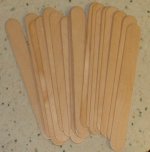
That's pretty much what I'm using except they are wider and a hair thinner maybe. I don't know if that would cause more turbulance, and create more bubbles or not though. Here's what they look like. My Mom is always getting craft things to do with My daughter when they spend time together, and she picks up a few bundles of these at a time for me, from somewhere here in town where she gets that kind of stuff. They come in packs of 100, but I'd have to ask her again to be sure. I have some regular size popsicle sticks somewhere too, I'll try one of those and see it they creates less bubbles. One nice thing about these wide ones Is they seem to mix epoxies up really well. They do make them Wider then these I think.

Also If i want to get up in a bore with some glue, I can run a razor down them one time, and strip a long thin piece off of one with ease. I can get multibles out of each one for that use.
 

Attachments

  • stirsticks1.JPG
    stirsticks1.JPG
    63.3 KB · Views: 227
Michael Webb said:
Your working a lot harder than you have to. Sealing and finishing is suppose to be the easy part.


Yeah your probably Right My friend, But I must have missed the vote on that one:D Easy for You maybe :p , but I'm sure It wasn't always that way;)
I do love Your finish work, from what I've seen I was Impressed, It's hard for me to imagine that doesn't come without atleast some amount of hard work, even after having your methods mastered, as you probably do By now. :)
 
Back
Top