Predator butt pin change

PowerDraw

AzB Gold Member
Gold Member
I am looking for someone to change the radial pin on a True Splice 16 and LE3 to 5/16x18. I had someone local in NYC do one for me which came out perfect but he is too busy with other work to do another. Not a super difficult job but harder than usual.

1st, b/c Predator embed the pin in a big phenolic cylinder. Which has to be drilled out and filled with maple. 2nd, removing the pin is also a bit harder than usual b/c it is titanium and an electromagnetic induction coil gun will not work to heat it like a steel pin.

Thanks,
-Alex

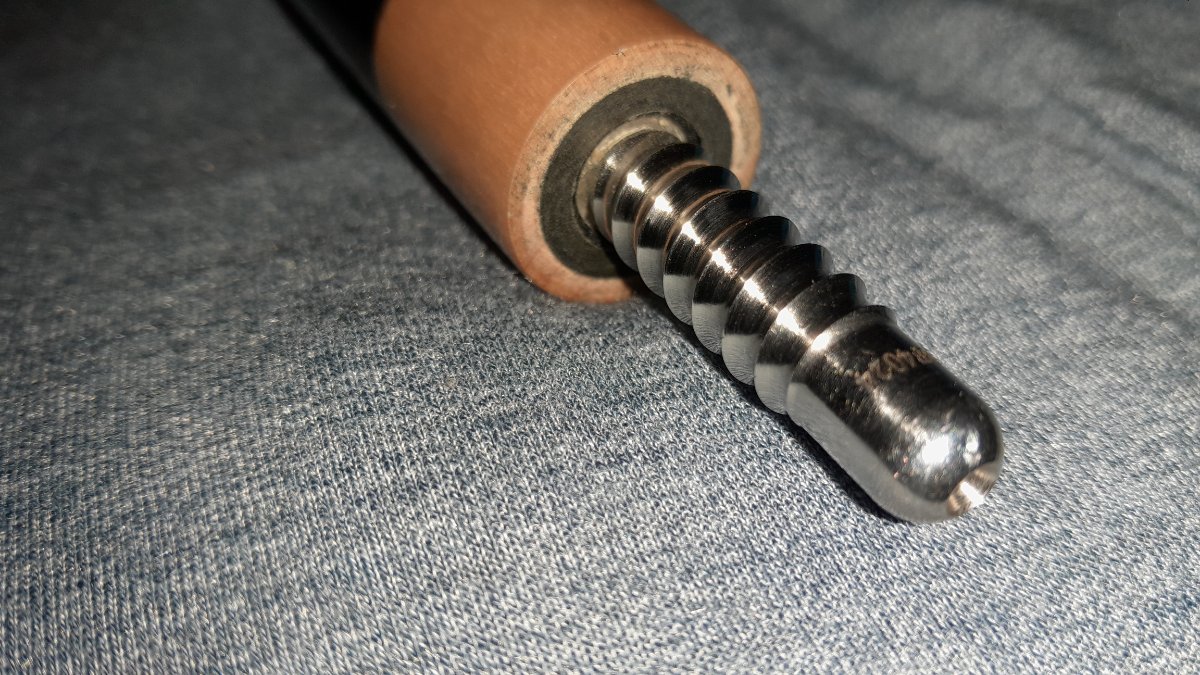
These are the (before) factory Predator phenolic/radial pins.
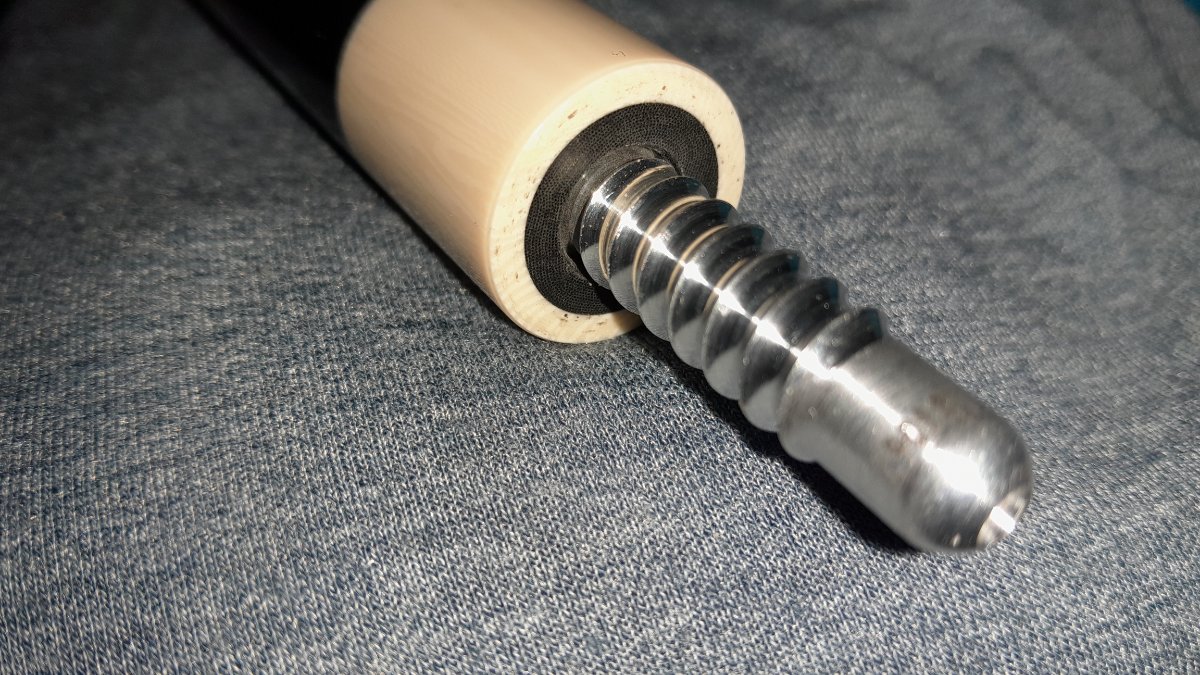
TS16_radial.jpg
LE3_radial.jpg


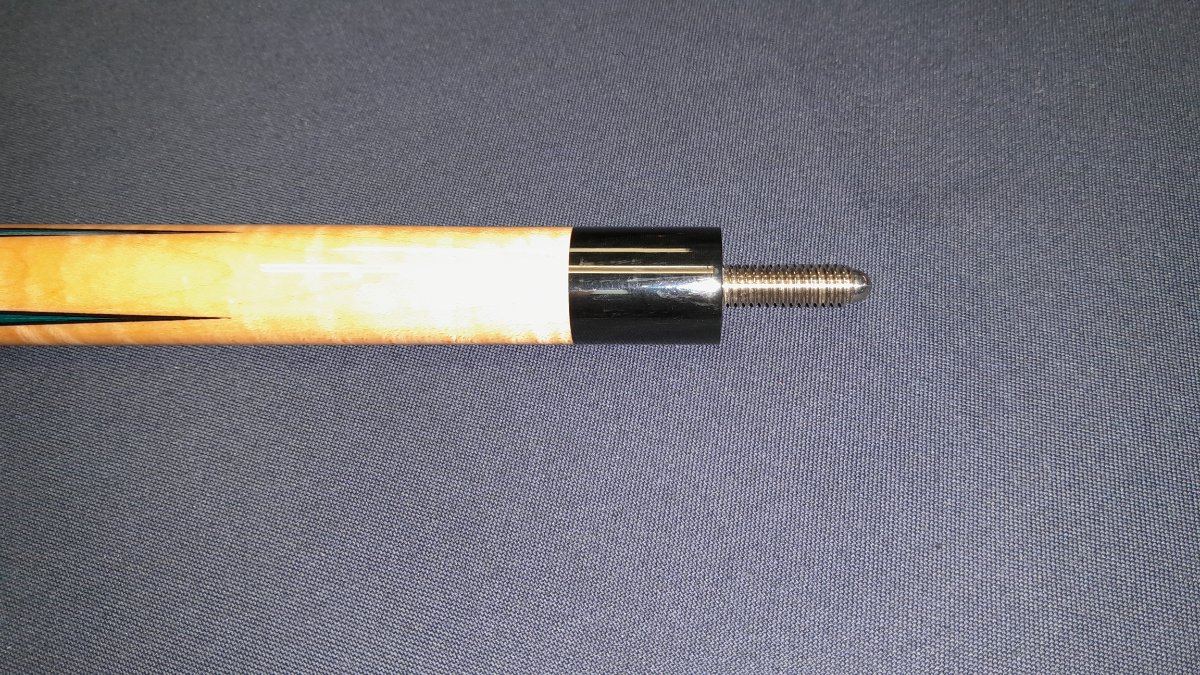
This is converted to 5/16x18 (after):
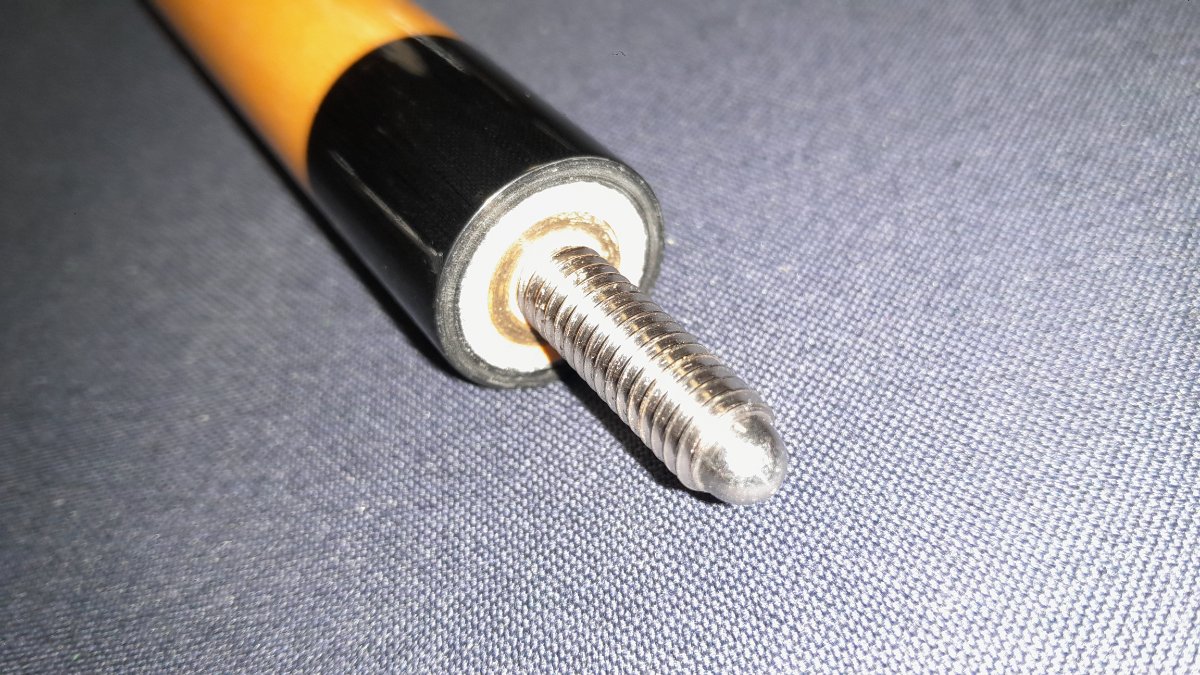
TS16_1.jpg

TS16_2.jpg
 
I've not yet removed a titanium pin, ,however i have removed a few others but my guess is a propane torch . You're not cutting the titanium your breaking the glue bond,
 
Yes, the point is the pin has to be heated directly. Cue repair guys I discussed it with have not done this on a Predator with this phenolic/titanium config and are concerned they cannot heat it enough to break down the adhesive and get the pin out, the heat may damage the finish, etc.

I would rather just have the same guy do it who already did the other one but it's not an option. He is good but not the caliber of the best custom cuemakers out there so I am sure there are many others out there who can do it just as well. Richard Hsu (who is local to me in NYC and did a lot of excellent work for me) is not available right now either.

There will have to be some finish work done afterwards anyway because the joint collar sits on the phelonic barrel so it just came off when the phenolic cylinder insert was removed and had to be sleeved back onto the new wood cylinder after that is put in to replace the phenolic. OK, so I paid for the extra work, not a big deal.

So basically I am just looking for someone to send the butt to who has either done this or is confident enough to be willing to do it. I realize it will cost more than a standard pin change, not a problem.
 
Yes, the point is the pin has to be heated directly. Cue repair guys I discussed it with have not done this on a Predator with this phenolic/titanium config and are concerned they cannot heat it enough to break down the adhesive and get the pin out, the heat may damage the finish, etc.

I would rather just have the same guy do it who already did the other one but it's not an option. He is good but not the caliber of the best custom cuemakers out there so I am sure there are many others out there who can do it just as well. Richard Hsu (who is local to me in NYC and did a lot of excellent work for me) is not available right now either.

There will have to be some finish work done afterwards anyway because the joint collar sits on the phelonic barrel so it just came off when the phenolic cylinder insert was removed and had to be sleeved back onto the new wood cylinder after that is put in to replace the phenolic. OK, so I paid for the extra work, not a big deal.

So basically I am just looking for someone to send the butt to who has either done this or is confident enough to be willing to do it. I realize it will cost more than a standard pin change, not a problem.

I take thst back after carefully looking at the pics i'm seeing the collar fastened to the phenolic that's a high dollar repair or whatever.If the heat separates the collar ir will have to be reattached and refinished im out i'm sure what anyone wold want to do this would be too much and negate the value of the cue
 
Last edited:
My question is more why you are buying Predator cues when you clearly want cues with 5/16-18.
Changing the pin is always a risky thing to do. How much heat it takes can vary wildly and some cues does not respond well to heat at all, Predator with their graphics and faux finishes is one of them. As others have mentioned a induction heater only works on magnetic materials, so a soldering iron or torch is the only way to apply heat. A soldering iron might not get hot enough to melt certain epoxies, so the torch is the only option left.
Worst case scenario, you have to drill the pin out, that also causes heat so it has to be done carefully and in steps to keep everything cool.
For all the above mentioned reasosn I always recommend changing the threads in the shaft, it's so much easier and less frought with problems.
 
I like exactly how it plays with 5/16x18. I know about the pin debate and don't want to get into that peripheral discussion. I can tell the difference. The phenolic insert and big radial pin change the quality in a way that I don't like.

I always played with Meuccis but I switched to the Cynergy shaft. The problems with almost all Meucci butts is the non-standard joint diameter never matches and they are too wide in the buttsleeve for my liking, like 33+ mm. Plus the build quality varies and they often warp.

I like the joint and buttsleeve diameters of the TS16 and I like how it plays with my 5/16x18 Cynergy shafts. It easily generates action, feels closer to wood, but I play better and more consisently with this combo.

I am not a big Predator fan in general, nor critic. I try different things and use what I like. I like the BKrush break cue. I like the Propel better for jumping. I like the Cynergy but don't especially like the Cuetec 3/8x14 steel capped joint. I can play with other equipment but settled on what I like best so I want a couple of cues that play exactly the same.

I am in NYC but don't mind shipping it (to USA). It can obviously be done, just a question of who is willing to do it : )
 
You can heat it up with an induction heater no problem, the same way copper coils in transformers induce magnetic fields by rapidly changing the electrical field, even though copper is not magnetic. The metal just needs to be electrically conductive, which titanium is. The type that mechanics use, that is a coil held in the hand, that goes around the pin, will do it for sure.

Or just a blow torch like mentioned, you just want to heat it super hot super fast, so that the least amount of heat gets transferred into the cue, sort of like soldering, where you want the pads to get hot fast, without melting the pcbs underneath.

Look up videos of induction heaters heating up brass, it's the same principle and there's plenty of those videos, since brass is more common.
 
You can heat it up with an induction heater no problem, the same way copper coils in transformers induce magnetic fields by rapidly changing the electrical field, even though copper is not magnetic. The metal just needs to be electrically conductive, which titanium is. The type that mechanics use, that is a coil held in the hand, that goes around the pin, will do it for sure.

Or just a blow torch like mentioned, you just want to heat it super hot super fast, so that the least amount of heat gets transferred into the cue, sort of like soldering, where you want the pads to get hot fast, without melting the pcbs underneath.

Look up videos of induction heaters heating up brass, it's the same principle and there's plenty of those videos, since brass is more common.
How hot do those coils get, Maybe i'm wrong but i'm thinking you need at at least 500 degrees . Which might melt all of the epoxy all the way to the collar. An expensive repair Mr Kim Bye , is right go forward not backwards. Do the shaft not the butt on this one, unless the cue maker or repair guy gets a fair price. A lot of work involved here. To the OP ask yourself im sure you remember what hsu charged you and he probably felt he didn't charge enough. So maybe he doesn't want to do that repair again, or was his price right for him and not you Like i said a lot more work involved here that will cost you.
 
Last edited:
Em induction *can heat titanium or aluminum or any electrically conducting metal (it is electro*magnetic interaction b/c it is a consequence of Maxwell's equations always relating time dependent E field to B field and vice versa, not b/c the material must have particular ferromagnetic properties).

Applied physics is not my field but there are additional effects that make this kind of heating *inefficient with a regular coil gun b/c they are suppressed in materials with high electrical resistivity and low magnetic permeability.

I have not tried it with titanium but with removing aluminum weight bolts I was absolutely unsuccussful. Steel bolts I removed easily in seconds. I am not worried about the cue. If you heat the bolt quickly (and stop) there is a thermal gradient, it should not damage the cue or the finish. So I am sure a skilled cueman can heat the pin directly and break down the adhesive to get it out.

The problem with induction was the induction gun itself got superheated much faster than the aluminum bolt so I had to stop. I use the Bolt Buster, it's a pretty good tool -- but not for this material. You can probably do it pretty well with induction but it requires more sophisticated machinery.

Anyway, it is pointless for me to tinker with attempting to remove the pin myself. I don't do this kind of work, would probably *f it up, and even if I could get the pin out I would need to send it to someone to do the rest of the job.

ETA -- He does not mind to do it again, but has too much backlog and would not be able to give me any time frame when he can get to it. If nobody else will do it I will probably just wait then..
 
Last edited:
They heat up the metals to the point they're glowing, so you're easily over 900°F pretty fast (depending on the unit power, size of the coils, and proximity to the piece you're heating, with solid units well over 1400°F in seconds pretty much). Mechanics basically use them just to remove nuts and bolts, so a single titanium pin in a cue is no challenge for a 1kW-1.5kW unit, I'm sure, even though I personally don't own one and just use a blow torch.

Most of the common epoxies start to get soft/fail just over 200°F, so if you heat it up to let's say 500-600°F, grab the longest pair of pliers you have for maximum torque on the pin (shear on the epoxy), and twist it hard, you'll be safe. I do recommend two people do it however, because it's better to give more torque on the pin with the pliers, rather than heat up the epoxy even more, as more heat soaks into the cue. When I pull pins, the cue is warm to the touch, nothing it wouldn't experience in a trunk of a car on a sunny day. And when I pull pins they never go out easily, which is why I get a pair of extra hands, but the pin is always out in less than a minute.

I will mention that I am not a cuemaker, but I thought I would share the info, as I think it will come in handy. I mostly just read here, and ask for advice here and there (but I do pull and replace pins pretty regularly for club members, for various reasons, no issues so far).

And regarding the weight bolt removal - was it inside the cue? The pin needs to be as close to the coils as possible for the best effect. Which is why I reckon you had issues with the weight bolt, would it be just the joint pin out in the open, and a tight fitting coil around it, I'm sure you'd have gotten it hot enough in seconds.

So I think anyone that changes pins on the regular should be able to do the job, just because it's titanium is nothing special in terms of the repair.
 
The configuration of the bolt was same. Just a bolt in under the bumper. I took out lots of glued steel bolts in Meuccis easily for myself and locals. Al bolt in a Huebler never even got warm.

I don't see why a person has to heat to temperature X (=900 or whatever). How hot it gets is a function of duration. I heated it just enough and stopped. The bolt is positioned well b/c it is in the center of the coil.

Someone got the Huebler bolt out by heating it with soldering iron but it was not easy.
 
Last edited:
The diameter of the coils should be as close to the diameter of the pin as possible (within reason), and if you have half an inch of wood (or air) between the coil and bolt, or not, plays a difference too.

You want to heat the pin to at least double over the epoxy's rated temperature, because then you keep the duration of the heat transfer from the pin to the wood of the cue to a minimum. (Edit: double meaning, it's better to get it to double the temp with a blow torch in 30 seconds, compared to taking 2 minutes to get to half of that temperature with something slower, like a soldering iron).

The longer you take to heat the pin, the worse it is for the cue. It's like trying to do a chip removal from a pcb that uses lead-free solder (higher temp. needed for it to get into a liquid state), so you're better off blasting it with high heat for a few seconds, then getting it off the pcb quickly, rather than heating it slowly, as the pcb will start to melt underneath from the longer duration of heating.

Also the heat transfer between a soldering iron to the pin is not ideal, as the soldering iron's lower mass means that the tip cools too much upon contact with the pin, unless you have a massive tip (which is ideal), so the duration of heating is needlessly prolonged, and therefore you're heating up the cue excessively.
 
Last edited:
The diameter of the coils should be as close to the diameter of the pin as possible (within reason), and if you have half an inch of wood (or air) between the coil and bolt, or not, plays a difference too.

You want to heat the pin to at least double over the epoxy's rated temperature, because then you keep the duration of the heat transfer from the pin to the wood of the cue to a minimum. (Edit: double meaning, it's better to get it to double the temp with a blow torch in 30 seconds, compared to taking 2 minutes to get to half of that temperature with something slower, like a soldering iron).

The longer you take to heat the pin, the worse it is for the cue. It's like trying to do a chip removal from a pcb that uses lead-free solder (higher temp. needed for it to get into a liquid state), so you're better off blasting it with high heat for a few seconds, then getting it off the pcb quickly, rather than heating it slowly, as the pcb will start to melt underneath from the longer duration of heating.

Also the heat transfer between a soldering iron to the pin is not ideal, as the soldering iron's lower mass means that the tip cools too much upon contact with the pin, unless you have a massive tip (which is ideal), so the duration of heating is needlessly prolonged, and therefore you're heating up the cue excessively.
in other words don't try this at home. You might burn the house down trying to remember what he said lmao
 
Industrial strength induction heaters might be able to generate more heat in non magnetic materials than the standard hand held induction heaters most of us use. I have tried Ti, Brass and pins like Predators own Uni'loc pins and no matter how long I use the indiction heater these won't get really warm, you will feel no radiating heat when holding your hand overt them and measured with my infrared heat gun then don't even get to 100c.
As for soldering irons, you're right, you loose a lot of that heat. What I do is drill a small hole in the pin, so I have the tip of the soldering iron in the pin and I just support it with the tailstock and let it sit, while monitoring the heat of the pin and cue. I'd say it's about a 30% success rate. The torch method is the most reliable and it obviously doesn't matter what metal the pin is., but you need to shield the face of the cue and constantly monitor the heat. If you have to heat up the pin until it's glowing, the forearm and finish is probably toast long before that. All you need is the epoxy to loosen slightly so you can back the pin out. Some epoxies like certain Hysol ones can have a really high melting temperature and you will never be able to remove the pin on those with any of the above mentioned methods. The same goes for super glue, that can be very difficult as well and you are left with the option of drilling the pin out, which asks a lot of your setup and the drills you use. Forget HSS. You need Cobalt or Carbide.
 
Yes, the guy who removed the aluminum Huebler weight bolt said he drilled a hole in it for more contact area and used a soldering iron. Using a torch unfortunately wasn't a good option b/c the bolt was recessed into the plastic buttplate (and held it down) so torching it would probably damage the plastic.

I will ask the guy who removed the Predator pin how he actually did it. He said it was more work and cost me more, but the work itself was not so difficult that he wouldn't do it again. Main problem he said was the collar came off b/c it was sitting on the phenolic insert and had to be sleeved back on at the end which required some finish work. Showed me photos on his phone. Clean work at the end, looks factory.

He didn't really complain about getting the pin out and the phenolic barrel. He said the phenolic was pretty long, like ~4 inches. He took the 2nd cue but hasn't been able to get to it. That's pretty common, a lot of the time I send my cues out and then don't see them for 6+ months. He is local and I just took it back for now to see if I could get someone else to do it.
 
Back
Top