So, I wanted to reply to this. I know I haven't posted here in a while but I do think of you guys often and fondly!
I've been working with Stephen Feeney (the inventor of SightRight) for the past couple of months as I train for the US Open. I'm a 650 FR so my aspirations have been modest - I want to bring the best version of myself to Frisco and see what happens. I'm now at a point where I can confidently say I've incorporated his lessons into my own routine and I feel exponentially improved. I don't know how that's going to translate when play begins but I feel ready for my most glorious two-and-out with the hopes that something more may be in store for me.
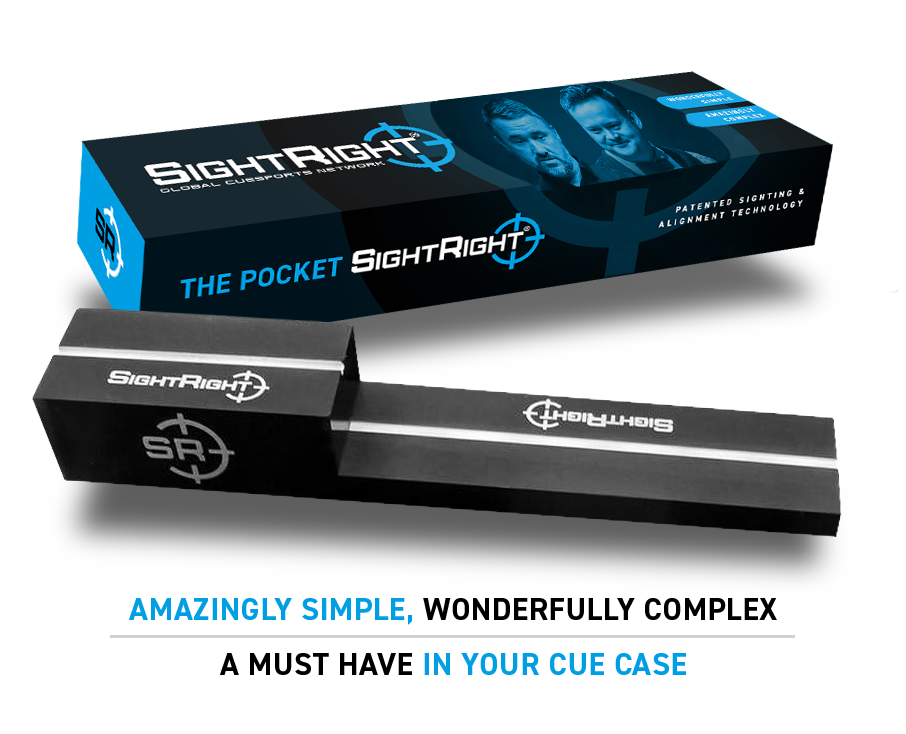
What is SightRight? It's more than just a tool. The tool is almost like an introduction - it's to show you what you're doing wrong but it doesn't show you how to do it right. That's where Feeney's videos and coaching come into play. In fact, the overwhelming majority of time I've spent with him did not involve the tool at all.
I know one person here was looking for a single sentence summary - Feeney reprograms your brain to properly see alignment. That's it. He's not using some sort of revolutionary idea or concept. Everything here is rooted in science. But, his methods seem to consistently get students to have a far better understanding of the shot line.
One person asked if you can learn SightRight if you only have one eye. I don't see why not but that's a great question to ask him. I'm sure this is a topic he's already addressed. From my own experiences and as mentioned, everyone still possesses a "SightRight Line". I don't see how one eye would hinder that but you should definitely email him and ask.
In my opinion, these are the resources Europe has used over the last few decades to surpass the United States in the Mosconi Cup. Prior to meeting Feeney, I never had any formal training in how to aim. I think most pool players learn the same way I did - by hitting a million balls until they started going in. Feeney's methods are more direct and leave you with the satisfaction of *knowing* rather than *believing* in what you're doing. He is an expert in teaching precision and I think he's Europe's best kept secret.