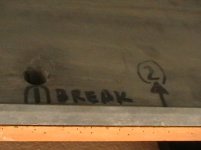
the "break" end

sausage

Banned
ok, i though that i had this figured out but now i'm not sure. the pic on the slate says "break" with an arrow. does that arrow mean, break toward this end or break AT this end? also, what's the difference? i don't see anything on the frame or slate that is different from end to end that could possibly make a difference on which end from which to break.

thanks!
 

Attachments

  • IMGA0988.jpg
    IMGA0988.jpg
    25.7 KB · Views: 333
ok, i though that i had this figured out but now i'm not sure. the pic on the slate says "break" with an arrow. does that arrow mean, break toward this end or break AT this end? also, what's the difference? i don't see anything on the frame or slate that is different from end to end that could possibly make a difference on which end from which to break.

thanks!

Looks to me like someone just marked the slate so if moved the table can be reassembled the same as when disassembled.
Other then that it makes no difference.
 
are you a 'mechanic'?

i've run into this before with a GC. there is a reason why they have one end designated "break" . on the base of my table there is a "break" end. i just need to know which end of the slate is the "break" end.
 
are you a 'mechanic'?

i've run into this before with a GC. there is a reason why they have one end designated "break" . on the base of my table there is a "break" end. i just need to know which end of the slate is the "break" end.

Unless you have a slate piece cutout for scoring wheels (this would typically be the rack or foot end) when you first install a table with 3 pieces of slate it makes no difference how the slates are setup as long as the middle piece is in the middle and the set line on the 3 pieces match up. The advice we give people looking to move a table is to mark the slates, frame, legs, supports and rails so they can reassemble the table exactly as it was when taken apart - and most probably why your table is marked.
 
he is a mechanic - but that doesnt really matter anyway.
you're asking a question that nobody but the person that wrote it can truly answer. its not like those are standard factory markings that every mechanic is familiar with. as a matter of fact, i dont know any mechanics that would use the term "break" or "break end". lol

if i had to guess based on your photo, i'd say that the slate marked "break" is intended to be at the head end of the table. in other words, match the slate that says break to the end of the frame that says break and you should be fine.

yes, the orientation of the slate to the frame makes a big difference, and the rails as well. both should be re-assembled in the exact same position that they were removed from.

although it makes no difference which end you actually break from.

p.s. the head end is where the rail badge should be, the foot end is where any scorekeepers would be.
 
thanks for the responses.... the slate was clearly marked from the factory and when i removed the rails, i numbered them. i did not however number the legs.

my gold crown had the slate cutout for the scoring wheels but this table does not so that's not an issue.

thanks again
tim
 
thanks for the responses.... the slate was clearly marked from the factory and when i removed the rails, i numbered them. i did not however number the legs.

my gold crown had the slate cutout for the scoring wheels but this table does not so that's not an issue.

thanks again
tim

Never heard or seen slate marked from the factory other then an OIS sticker. What's the table brand?

In any event placing the slates to match the existing slate screw holes is facilitated by marking the slates and frame so in this case depending on how you set it up you either hit the existing holes or make new ones. Either way it doesn't really matter as either end slate can go on either end of the table.

As a former table dealer I can tell you that slate comes in on pallets containing several sets where every 3 pieces is a set - and none are marked other then a chalk or ink line across the 3 pieces that helps assure they match. From the staple marks in your picture I'd conclude that whoever setup the table the first time is the person that marked it.
 
Unless you have a slate piece cutout for scoring wheels (this would typically be the rack or foot end) when you first install a table with 3 pieces of slate it makes no difference how the slates are setup as long as the middle piece is in the middle and the set line on the 3 pieces match up. The advice we give people looking to move a table is to mark the slates, frame, legs, supports and rails so they can reassemble the table exactly as it was when taken apart - and most probably why your table is marked.

true in most cases but many antique tables only go one way and are often marked Head especially when they are a ball return for obvious reasons.

Frames were also marked as well the same way, last thing you want is getting to the point where you put in gully pockets and find out the slate is going the wrong way.

DARTMAN is really referring to the new table era and agree with his points. Just wanted readers to know its dif on antique tables.
 
table

All the antiques I have came across have pined slates...there is not way to screw up the head from the foot unless you remove the pins...
-
Rob.M
 
Think you mean "some" antique tables. :thumbup:

You are correct however the SOP here is to follow the layout if marked from the factory. Have seen many times slate turned wrong in the middle. Anyways the real problem here is Rick that when your dealing with antiques, let's say drop pocket You would think either direction might work but it won't fit as well and you risk problems with tables as the frame screw holes are not consistent. You turn them around and now you may have holes not in the same area as before and perhaps the slope of the pockets not marrying nicely with the top side of the frame. You are correct but it's better to follow as a general rule. Plus then you may have problems with the irons fitting. Not even considering if the frame was square and if it was centered properly to begin with. Just potential problems which can be avoided IMO

So yes you only have to do it on some but you may end up with problems if you vary from the initial config,

Brunswick used a STD pattern but others did not. Even today tables have slate/frame holes not in alignment. So if you put them on the other way you will be adding new holes perhaps


On an antique. This could mean a guy pops a screw throughout the side. Lol.
 
Last edited:
...
So yes you only have to do it on some but you may end up with problems if you vary from the initial config, ...

Just saying that each antique should be dealt with individually. In some cases you can set them up either way and others
you can't - just depends on the table and what you have to work with. In any case when you have parts with stamped
numbers deviating isn't a good idea. Not disagreeing with you just commenting that some tables have more flexibility then others.
 
Back
Top