What's better about old phenolic?

JC

Coos Cues
Does it age like wine?

I fix cars for a living and the older the man made material gets everywhere the more it deteriorates. Things that used to be freight train tough crumble like egg shells.

As an aspiring cue maker I plan to use as little as possible. I don't trust it to age well. Further more, I find the phenolic with the visible weave to look funky, like something that's military surplus. I just don't get the attraction when there are so many beautiful and durable woods that can be used in place of it.

JC
 
Woods split from the inside following the grain.
Phenolics do not split unless really abused .
Woods shrink and expand from humidity/temp/weather conditions.
Phens don't.
The old brown phenolic were dark.
The old double black were really dark and did not tear out like the latest one.

Thank God for Warther's white melamine/ivory substitute these days .
I almost gave up on white material.
I still have a lot of the old dle black.
But, the brown ones are really limited now.
 
If you want to match a shaft to a vintage cue, you need to use the correct material. Sometimes you can't match it well because the material changes with age, but the old black doesn't really discolor over time.

It just has the black fibers instead of white.
 
Woods split from the inside following the grain.
Phenolics do not split unless really abused .
Woods shrink and expand from humidity/temp/weather conditions.
Phens don't.
The old brown phenolic were dark.
The old double black were really dark and did not tear out like the latest one.

Thank God for Warther's white melamine/ivory substitute these days .
I almost gave up on white material.
I still have a lot of the old dle black.
But, the brown ones are really limited now.

I also thought wood will not be strong enough for joints and butt caps but searching the archives here I found quite a few accomplished cue makers have used certain types of wood without any troubles. And quite a few woods on the list too. That's what got me thinking. I believe phenolic has almost 10 times the thermal expansion of most wood too and that doesn't seem to be an issue with cues kept reasonably well protected. It doesn't seem to matter what materials are used, cues that are abused don't fare well. They need a fairly narrow range of environment in which to exist is seems.

So what gives with the material? Why is it no longer made like it used to be? Shouldn't something like this advance with technology and not decline?


JC
 
So what gives with the material? Why is it no longer made like it used to be? Shouldn't something like this advance with technology and not decline?


JC

It absolutely has. Go call a composite manufacturer and give them your exact specifications, they will process it exactly as you want it. A lot of companies have an internal catalog of just about every time of composite out there, made to withstand heat, electricity, shock, to exact margins. Cosmetics, too, but it gets spendy.

Put on a diaper because you will shit yourself at the price.

The stuff cue makers buy is cheap. If you want a special order, prepare to spend anywhere from 10 to 1000 times as much.
 
The older Phenolics may be prettier than the some of the newer ones. That is the only advantage of the older stuff. The advantages of phenolic over woods are tremendous. The only advantage of wood over phenolic is the same as older and newer phenolics. It is the looks of wood that are the only advantage over phenolics for ring work or butt plates.

The reason most phenolic is not being made to the quality it used to be is the new people who bought out the old companies are either too lazy or too cost savings minded to do it right or just don't know how. I am not sure which is the case.
 
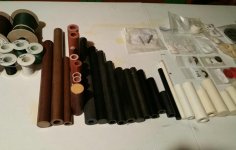
How do you tell old from new? Is this brown and black old or new?
 

Attachments

  • 20150928_190728-1.jpg
    20150928_190728-1.jpg
    88.8 KB · Views: 451
Back
Top