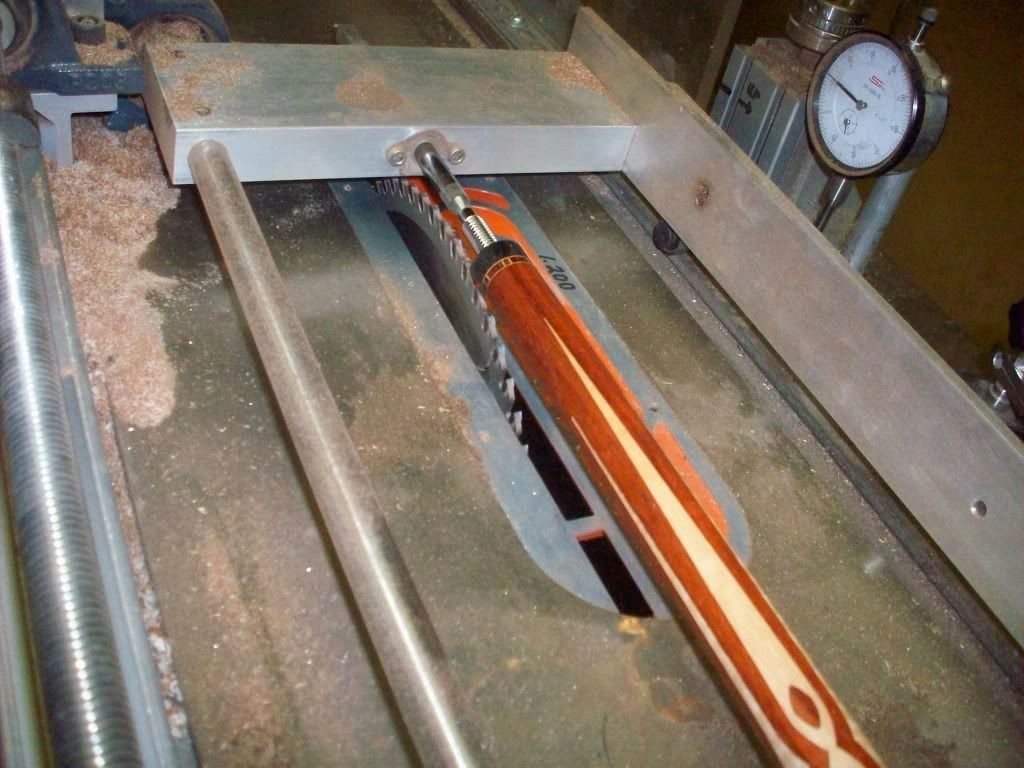
Hi,
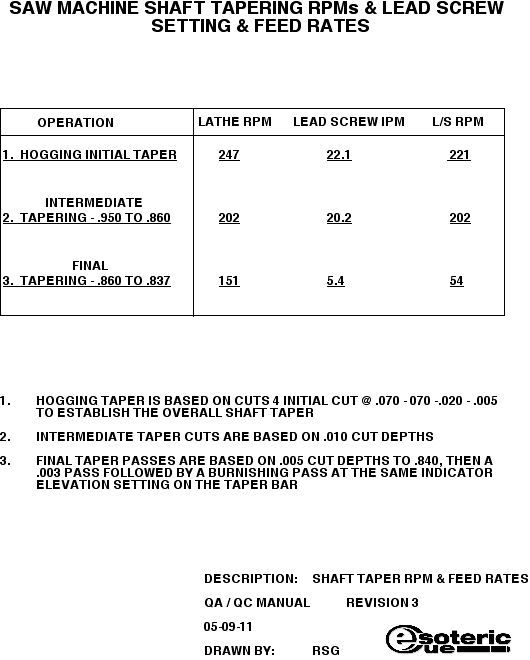
I recently posted my fruitful experience using a laser tachometer to calibrate my saw tapering machines. Below is a chart that may be useful to some that may not have DC motor vernier control and are using pulleys or gear ratios. With this data they can dial in the exacting gear ratios without having to extrapolate. (Please note that these numbers are based on flat ground saw blades and not a router set up.)
The linear travel rates are based on my lead screws that are 10 TPI.
Anyone who is interested in data for the butt tapering can PM me and I would be happy to share that info in the near future. At this time I do not have completed data as I have 13 cues in the queue that are at .020 over size awaiting inlays before final passes so I am at an impasse. I cut two plain janes to final dimension this weekend and got very good results but I need to do more sampling with different rpm to speed ratios before I can find the absolute optimum combo on the larger dia.
Note: The Hogging RMS finishes are not quite as perfect and have a little spiral to them as the lathe speeds need to be higher to attain the sufficient torque required to take a .070 pass based on the power curve ramping. I felt that this initial tapering process is not as critical and does not need to take as much time per pass as long as the wood is not burning or the motor is not stalling.
Rick G
Bludworth CNC tapering machine converted to a manual machine with half nut lead screw, E-Stop and DC Motors and controllers.
I recently posted my fruitful experience using a laser tachometer to calibrate my saw tapering machines. Below is a chart that may be useful to some that may not have DC motor vernier control and are using pulleys or gear ratios. With this data they can dial in the exacting gear ratios without having to extrapolate. (Please note that these numbers are based on flat ground saw blades and not a router set up.)
The linear travel rates are based on my lead screws that are 10 TPI.
Anyone who is interested in data for the butt tapering can PM me and I would be happy to share that info in the near future. At this time I do not have completed data as I have 13 cues in the queue that are at .020 over size awaiting inlays before final passes so I am at an impasse. I cut two plain janes to final dimension this weekend and got very good results but I need to do more sampling with different rpm to speed ratios before I can find the absolute optimum combo on the larger dia.
Note: The Hogging RMS finishes are not quite as perfect and have a little spiral to them as the lathe speeds need to be higher to attain the sufficient torque required to take a .070 pass based on the power curve ramping. I felt that this initial tapering process is not as critical and does not need to take as much time per pass as long as the wood is not burning or the motor is not stalling.
Rick G
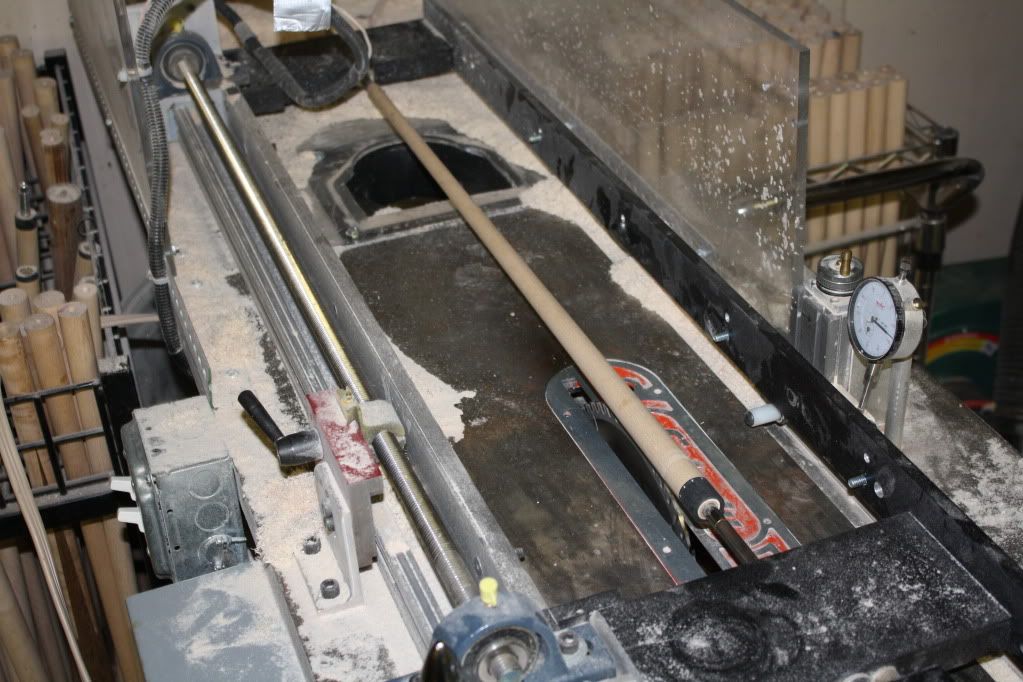
Bludworth CNC tapering machine converted to a manual machine with half nut lead screw, E-Stop and DC Motors and controllers.
Last edited: