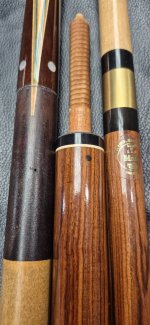
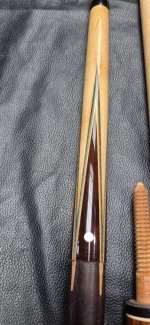
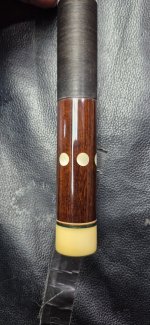
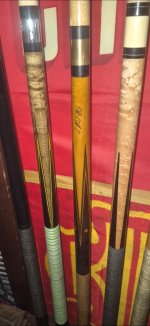
Old school shellac?? Wow!!! I didn't know anybody still used that. Thot it had all gone to polyurethane.I sprayed Amber tone shellac as a base that I used Nitro lacquer over that
Thanks for the info!!


Old school shellac?? Wow!!! I didn't know anybody still used that. Thot it had all gone to polyurethane.I sprayed Amber tone shellac as a base that I used Nitro lacquer over that

Shellac is still a great finish. Derived from beetles and fast dry time. Its even food safe!Old school shellac?? Wow!!! I didn't know anybody still used that. Thot it had all gone to polyurethane.
Thanks for the info!!

Yes, Adam made and makes good cues.Can't agree with the cue being low quality. The way it is constructed is pretty good. No metal was used in the joints. Very well made
That looks great. Can we see some close ups?Purchased the cue off ebay a while back . I wiped the dust off of it it cleaned up pretty nice
I heard 6 or 7 years ago that real shellac was no longer going to be produced. Bad info? Or did it come back?Shellac is still a great finish. Derived from beetles and fast dry time. Its even food safe!
Probably not as durable as the products used by today's cue makers but way safer to apply.
Due to modern finishes Shellac is on the decline but I doubt it ever goes away entirely.I heard 6 or 7 years ago that real shellac was no longer going to be produced. Bad info? Or did it come back?
Yes, I understand that.Due to modern finishes Shellac is on the decline but I doubt it ever goes away entirely.
It is a huge part of India's economy. The beetles actually excrete a natural polymer. A sustainable product that has been used for 3000 years. It takes a lot of labor to produce.
We used to use that on anything needed a shiny finish. Then polyurethane hit the market and we went that way. Don't know why really.Shellac is still a great finish. Derived from beetles and fast dry time. Its even food safe!
Probably not as durable as the products used by today's cue makers but way safer to apply.
Shellac mixed with everclear is far less toxic to spray than almost anything else looks great and is cheap and is among the best clear coat to use to protect wood from moisture according to a study done in the late 80s. And to top it off it is super easy to restoreOld school shellac?? Wow!!! I didn't know anybody still used that. Thot it had all gone to polyurethane.
Thanks for the info!!
Yes, Adam made and makes good cues.
That's why I put "cheap knock off" in quotes.
Incidentally I really dig my Adam Rambow.
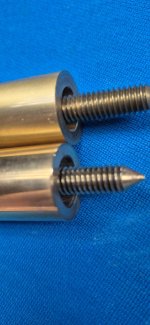
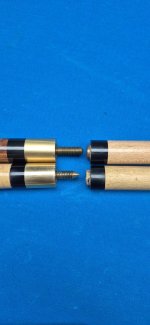
I am not sure what you meant "no metal used in the joints". It's obviously a full splice forearm. Many very high quality short splice cues use a metal screw in the A joint, including actual Balabushka cues. As you can see from your picture the handle joint is not in the typical A position but is under the wrap. This was a common construction type for Adam. Are you saying there is no metal screw in that joint and the one at the other end of the handle? Forgive me if I am wrong, but I was under the impression they used a metal screw in those joints.
This is an Adam R/A-10 with the same construction:
View attachment 881327
I say that because it appears to be a wood to wood joint that is pinned. I suppose they could have used aluminum or brass in the joint but they definitely didn't use any steel to weight the cue. I can run a magnet across the whole cue and nothing hits. I can't say that about all my cues. Early mail cues feature the same construction techniques.Yes, Adam made and makes good cues.
That's why I put "cheap knock off" in quotes.
Incidentally I really dig my Adam Rambow.
I am not sure what you meant "no metal used in the joints". It's obviously a full splice forearm. Many very high quality short splice cues use a metal screw in the A joint, including actual Balabushka cues. As you can see from your picture the handle joint is not in the typical A position but is under the wrap. This was a common construction type for Adam. Are you saying there is no metal screw in that joint and the one at the other end of the handle? Forgive me if I am wrong, but I was under the impression they used a metal screw in those joints.
This is an Adam R/A-10 with the same construction:
View attachment 881327
Yes, Adam made and makes good cues.
That's why I put "cheap knock off" in quotes.
Incidentally I really dig my Adam Rambow.
I am not sure what you meant "no metal used in the joints". It's obviously a full splice forearm. Many very high quality short splice cues use a metal screw in the A joint, including actual Balabushka cues. As you can see from your picture the handle joint is not in the typical A position but is under the wrap. This was a common construction type for Adam. Are you saying there is no metal screw in that joint and the one at the other end of the handle? Forgive me if I am wrong, but I was under the impression they used a metal screw in those joints.
This is an Adam R/A-10 with the same construction:
View attachment 881327
That looks great. Can we see some close ups?
You didn't need to replace the butt cap?
Not done with the cue yet. Going to Rambo it up with some water slide decals and some more lacquer. I honestly didn't even take the time to wet sand it out so still work in progress. It got a bit cold outside to be spraying lacquer in my garage but spring time's coming up and I'll have it finished up here in a few months. I didn't replace anything just sanded and sprayedThat looks great. Can we see some close ups?
You didn't need to replace the butt cap?
This is what it look like by first go around but I made some mistakes and had to send it all back downThat looks great. Can we see some close ups?
You didn't need to replace the butt cap?
I purchase all my stuff from shallac.net not sure where it comes fromI heard 6 or 7 years ago that real shellac was no longer going to be produced. Bad info? Or did it come back?
That Mali was designed to unscrew at that point and came with weights to put there, I believe brass. They had adjustable weights.I say that because it appears to be a wood to wood joint that is pinned. I suppose they could have used aluminum or brass in the joint but they definitely didn't use any steel to weight the cue. I can run a magnet across the whole cue and nothing hits. I can't say that about all my cues. Early mail cues feature the same construction techniques.
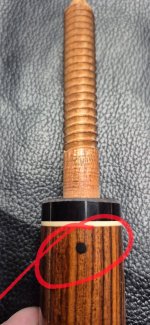
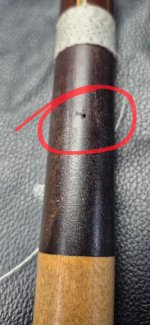
I'm not talking about the screw I'm talking about the pin that holds that piece of wood in place it looks like a black circleThat Mali was designed to unscrew at that point and came with weights to put there, I believe brass. They had adjustable weights.
Some are missing the weights.
That's a very different design. The Adam does not unscrew.
I suppose they could just be glue relief holes. But neither cue have any steel in them besides the butcap bolt. ultimately it's not worth cutting the cue in half to investigate any further. But both cues do feature similar construction techniquesThat Mali was designed to unscrew at that point and came with weights to put there, I believe brass. They had adjustable weights.
Some are missing the weights.
That's a very different design. The Adam does not unscrew.
I see what you mean.I suppose they could just be glue relief holes. But neither cue have any steel in them besides the butcap bolt. ultimately it's not worth cutting the cue in half to investigate any further. But both cues do feature similar construction techniques
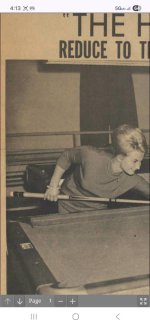
That would be awesome. It's hard telling if these are the same cues but here's a picture from the front page of a 1966 magazine.I see what you mean.
It leaves me curious. I had always just assumed there was a metal screw in there.
Maybe I'll xray mine. If I do, I'll post it.
One things that I always threw me off all three blue books state the rambow cue has four mother Pearl dots in the bottom. Mine in the majority of others have six. It also says that cue was named after a car. Because I love Top Gear I know there was a car produced named RambowI see what you mean.
It leaves me curious. I had always just assumed there was a metal screw in there.
Maybe I'll xray mine. If I do, I'll post it.