Aim Visualization Techniques

dr_dave

Instructional Author
Gold Member
Silver Member
FYI, I just posted a new video that discusses and demonstrates various visualization techniques that can help you improve your aiming skills in pool, allowing you to pocket balls more effectively and more consistently. Check it out:


Contents:
0:00 - Intro
1:06 - Contact Point
2:22 - Ghost Ball
3:58 - Parallel Lines
5:44 - Cue Visualization
7:38 - Double Distance
8:48 - Ball Overlap
11:28 - Ball-Hit Fraction
14:20 - More Info

Supporting Resources:
As always, I look forward to your feedback, comments, questions, complaints, and requests.

Enjoy!
 
Skimming the video now. In the parallel lines section, one added thing I do is extend the contact line through both balls. This yields what I call reciprocal sections and figuratively, the actual "cut".
 
Skimming the video now. In the parallel lines section, one added thing I do is extend the contact line through both balls. This yields what I call reciprocal sections and figuratively, the actual "cut".
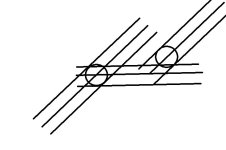
I used to use a technique I called railroad tracking, where I would visualize three lines going through the ob to the pocket, one through the center of the ball and one on either edge, then three parallel lines through the cueball. Then three lines intersecting the two sets of lines. It's EXTREMELY accurate but also mentally taxing to do for hours at a time.
 
I used to use a technique I called railroad tracking, where I would visualize three lines going through the ob to the pocket, one through the center of the ball and one on either edge, then three parallel lines through the cueball. Then three lines intersecting the two sets of lines. It's EXTREMELY accurate but also mentally taxing to do for hours at a time.
I suppose you could push the envelope on enduring that too. To me one should embrace one's method - as the path, so to speak. Beats all the pressure they want you to crumple under.

Can you diagram that triple cross (:ROFLMAO:) method? Anything to look for in the grid?
 
I suppose you could push the envelope on enduring that too. To me one should embrace one's method - as the path, so to speak. Beats all the pressure they want you to crumple under.

Can you diagram that triple cross (:ROFLMAO:) method? Anything to look for in the grid?

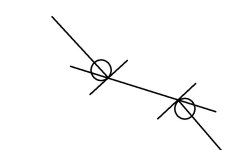
sure, attached is a diagram. It's still all based on parallel shift cp to cp alignment. Another method I used, I called the T joining method. Which utilizes the center ball parallel lines with the tangent line attached and you just visualize an intersecting line between the T joints.


The ideal is to do this in practice and get to where you can make every shot when you follow your preshot and aiming methods and once you've made enough balls in enough differing conditions, you can just visualize the entire shot and just know where to aim.
 

Attachments

  • rrTracking.jpg
    rrTracking.jpg
    30.2 KB · Views: 17
  • T_join.jpg
    T_join.jpg
    17.9 KB · Views: 18
Last edited:
I used to use a technique I called railroad tracking, where I would visualize three lines going through the ob to the pocket, one through the center of the ball and one on either edge, then three parallel lines through the cueball. Then three lines intersecting the two sets of lines. It's EXTREMELY accurate but also mentally taxing to do for hours at a time.

Sort of like this, from the Contact-Point-to-Contact-Point and Parallel-Lines Aiming Systems resource page:

aiming_parallel_lines_aiming_system_more_lines-1.png
 
I'm thinking the "sections" are the overlapped edges, "cut" at the contact point between them? (y)

pj
chgo
Right. This was one of my first attempts at CPG. The way I looked at it (and showed off to friends lol) was bisecting the OB with the pocket line and then paralleling that to the CB. That provided the contact points and shot direction/cut sections. In the shooting position the section line becomes vertical and very "distinctly" partitions the cut section.
 
sure, attached is a diagram. It's still all based on parallel shift cp to cp alignment. Another method I used, I called the T joining method. Which utilizes the center ball parallel lines with the tangent line attached and you just visualize an intersecting line between the T joints.


The ideal is to do this in practice and get to where you can make every shot when you follow your preshot and aiming methods and once you've made enough balls in enough differing conditions, you can just visualize the entire shot and just know where to aim.
The tangent depiction is good for any shot. I set those in my mind with the edge of my hand or just a couple fingers.

The triple lines start generating an interference pattern. :ROFLMAO:
 
FYI, I just posted a new video that discusses and demonstrates various visualization techniques that can help you improve your aiming skills in pool, allowing you to pocket balls more effectively and more consistently. Check it out:


Contents:
0:00 - Intro
1:06 - Contact Point
2:22 - Ghost Ball
3:58 - Parallel Lines
5:44 - Cue Visualization
7:38 - Double Distance
8:48 - Ball Overlap
11:28 - Ball-Hit Fraction
14:20 - More Info

Supporting Resources:
As always, I look forward to your feedback, comments, questions, complaints, and requests.

Enjoy!
You determine the CB contact point by drawing a line thru the CB to the pocket Dave. This will show you exactly where the CB contact point should strike the OB contact point. No visualization or estimation required.
 
You determine the CB contact point by drawing a line thru the CB to the pocket Dave. This will show you exactly where the CB contact point should strike the OB contact point. No visualization or estimation required.

That's not true. See the diagram in the video and on the contact-point-to-contact-point resource page. The line through the required contact point on the CB is parallel to the OB line to the pocket. Therefore, the line through the center of the CB and the CB contact point can't possible point at the pocket (unless the shot is straight). Now if the CB is close to the OB and both balls are far from the pocket and the cut angle is small, the line through the center of the CB to the pocket will be close to the required contact point on the CB.
 
The line through the required contact point on the CB is parallel to the OB line to the pocket.
To visualize this, think of the cue ball frozen to the object ball as it makes contact to make the shot (the ghost ball position) - the line from the pocket passes through both balls’ centers and contact points at the same angle (parallel). The line to the pocket from the cue ball’s starting position would be different.

pj
chgo
 
To visualize this, think of the cue ball frozen to the object ball as it makes contact to make the shot (the ghost ball position) - the line from the pocket passes through both balls’ centers and contact points at the same angle (parallel). The line to the pocket from the cue ball’s starting position would be different.

pj
chgo
Yeah another method I tinkered with was visualizing the outside line from the pocket along the outside edge of the OB, and then the outside of the cb in line with the shot and then visualizing the cb staying within the boundaries of those two lines intersecting and the cb touching the ob at the contact points.

Any more I just see the shot. Sometimes I'll visualize the CB to the OB to the pocket, back to the OB back to the cb and then look at the centerline the first few inches on the shot line in front of the cb as I step into and get down on the shot, but for the most part I can just step into the shot and be on the correct line and see where to aim from millions of pocketed balls over the years.
 
To visualize this, think of the cue ball frozen to the object ball as it makes contact to make the shot (the ghost ball position) - the line from the pocket passes through both balls’ centers and contact points at the same angle (parallel). The line to the pocket from the cue ball’s starting position would be different.

pj
chgo
A simple visualization exercise I used to do is freeze 2 balls anywhere on the table, make note of where the line of centers and tangents point, then walk around the table observing as much as you can about the "look" of the shot.
Variations include not making note and guessing where the lines go, or lining up the balls dead to a pocket to observe what the intersection actually looks like in 360 3D.
 
Last edited:
That's not true. See the diagram in the video and on the contact-point-to-contact-point resource page. The line through the required contact point on the CB is parallel to the OB line to the pocket. Therefore, the line through the center of the CB and the CB contact point can't possible point at the pocket (unless the shot is straight). Now if the CB is close to the OB and both balls are far from the pocket and the cut angle is small, the line through the center of the CB to the pocket will be close to the required contact point on the CB.
I guess we have to disagree. Reading thru your description was simply confusing about centers and parallels. 2 spots derived from 2 lines. Put them together and ball falls. Period.
If you'd like to pm me, I can show you exactly what I'm talking about and it does work bcuz I've been using it for 40 years. It's simple.
I'm not going to get into another aiming discussion in the open forum again.
Learned my lesson on that the hard way. Just trying to help is all.
 
I guess we have to disagree. Reading thru your description was simply confusing about centers and parallels. 2 spots derived from 2 lines. Put them together and ball falls. Period.
If you'd like to pm me, I can show you exactly what I'm talking about and it does work bcuz I've been using it for 40 years. It's simple.
I'm not going to get into another aiming discussion in the open forum again.
Learned my lesson on that the hard way. Just trying to help is all.
Too late. :p

I wont argue what you're doing works. It just can't be point to point aim. P2P aim is like carpentry and provable in 3 dimensions.
Consider that the energy transfer takes place along the line of centers. This is the meeting of the contacts. This is always 180 degrees. Aiming directly at the object ball contact point ignores and defies the location of "the other contact point" the one on the cue ball. This will form a different line of centers involving different contacts entirely.

Take an 85 degree cut. If you aim directly at the contact point, you have roughly a half ball hit not 85 degrees right?

Your turn.
 
FYI, I just posted a new video that discusses and demonstrates various visualization techniques that can help you improve your aiming skills in pool, allowing you to pocket balls more effectively and more consistently. Check it out:
I can see how some or all of these techniques might help someone figure out where they should be aiming.

But my initial thought was that using methods like these would be inconsistent with good play because they require the player to employ the wrong part of the mind: an expert performing a complex motor task does so in the main using subconscious, autonomous, control systems. If the conscious mind starts to get involved (in pool for example, the player consciously thinking about what his hand or eyes are be doing), then performance tends to suffer.

But thinking about it, this may not be right. Consciously thinking about some aiming rule might actually be helpful, especially under pressure, since it might keep conscious mind occupied reducing the chance of it interfering with stroke execution.

I would be genuinely interested to find out whether there are any good players who use anything like this when they play. I don't think that I have met any - at least I don't recall it ever coming up in conversation.
 
I can’t speak for others, but to me, I utilize visualization quite differently than in the ideas proposed in Dr. Dave’s videos here. Clearly he is a large asset to the pool and billiards community in his research of all things cue sports and his information on all subjects is extraordinarily valuable and useful to those that love this sport.

While I feel the info posted here is useful to new players and those just starting their journey in this beautiful sport. I’m of the belief that after you reach a certain amount of table time, amount of balls hit, etc. That once this point is reached, any additional discussion regarding aiming is just like spinning your wheels in the mud.

In my years of lurking here I witnessed the flame wars that occurred over this subject, finally resulting in an actual sub forum specifically dedicated to those that continue to chase the “aiming point unicorn”.

I think I heard it put best by Jeremy Jones, “when seasoned players miss a ball, you never hear them say I really aimed that badly”. His reasoning being that once a certain level of proficiency is reached, everyone knows how to aim correctly. Yet even with this knowledge of the correct aiming point, many go years, sometimes their entire lives, never really reaching the level of proficiency of play that they aspire to. That a good portion of these people think it’s about “their aim” and chase system after system looking for the “aiming unicorn” that will magically transform their game. There are others that chase every “new and improved” cue, shaft, tip, chalk, etc. in the belief that their plateaued game is rooted in their equipment. The real truth being that it is NOT their aim or equipment that is at the root of the stagnation of their progress.

It’s often numerous things, flaws in mechanics, some ever so subtle that they are nearly undetectable without consultation with a qualified instructor that utilizes video in their diagnostic and teaching process. Sometimes even with that and true problems being identified, some still struggle to correct these flaws or keep them corrected consistently.

Visualization is extraordinarily important and necessary to achieve elite level of play and consistency. I was fortunate that over 30 years ago, I made the acquaintance of someone that gave me a unique take on visualization. I was a shortstop before I met him, in less than a year I’d left that plateau behind and reached a far better level of play.

He expressed that it was about finding a way to “get out of my own way”, to achieve flow state on demand. He said this could all be achieved through a particular manner of visualizing. He said our brains are really no different than a computer. That anything that we do, especially things we spend a LOT of time doing, form “files” in our unconscious mind, very detailed files. What speed, spin, cue tip position, type of stroke etc. produces in the myriad of combinations of all the above. What shots “feel like”, the different “sounds” of what the cue striking the ball is in different circumstances. That after reaching a certain level of play, that we form “files” of each of these shots that are stored in our unconscious. That it’s a matter of understanding “how to retrieve these files”, because if we can do that consistently, no requisite thought is necessary for us to play at our peak performance level. That the way to be able to do this IS visualization. Not of aiming point, cue tip position on the cue ball, etc. That it is developing a consistent routine where we “see” the shot we desire to execute, every detail of it. From the moment we drop on the ball, the cue striking the cueball, the cue ball striking the object ball, the resultant path of the object ball not only being pocketed, but in the precise area of the pocket that results in the cueball’s divergent path off the object ball, seeing the cue ball travel that entire path until it comes to a halt precisely where we want it to be on the correct side of the next object ball to provide the angle to get on the next object ball after that. To see it in it’s entirety, to feel it in your hands. Once you have “seen it, felt it” in its entirety, to lastly drop on the ball and TRUST it, fully committed to the shot snd get out of your own way and let your unconscious do what it does, execute it without conscious thought. Powerful stuff
 
....

I think I heard it put best by Jeremy Jones, “when seasoned players miss a ball, you never hear them say I really aimed that badly”. His reasoning being that once a certain level of proficiency is reached, everyone knows how to aim correctly. Yet even with this knowledge of the correct aiming point, many go years, sometimes their entire lives, never really reaching the level of proficiency of play that they aspire to. That a good portion of these people think it’s about “their aim” and chase system after system looking for the “aiming unicorn” that will magically transform their game. There are others that chase every “new and improved” cue, shaft, tip, chalk, etc. in the belief that their plateaued game is rooted in their equipment. The real truth being that it is NOT their aim or equipment that is at the root of the stagnation of their progress.

...

Visualization is extraordinarily important and necessary to achieve elite level of play and consistency. I was fortunate that over 30 years ago, I made the acquaintance of someone that gave me a unique take on visualization. I was a shortstop before I met him, in less than a year I’d left that plateau behind and reached a far better level of play.

He expressed that it was about finding a way to “get out of my own way”, to achieve flow state on demand. He said this could all be achieved through a particular manner of visualizing. He said our brains are really no different than a computer. That anything that we do, especially things we spend a LOT of time doing, form “files” in our unconscious mind, very detailed files. What speed, spin, cue tip position, type of stroke etc. produces in the myriad of combinations of all the above. What shots “feel like”, the different “sounds” of what the cue striking the ball is in different circumstances. That after reaching a certain level of play, that we form “files” of each of these shots that are stored in our unconscious. That it’s a matter of understanding “how to retrieve these files”, because if we can do that consistently, no requisite thought is necessary for us to play at our peak performance level. That the way to be able to do this IS visualization. Not of aiming point, cue tip position on the cue ball, etc. That it is developing a consistent routine where we “see” the shot we desire to execute, every detail of it. From the moment we drop on the ball, the cue striking the cueball, the cue ball striking the object ball, the resultant path of the object ball not only being pocketed, but in the precise area of the pocket that results in the cueball’s divergent path off the object ball, seeing the cue ball travel that entire path until it comes to a halt precisely where we want it to be on the correct side of the next object ball to provide the angle to get on the next object ball after that. To see it in it’s entirety, to feel it in your hands. Once you have “seen it, felt it” in its entirety, to lastly drop on the ball and TRUST it, fully committed to the shot snd get out of your own way and let your unconscious do what it does, execute it without conscious thought. Powerful stuff
Excellent post. In my opinion, the importance of the mental side of things cannot be overemphasized. As someone probably never said, 'pool is 90% mental, and the rest of it is just in the mind'.

I read a post recently where the OP said that he was playing better than ever but was worried that his arm was not in the right position; I groaned inwardly, but did not respond. It just seems such an uphill struggle trying to convince people that they are looking for the answers in the wrong places. I suspect that a large part of the problem is that what goes on inside the mind is hidden and rather nebulous; often we do not have the words to describe it, and this impacts our ability to grasp and understand it. So it just happens in the background, largely ignored

I think that there are 2 areas in which the mental side is key.

One is in using the right part of the mind, not letting the wrong part interfere. This is the 'getting out of your own way' piece. This is crucial to learning pool: If you do not learn how to do this, you will not learn how to play well.

The other part comes to the fore when you have learned to play to a high standard. That is, how do you perform somewhere near your best consistently, particularly (but not uniquely) when feeling pressure. This is all about the discipline of concentration and focus (again using the right part of the mind), and is especially salient during the early parts of the shot, before you have got down into your shooting position. This early stage is, I believe, where you are most vulnerable to concentration lapses which will then have an impact later on in the routine when you actually deliver the cue.
 
  • Like
Reactions: bbb
Back
Top