
You are using an out of date browser. It may not display this or other websites correctly.
You should upgrade or use an alternative browser.
You should upgrade or use an alternative browser.
Can you detect a warp in a cue by just...
- Thread starter Cuedog
- Start date

i know someone who can, and i'm trying to learn it. being careul and slowly rotating the cue in front of yours would give you enough hint if the cue is warp or not.

 .
.
Well if it's less than a sixteenth of an inch over a couple feet, it might be hard to see depending on the taper, but any more than that is pretty easy. It probably helps to be tall enough to stand over the cue and sight down it while twirling it from the ferrule without too much angle.


mayamon said:By placing the cue under my eye and looking down the shaft (think aiming w/ a rifle) spotting a warped cue isn't too difficult. I won't say it's 100% but much more noticable to me than rolling it or any other method.
 You are trying to tell us that siting a cue for straightness is more acurate then rolling it. I don't think so!
 Actually if you spin not roll the shaft alone on a flat hard surface such as the rail skirt or kitchen table, I find is the best method. Then assemble the cue and roll it to final check.

rackem said:
.
the thing is, rackem, he says it's more obvious to HIM. maybe he sees something, say, a change in the light refelction on the butt or something else. btw,,,rolling a cue isn't definitive either.
Oh I know sitghing can be done. But I'm talking about what is easier for all. Believe me in my 9+ years of selling imported cues and 5 years of working the Vegas national tournaments I think I have seen a cue checked every way possible.bruin70 said:the thing is, rackem, he says it's more obvious to HIM. maybe he sees something, say, a change in the light refelction on the butt or something else. btw,,,rolling a cue isn't definitive either.
 Nothing beats spinning on a flat surface at eye level. Except maybe a lathe.
Last edited:


I have been asked to clearify.
The bottom line is, if you sight down a cue and can not tell, everytime you do so, that the cue is straight, then your answer is "Sometimes".
If you can tell every time you sight down a cue, then you answer is "Yes".
If you do not use this method because you cannot tell either way by doing so, then your answer should be "No".
Thanks again.
Gene
The bottom line is, if you sight down a cue and can not tell, everytime you do so, that the cue is straight, then your answer is "Sometimes".
If you can tell every time you sight down a cue, then you answer is "Yes".
If you do not use this method because you cannot tell either way by doing so, then your answer should be "No".
Thanks again.
Gene

Cuedog said:Can you detect a warp in a cue by just putting it together and sighting down it? In other words... can you take a cue in your hands and place it in front of your eye(s) and tell if it is warped or not?
Here's how you can tell. Assemble the cue and sight down it, slowly turning it, keeping the tip end in sight like a gun barrel. You will see if the shaft the forearm or the joint is even the slightest bit off. You will not see if the handle or butt sleeve is warped.
However, you cannot necessarily tell if it's the shaft, forearm, or the joint. Joints can sometimes be re-surfaced to square with the cue. Sometimes pins get bent over, etc.
Here's a good technique to quickly check straightness and soundness of a cue:
Straightness:
1) Assemble the cue, gunsight down it and turn it. If the cue sights warped, determine what is warped with the following additional checks.
2) get to eye level and place the shaft of the cue on a flat surface and slowly turn it. If the gap between the shaft and the surface remains constant, the shaft is straight (and round).
3) repeat with the handle. If there is a gap, check the same way. If there is no gap, look for lifting of the joint or butt off the surface. Any lifting and falling will be evidence of warpage.
If the cue's parts are straight, but the cue sights warped, chances are the joint needs to be trued. The way I check for this is to lightly screw the cue together until the joint lightly touches but sights straight. If you can turn it and it stays straight, but sights warped when tight, then the surfaces need to be squared.
Soundness:
Take the cue apart and let each end of the shaft and butt tap lightly and freely against the table. If there are any loose parts or broken pieces internally, loose or broken ferrules or tenons, you will hear it.
Chris
Last edited:
TATE said:Here's how you can tell. Assemble the cue and sight down it, slowly turning it, keeping the tip end in sight like a gun barrel. You will see if the shaft the forearm or the joint is even the slightest bit off. You will not see if the handle or butt sleeve is warped.
However, you cannot necessarily tell if it's the shaft, forearm, or the joint. Joints can sometimes be re-surfaced to square with the cue. Sometimes pins get bent over, etc.
Here's a good technique to quickly check straightness and soundness of a cue:
Straightness:
1) Assemble the cue, gunsight down it and turn it. If the cue sights warped, determine what is warped with the following additional checks.
2) get to eye level and place the shaft of the cue on a flat surface and slowly turn it. If the gap between the shaft and the surface remains constant, the shaft is straight (and round).
3) repeat with the handle. If there is a gap, check the same way. If there is no gap, look for lifting of the joint or butt off the surface. Any lifting and falling will be evidence of warpage.
If the cue's parts are straight, but the cue sights warped, chances are the joint needs to be trued. The way I check for this is to lightly screw the cue together until the joint lightly touches but sights straight. If you can turn it and it stays straight, but sights warped when tight, then the surfaces need to be squared.
Soundness:
Take the cue apart and let each end of the shaft and butt tap lightly and freely against the table. If there are any loose parts or broken pieces internally, loose or broken ferrules or tenons, you will hear it.
Chris
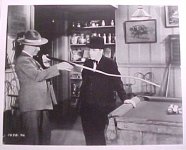
that's exactly what w.c. was doing.
bruin70 said:that's exactly what w.c. was doing.
I can imagine him teaching pool and saying "it's all in the wrist, son, all in the wrist".
I saw that movie not long ago - he's so damn funny. He had perfect timing.
Chris
At the time of this post, there were almost 400 views and only 50 selections. Not too sure why more didn't make a selection. I made the poll so that no one would know your selection just in case some would feel shy for some reason.
I also understand that some who viewed, never even thought to sight down a cue. In that case, they could not vote. I'm just looking for a little more participation and a greater representation of posters.
Thank you to those that have taken and will take the time to select an answer and even to those that took the time to read this. I hope that you have gotten something from this thread.
Gene
I also understand that some who viewed, never even thought to sight down a cue. In that case, they could not vote. I'm just looking for a little more participation and a greater representation of posters.
Thank you to those that have taken and will take the time to select an answer and even to those that took the time to read this. I hope that you have gotten something from this thread.
Gene
