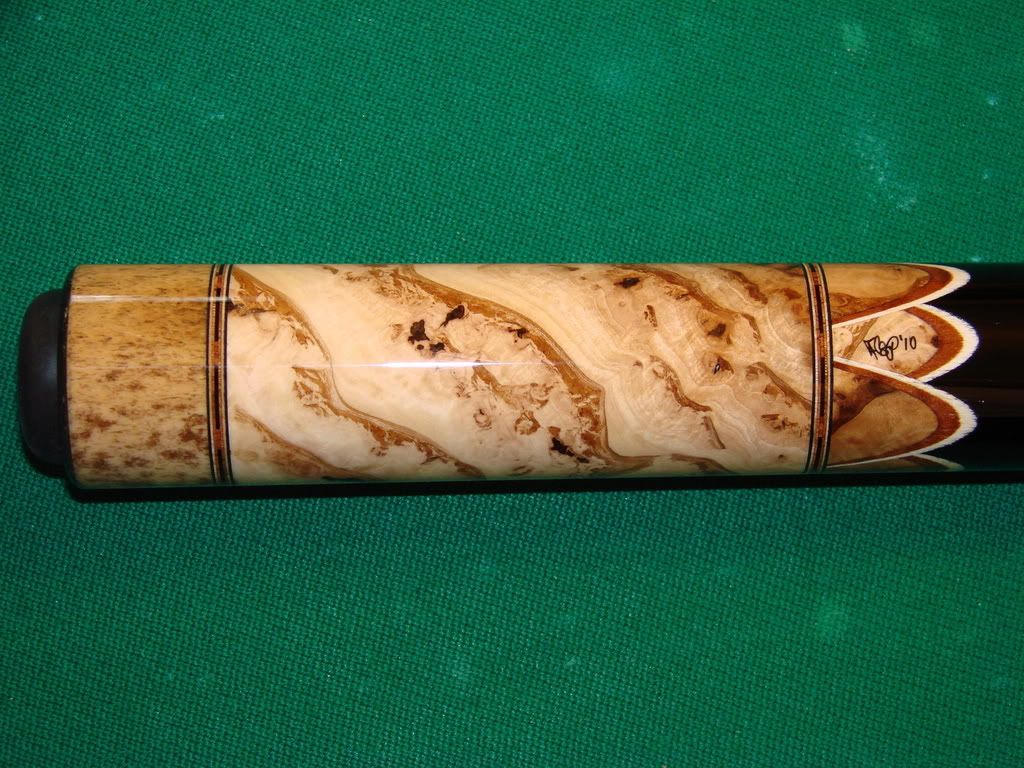
Ryan is correct. Those woods are not available in figure and color and tone that are preferred for cues. You can't find it. It exists but it's not commercially harvested. Only specialty mills offer it and then it's on the basis of availability. They sell what they have when they have it. I cut my own stuff and process it. It allows me to use wood in cues folks have never seen nor even knew existed. And it all grows right here in the good ole USA, but isn't commercially available. So unless you get lucky & find a mill who specializes in crazy woods, you pretty much have to get it yourself. Otherwise, you conform to the same mold as everybody else & use what you can buy from the cue & luthier exotic wood suppliers.
Here's a few photos for thought:
Mountain maple burl log
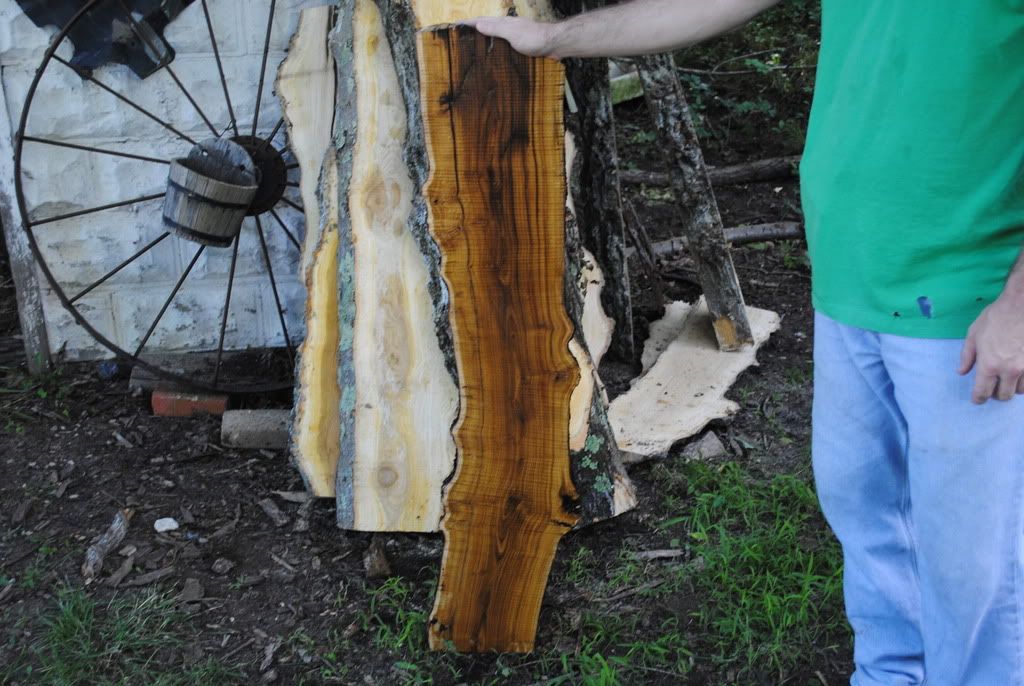
200yr old cemetery cedar, been dead decades before cutting
Hickory burl I harvested 3 years ago
White oak burl I harvested & slab milled earlier this year, drying right now
Redbud I harvested early summer, drying now
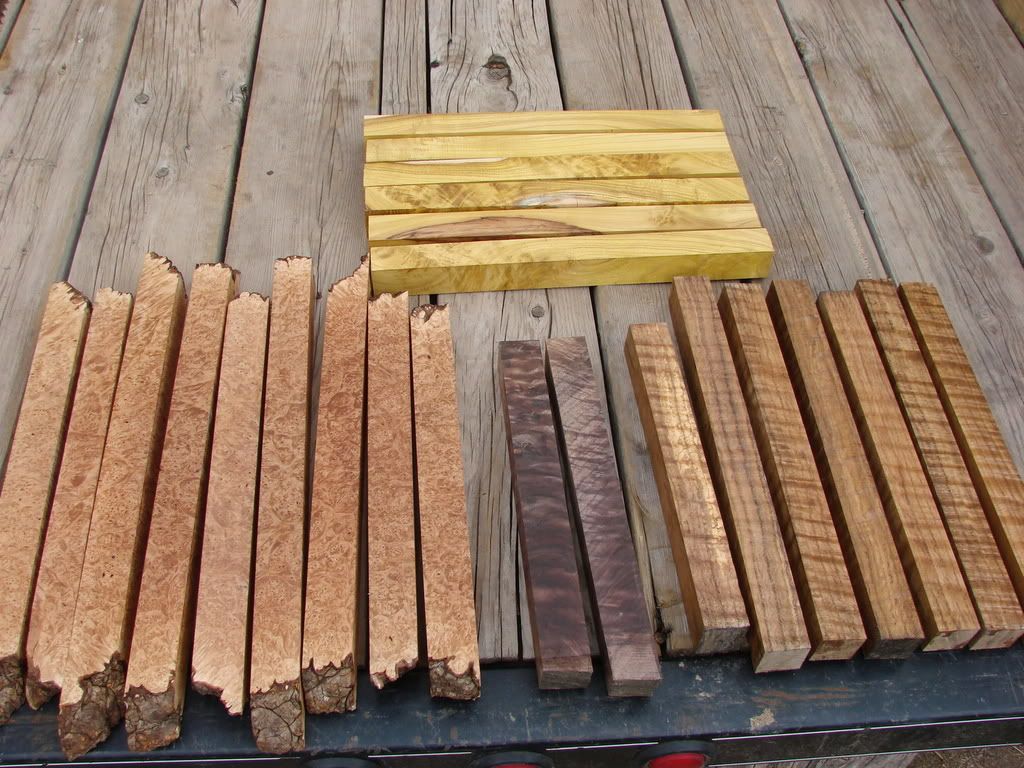
Cue squares from wood I milled. Curly red oak, figured mulberry, walnut crotch, and maple burl
Desert ironwood, some I have milled & some yet to mill
And I have loads of stuff like this. I hunt for it and harvest it. Then I mill it to lumber suitable for cues and process it into cue wood. It's more fun than actually building cues. If I could harvest & mill figured oddity logs at night and on crappy weather days, i'd prolly never build cues because i'm too busy acquiring wood. I have no clue what i'll ever do with it all. But it's sure fun getting it......though inherently more dangerous than building cues and not for the faint of heart. I am healing now from a neck injury incurred early October, lost the strength & feeling to my left arm & hand due to nerve damage. Coming back now but been a slow heal and I have been able to do almost nothing but wait. But to the point, this wood does exist and is well suited for cues. It's just virtually not available to cuemakers so most don't even know it exists, or cannot get it.