cue photography gods please

cubc

AzB Silver Member
Silver Member
I have a canon digital elph 7.1mp camera. What is the best way to take pictures of a cue without reflection of other surroundings or colors in the cue with high detail? I know a tripod will help but in terms of lighting, backdrop, etc. What could I do w/ this camera to get a good high quality picture?

http://www.bestbuy.com/site/olspage...&ref=06&loc=01&ci_src=17588969&ci_sku=8266501

I tried the macro setting on regular pictures and all it does is make everything incredibly blurry so I have no idea what that does.

Thanks
 
cubc said:
I have a canon digital elph 7.1mp camera. What is the best way to take pictures of a cue without reflection of other surroundings or colors in the cue with high detail? I know a tripod will help but in terms of lighting, backdrop, etc. What could I do w/ this camera to get a good high quality picture?

http://www.bestbuy.com/site/olspage...&ref=06&loc=01&ci_src=17588969&ci_sku=8266501

I tried the macro setting on regular pictures and all it does is make everything incredibly blurry so I have no idea what that does.

Thanks
Here is a link to a photo forum, there's a lotta folks over there with substantial knowledge in that feild http://photography-on-the.net/forum/forumdisplay.php?s=&daysprune=100&f=7
 
Cue Photography

Check with Tank 138. His cue pictures are second to none, IMO. Super nice guy and I am sure he would be willing to give you some pointers.
 
a long ways from a god

I am a long ways from a god but the keys to a good shot are lighting and a camera that stays still. Even ten or twelve dollars for a mini tripod will hold the camera and then you have to diffuse the light on the cue. My first choice would be a light tent but simply putting strong lighting behind white sheets will work. If you get some pretty decent images, I'll try my hand at post processing a few for you. Many images are more the result of post processing than the original shot although the better the photograph, the better the final result.

Hu

PS Shoot against a plain one color flat background.


cubc said:
I have a canon digital elph 7.1mp camera. What is the best way to take pictures of a cue without reflection of other surroundings or colors in the cue with high detail? I know a tripod will help but in terms of lighting, backdrop, etc. What could I do w/ this camera to get a good high quality picture?

http://www.bestbuy.com/site/olspage...&ref=06&loc=01&ci_src=17588969&ci_sku=8266501

I tried the macro setting on regular pictures and all it does is make everything incredibly blurry so I have no idea what that does.

Thanks
 
The macro setting is good, but you have to get pretty close to the cue. If the flash is off, the shutter speed may be too long for you to get a sharp picture when hand-holding the camera. A tripod helps with this, or you could just put the camera on the table or a couple books and not hold it. Obviously if the flash is on, then you're more likely to get reflections. The light diffuser suggestion is good to go with, as is the one colored solid background.

When you get blurry pictures, is the autofocus light on or off?

The other thing you could do is take a picture from a few feet away and then crop the photo since you have a decent number of megapixels to work with.
 
Macro setting is for ultra closeup detail pics, you have to be within 2-4" of your picture object. Your camera has 1.2" minimum focas on digital macro.

After reading the specs and features on the camera, you have all the options to take great cue pics, BUT YOU NEED TO READ THE MANUAL FIRST, AND GET ACQUANTED WITH WHAT DOES WHAT....
 
Last edited:
cubc said:
I have a canon digital elph 7.1mp camera. What is the best way to take pictures of a cue without reflection of other surroundings or colors in the cue with high detail? I know a tripod will help but in terms of lighting, backdrop, etc. What could I do w/ this camera to get a good high quality picture?

http://www.bestbuy.com/site/olspage...&ref=06&loc=01&ci_src=17588969&ci_sku=8266501

I tried the macro setting on regular pictures and all it does is make everything incredibly blurry so I have no idea what that does.

Thanks

Cues are shiny, if you don't want anything reflecting in it, you'll need to drape off the surrounding area with something (black would be good I guess - but it'll still reflect whatever color you drape with so you'll see that in the reflection).

No flash is pretty obvious - as noted if you don't have really good lighting than you absolutely want a tripod. If you want the lighting to be nice and even you'll need to diffuse it somehow (they sell stuff - I think tehy are called softboxes - to do this, but you can also just get some translucent sheeting and put a light behind that).

If you want the lighting to be more even you'll also need to light from more than one location - ie two or three diffused sources.

You'll want to stop the lens down so that the depth of field encompasses the entire object (that is you want the very top of the cue and the edges to all be perfectly sharp). if you are using a tripod stopping down is no problem even if the light isn't super bright. Most lenses have a sweet spot for where they will be sharped (generally f/8-f/11).

If you get a decent SLR you can also enable what's called mirror lockup (this will make you hit the shutter button 2x - once to lift the mirror, wait a few seconds so you know the camera is not vibrating, then again to actually trigger the shutter) and get a shutter release cable so you don't need to actually be touching the camera body when you click the button - both of these will cut down on vibrations and make for a sharper picture.

Use the lowest ISO setting the camera has - once again if you are using a tripod and with ISO 100 and f/11 even if you need to have a 1/4 sec exposure it shouldn't matter as nothing will be moving.

Incidentally if you have a really well lit area, you can take fantastic pictures with just a regular digicam (like a canon powershot). The digicams generally work well in bright light - and degrade rapidly as the ISO raises.

If you really want the best pictures though go with the SLR - also don't use a wide angle lens as you'll get some distortion - use a normal lens (generally a 50mm is great). If you go Canon there is a very good and very cheap 50mm f1.8 lens - only around $80.
 
Couple quick and easy suggestions :

Lighting - Outside on an overcast day (no direct sunlight) , almost fool proof.

Tripod - A must but not always perfection. To get the most out of it use the timer on the camera as well.

Quality/Resolution - Use the highest available and full frame the picture , then crop afterwards.

Those are my 'simple' quick tips. :)
 
Question

RRfireblade said:
Couple quick and easy suggestions :

Lighting - Outside on an overcast day (no direct sunlight) , almost fool proof.

Tripod - A must but not always perfection. To get the most out of it use the timer on the camera as well.

Quality/Resolution - Use the highest available and full frame the picture , then crop afterwards.

Those are my 'simple' quick tips. :)

What is the advantage of full framing the picture and then cropping it?
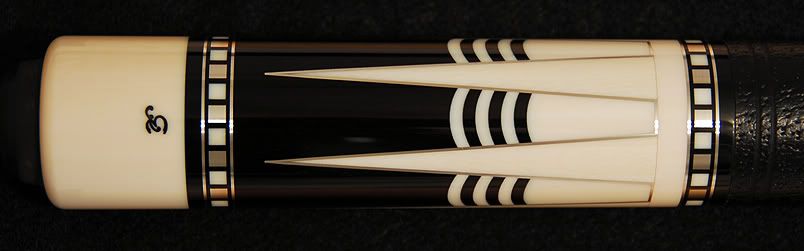
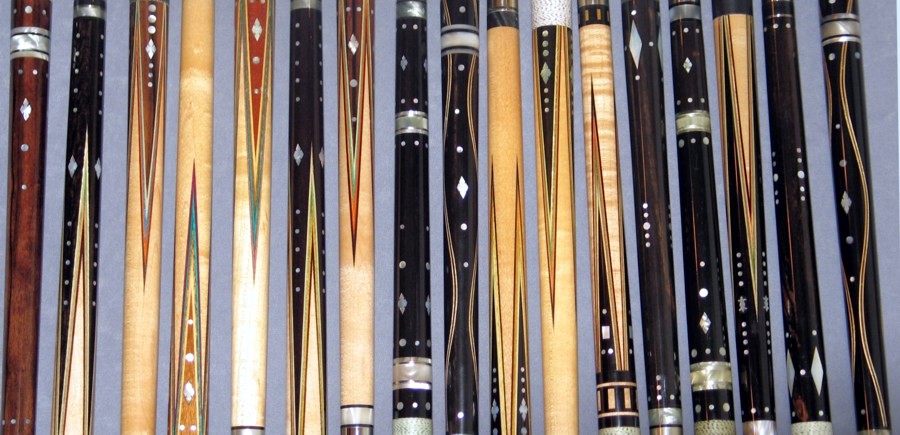
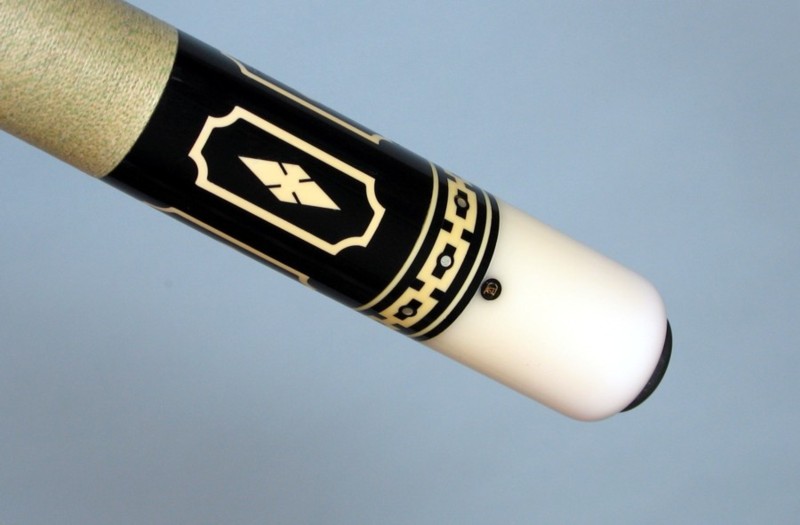
I thought I knew a little about taking pictures but am always willing to learn new procedures. Here are two samples of my cues.

DSC_0064.jpg


DSC_0025.jpg
 
it'll come to ya - try to feel the moment.

I use a sony cyber shot 7.0 Just tilt the camera at an angle so the light doesn't reflect the flash straight back zoom up if ya want. I used the angle of taking pictures from the top down for a different view. I have a boggden tripod not what you need here. Films free just use and pick and choose it will come to ya have confidence it is you looking throught the lens. Put other objects in your pictures as well. Store them on the hard drive. nice to look back at I forgot movies clips too? mine does set a goal achieve it print for new avatar or whatever mark
 
it's not that difficult... for this picture i just turned the bedroom light on and laid the cue on top of my bed. turned out pretty good... i should have adjusted the white balance to compensate for the tungsten house bulbs but it still looks alright....


ginabutt.jpg
 
Last edited:
cubc said:
I have a canon digital elph 7.1mp camera. What is the best way to take pictures of a cue without reflection of other surroundings or colors in the cue with high detail? I know a tripod will help but in terms of lighting, backdrop, etc. What could I do w/ this camera to get a good high quality picture?

http://www.bestbuy.com/site/olspage...&ref=06&loc=01&ci_src=17588969&ci_sku=8266501

I tried the macro setting on regular pictures and all it does is make everything incredibly blurry so I have no idea what that does.

Thanks

With the small camera and not too much fuss, to make things simple, for excellent but non-professional results, here's what I suggest. You don't need the tripod, jusy make sure you're in focus with the button down half way, then hold still and shoot.

1 - Eliminate most light sources, like daytime windows, sliding doors, hall lights, and just use whatever room lighting you have. Most of the light should come from the flash.

2 - use a not reflective background cloth. Most fabric reflects too much. I found the artificial suedes sold at fabric stores and velvet in neutral shades such as light gray (for dark cues) and black (for light cues) work well.

3. For full handle shots, frame the cue on a diagonal, use flash and autofocus. Position your head where you see the least amount of reflection, then move the camera up to your eye. There should normally be some small angle, as light from the flash will bounce back at you, but not enough angle to distort the photo.

4. For close ups, use macro and flash, and telescope to the close up. This way you won't get the flash spoiling your close up.

You can also suspend the cue over the fabric but then you need additional lighting.

This pic below was just taken with a Canon G6 on auto, the cues laid down on suede fabric.I stood on a chair and telescoped in to frame the pic and flash - no other tricks. The photo can then be touched up - I didn't do this one but you can remove the reflections with photo software. By the way, I have no photography knowledge, just kept messing around with stuff.

Inlays2.jpg


Here's one I like - I suspended the cue off a chair over a background, with a tri pod I telescoped in and used flash. This was auto/flash/macro/ delay on a tripod - the cue is at such an angle that the flash shadow is hidden, plus I used filtered light stands:


Tad_Butt.jpg
 
Last edited:
branpureza said:
it's not that difficult... for this picture i just turned the bedroom light on and laid the cue on top of my bed. turned out pretty good... i should have adjusted the white balance to compensate for the tungsten house bulbs but it still looks alright....


ginabutt.jpg

The thing is, that particular cue is extremely easy to get a good picture of as the less light the better. The white area's are perfect but the darks are so underexposed as they can't be seen. It makes no difference with this cue as the dark is Ebony and doesn't need to be focused better. You get no glare because the picture is actually under exposed and no direct lighting. It would be very tricky to try and get both the darks exposed properly and the whites not way over exposed as if you were trying to get a good picture with a darker cue, but not Ebony, and lighter inlays as this cue or many others have.

Dick
 
I have taken hundreds of photos of Cues. If reflection is a problem, choose an angle that eliminates or reduces any reflection. Post processing helps a bunch too.

Good Luck...
 
cubc said:
I tried the macro setting on regular pictures and all it does is make everything incredibly blurry so I have no idea what that does.

Thanks
One thing to remember is that most cameras have the flash in an upper corner. If you get too close to your subject cue, there will be a significant shadow due to the lens (or other camera frame parts).

I like to get a big lamp or a few high wattage shop lights to add lighting to cue pics. I have some in my sig which are decent - taken with a mid-level Sony camera. Some were macro pics. (For most macros you have to be close to the subject.) And the sad truth is, I get about 1 good picture for every 10 I take. I shoot in volume ;)

Now I use a Digital SLR with a grey background that my wife uses for her photography. They say it's the "correct" neutral background color. Doesn't seem to make a difference to me...

-td
 
branpureza said:
it's not that difficult... for this picture i just turned the bedroom light on and laid the cue on top of my bed. turned out pretty good... i should have adjusted the white balance to compensate for the tungsten house bulbs but it still looks alright....


ginabutt.jpg


The reason your whites are not white enough is due to underexposure. It's not due to your white balance setting. If you would increase the exposure a bit the whites would be correct and the blacks wouldn't be under-exposed. Just my observation, FWIW.
 
Tim5000 said:
The reason your whites are not white enough is due to underexposure. It's not due to your white balance setting. If you would increase the exposure a bit the whites would be correct and the blacks wouldn't be under-exposed. Just my observation, FWIW.


hmm you may be right but it looks pretty tungsteny to me.

yes i made tungsten an adjective.
 
yeah i think i was right about the white balance...

normal:

ginabutt.jpg


overexposed (still tungsteny):

ginabuttover.jpg


Color Corrected:

ginabutt2.jpg
 
Back
Top