
How many others use this technique for joining a cue at the A-Joint

manwon

AzB Silver Member
Silver Member
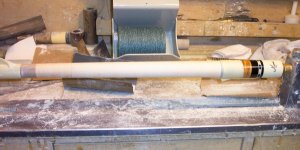
I am a retailer for Meucci among other brands and recently had a customer come in that wanted a Meucci Cue, however, he didn't want the wrap sealed like all Meucci cues are. So, as part of the sale I decided to re-wrap the cue for him. When, I removed the warp and examined the under wrap I found something that was kinda interesting or at least different from the way I was taught to install an A-Joint / Handle. I thought I would get everyones opinions and thoughts on the way this was done.

2.jpg

1.jpg
 
I am a retailer for Meucci among other brands and recently had a customer come in that wanted a Meucci Cue, however, he didn't want the wrap sealed like all Meucci cues are. So, as part of the sale I decided to re-wrap the cue for him. When, I removed the warp and examined the under wrap I found something that was kinda interesting or at least different from the way I was taught to install an A-Joint / Handle. I thought I would get everyones opinions and thoughts on the way this was done.

View attachment 91271

View attachment 91272

I join mine with a phenolic cylinder like that but I don't join with a tenon with no ring as that cue has farther toward the center.

Dick
 
I join mine with a phenolic cylinder like that but I don't join with a tenon with no ring as that cue has farther toward the center.

Dick

Hello Dick, what is a tenon with not ring? I have never seen this used before, what purpose does it serve? Is it good or Bad?

Thanks Dick
 
This connection dates back to Rambow. It is a tenon on the forearm and handle connected by a phenolic sleeve and screw. It is also the connection that I use.

P1012184.jpg


I am a retailer for Meucci among other brands and recently had a customer come in that wanted a Meucci Cue, however, he didn't want the wrap sealed like all Meucci cues are. So, as part of the sale I decided to re-wrap the cue for him. When, I removed the warp and examined the under wrap I found something that was kinda interesting or at least different from the way I was taught to install an A-Joint / Handle. I thought I would get everyones opinions and thoughts on the way this was done.
 
Hello Dick, what is a tenon with not ring? I have never seen this used before, what purpose does it serve? Is it good or Bad?

Thanks Dick

If you will notice, about 2 to 3 inch behind the phenolic collar, there is another piece of handle wood spliced on. This splice I'm sure uses a tenon but there is no type of ring inserted between the two surfaces to help retard the glue from being wicked away during assembly, from capillary action of the end grain. This leaves a much better chance that the cue may later develop a buzz, I feel.

Dick
 
If you will notice, about 2 to 3 inch behind the phenolic collar, there is another piece of handle wood spliced on. This splice I'm sure uses a tenon but there is no type of ring inserted between the two surfaces to help retard the glue from being wicked away during assembly, from capillary action of the end grain. This leaves a much better chance that the cue may later develop a buzz, I feel.

Dick

I'm gonna guess that section warped or got crashed on so they had to chop it then replace it. But, they didn't bother putting on a buzz ring there.
 
I'm gonna guess that section warped or got crashed on so they had to chop it then replace it. But, they didn't bother putting on a buzz ring there.

I don't think so, the cue was Brand New. I suspect this is their A-Joint Technique, however, like eveyone have said I would not recommend it to anyone there are much more stable methods with far less trouble long term.
 
If you will notice, about 2 to 3 inch behind the phenolic collar, there is another piece of handle wood spliced on. This splice I'm sure uses a tenon but there is no type of ring inserted between the two surfaces to help retard the glue from being wicked away during assembly, from capillary action of the end grain. This leaves a much better chance that the cue may later develop a buzz, I feel.

Dick

Thanks Dick
 
I don't think so, the cue was Brand New. I suspect this is their A-Joint Technique, however, like eveyone have said I would not recommend it to anyone there are much more stable methods with far less trouble long term.

Probably better their old 5/16 18 flatface ( no tenon ) A-joinery but still does not make much sense.
It's like putting on a safety gloves with holes in them.
I'm still guessing they chopped that handle off and redid the top b/c something happened.
 
I did not notice the second joint. I've never noticed that on other meuccis that I have wraped.

If you will notice, about 2 to 3 inch behind the phenolic collar, there is another piece of handle wood spliced on. This splice I'm sure uses a tenon but there is no type of ring inserted between the two surfaces to help retard the glue from being wicked away during assembly, from capillary action of the end grain. This leaves a much better chance that the cue may later develop a buzz, I feel.

Dick
 
I'm gonna guess that section warped or got crashed on so they had to chop it then replace it. But, they didn't bother putting on a buzz ring there.

I think you are right on The mark! They fix it instead of junking The cue!!!!!!
 
Back
Top