US Ivory Ban ( New )

I'm sorry what.............u need some mammoth


ETWmOjk.png
 
I Recognize There's Both Federal & State New Regulations

meridianblades......as of July 1, 2016, you'd get busted selling that or using it in any pool cue or selling a pool cue that contained any.......the CA ban is absolute.......clear as daylight.......
No ivory of any type or amount can be sold in any form, processed or raw, nor can anything containing any amount of ivory of any type be bought or sold in CA.........there really aren't
any ambiguities in CA's ivory ban. I'm challenging it on the basis it's being enacted ex post facto & legal counsel for my local Assemblyman, who opposed the law, has become intrigued.


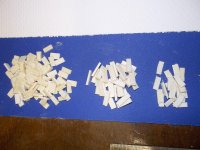
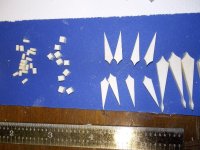
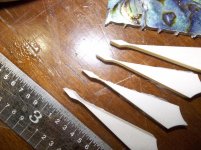
The below photos attest to the amt of ivory used in my newest cue recently completed last month. It also has ivory ferrules, flat ivory joint & an ivory butt cap. In any event,
I will abide by CA's new regulation & not buy, sell or order any pool cue containing ivory while I am physically in California. Thank goodness Las Vegas is only 6 1/2 hrs away.
 

Attachments

  • Inlays  (Ivory).jpg
    Inlays (Ivory).jpg
    63.7 KB · Views: 611
  • Inlays (10).JPG
    Inlays (10).JPG
    77.3 KB · Views: 617
  • Inlays (2).jpg
    Inlays (2).jpg
    101.2 KB · Views: 620
Last edited:
meridianblades......as of July 1, 2016, you'd get busted selling that or using it in any pool cue or selling a pool cue that contained any.......the CA ban is absolute.......clear as daylight.......
No ivory of any type or amount can be sold in any form, processed or raw, nor can anything containing any amount of ivory of any type be bought or sold in CA.........there really aren't
any ambiguities in CA's ivory ban. I'm challenging it on the basis it's being enacted ex post facto & legal counsel for my local Assemblyman, who opposed the law, has become intrigued.


The below photos attest to the amt of ivory used in my newest cue recently completed last month. It also has ivory ferrules, flat ivory joint & an ivory butt cap. In any event,
I will abide by CA's new regulation & not buy, sell or order any pool cue containing ivory while I am physically in California. Thank goodness Las Vegas is only 6 1/2 hrs away.


Federal law not only tells you what you can do it also gives you rights. I truly believe the new laws in ca and a couple other states can be beat in court but it won't be cheap. Jmho.


Sent from my iPhone using Tapatalk
 
So the real question still remains whether this truly stops the sale and trade of ivory inlaid cues or if it instead creates a huge black market vacuum for said cues. I can certainly see "raw" ivory being sold for significantly reduced prices prior to the ban going into full effect. But I can't see it completely devaluing existing ivory inlaid cues. I know I have several cues with quite a bit of ivory including a tuxedo cue with ivory points, joint and butt cap I just can't see it being worth $1.99 now. /shrug
 
I own a cue with ivory throughout it but if that ivory was an alternative it wouldn't mean all that much to me.
 
Question, if it is legal to import two tusks a year for sport hunting, what happens to the tusks after said hunter passes away? What do the kids do with the tusks? Can they sell them or give them away? Or do they just call fish and wildlife to come and confiscate them.
 
The law spells out what happens with tusks that can pass onto one's children but cannot be sold, processed, or otherwise disposed of in any way inclusive of bartering and gifting.
 
If you have a cue with ivory in it then you should have nothing to worry about per the rules. I encourage any that are worried to read the new rules before reacting hastily. Everything in red is from this link.
http://www.fws.gov/international/pdf/questions-and-answers-african-elephant-4d-final-rule.pdf

What types of items are likely to qualify for the de minimis exception?
When we proposed the 200-gram limit we had a particular suite of items in mind. The following types of items may qualify for the de minimis exception: many musical instruments (including many keyboard instruments, with ivory keys, most stringed instruments and bows with ivory parts or decorations, and many bagpipes, bassoons and other wind instruments with ivory trim); most knives and guns with ivory grips; and certain household and decorative items (including teapots with ivory insulators, measuring tools with ivory parts or trim, baskets with ivory trim, walking sticks and canes with ivory decorations, and many furniture pieces with ivory inlay, etc.).


Here is some logic and answers for the rules below.

iii) the ivory is glued (fixed) to a larger manufactured or handcrafted item.
iv) the ivory is not raw and is in a finished state.
v) I can't think of a cue that is comprised of more than 50% ivory...lord knows it would weigh a ton
vi) 200g or 7oz is a lot of ivory. typical butt is 16oz on the heavy side with shafts between 3.5-4.5 oz. in other words if your cue weighs 21oz 1/3rd of your cue can legally be made of ivory. inlays are very thin and light... What does 200 grams of ivory look like?
A piece of ivory that weighs 200 grams is slightly larger than a cue ball. The 200-gram limit is large enough to accommodate the white key veneers on an 88-key piano.
vii) cue has to be made before before the true effective date of this rule (its the gov and they scream fire before anyone has even bought a pack of matches!! so who knows when it will really go into effect)

Here are the rules for exemption
iii) The ivory is a fixed or integral component or components of a larger manufactured or handcrafted item and is not in its current form the primary source of the value of the item, that is, the ivory does not account for more than 50 percent of the value of the item;
(iv) The ivory is not raw;
(v) The manufactured or handcrafted item is not made wholly or primarily of ivory, that is, the
ivory component or components do not account for more than 50 percent of the item by
volume;
(vi) The total weight of the ivory component or components is less than 200 grams; and
(vii) The item was manufactured or handcrafted before the effective date of this rule
.
 
Just keep in mind CA is a different scenario and any state can enact more stringent laws than the Federal regulations but state laws can never be more lenient.
In CA, you can possess pool cues that contain ivory but you aren't allowed to ever sell the cues or even repair the cues using replacement ivory, if that was ever required.
 
meridianblades......as of July 1, 2016, you'd get busted selling that or using it in any pool cue or selling a pool cue that contained any.......the CA ban is absolute.......clear as daylight.......
No ivory of any type or amount can be sold in any form, processed or raw, nor can anything containing any amount of ivory of any type be bought or sold in CA.........there really aren't
any ambiguities in CA's ivory ban. I'm challenging it on the basis it's being enacted ex post facto & legal counsel for my local Assemblyman, who opposed the law, has become intrigued.


The below photos attest to the amt of ivory used in my newest cue recently completed last month. It also has ivory ferrules, flat ivory joint & an ivory butt cap. In any event,
I will abide by CA's new regulation & not buy, sell or order any pool cue containing ivory while I am physically in California. Thank goodness Las Vegas is only 6 1/2 hrs away.


You must reside in that state to buy/sell it there from what I have read...
 
These were the interesting and useful parts of the document...

THE FINAL RULE
This rule is effective July 6, 2016.

Comment: Some commenters stated that the economic impact of the proposed rule on American craftsmen and artisans will be significant. One commenter estimated that there are about seven individuals in the United States who purchase tusks (from individuals who imported them prior to 1989) and cut them into a variety of forms, or “blanks,” for U.S. craftsmen to finish. These craftsmen work the ivory pieces into finished products, including pool cues, knife handles, and piano keys. He estimated that there are about 15 individuals making pool cues with ivory ferrules and that there are a total of about 300 people in the United States creating finished products using ivory. The commenter stated that under the proposed rule all of these people would lose their livelihoods. We also received comments from craftsmen who restore ivory pieces (see (48), below).
Response: We agree that this rule will impact craftsmen working with ivory in the United States. We note, however, that the final rule does not impact intrastate (within a State) commerce so those buying and selling within the State in which they reside will be able to continue to do so (where such activity is allowed under State law). In addition, we note that these craftsmen can make use of alternative materials, including mammoth ivory or deer antlers, for example. Martin and Stiles noted in their 2008 report that the exact number of ivory craftsmen in the United States is unknown but they estimated that there were 120 to 200 craftsmen at that time, with the number decreasing over time. The authors also noted that most craftsmen work part-time with ivory and use other materials as well. The impact on individual craftsmen will depend on the diversity of materials they use (wood, bone, mammoth tusks, etc.) and may range from minimal revenue decrease to closure.

Impacted markets include those involving U.S. citizens or other persons subject to the jurisdiction of the United States that buy, sell, or otherwise commercialize African elephant ivory products across State lines and those that buy, sell, or otherwise commercialize such specimens in international trade. Examples of products in trade containing African elephant ivory include cue sticks, pool balls, knife handles, gun grips, furniture inlay, jewelry, artwork, and musical instruments.

One commenter estimated that yearly sales of cue sticks containing ivory amount to $1.7 million per year. To the extent that these craftsmen are unable to utilize alternate materials (including, for example, mammoth ivory, cow bone, or deer antler) and that their business is conducted across State lines, they will be impacted by this rule.

One commenter estimated that there are about seven people in the United States who purchase tusks (from individuals who imported them prior to 1989) and cut them into a variety of forms for U.S. craftsmen to finish. These craftsmen work the ivory pieces into finished products, including pool cues, knife handles, and piano keys. He estimated that there are about 15 individuals making pool cues with ivory ferrules and that there are a total of about 300 people in the United States creating finished products using ivory components. This rule will impact craftsmen working with ivory in the United States. While the commenter does not provide data regarding the industries under which these 300 establishments would be categorized, we can estimate that the potential number of establishments represents two percent of establishments in the affected industries (NAICS 339992, 423910, 321999, 332215, and 339910) or three percent of establishments in the affected industries (NAICS 339992, 321999, 332215, and 339910). Therefore, this rule does not impact a significant number in the affected industries. The final rule does not impact intrastate (within a State), commerce so those buying and selling within the State in which they reside will be able to continue to do so (where such activity is allowed under State law). In addition, there are alternative materials available to craftsmen, including mammoth ivory and ivory substitutes, which may decrease some impacts.

Takings: This rule does not effect a taking of private property or otherwise have taking implications under Executive Order 12630. While certain activities that were previously unregulated will now be regulated, possession and other activities with African elephant ivory such as sale in intrastate commerce will remain unregulated under Federal law. A takings implication assessment is not required.

* Clarify the Definition of “Antique”:*We intend to incorporate the Endangered Species Act’s exemptions for commercial trade of 100-year-old antiques into regulations that re-affirm the criteria that must be met for an item to qualify as an antique.

What is the de minimis exemption? The final rule provides an exemption from prohibitions on selling or offering for sale in interstate and foreign commerce for certain manufactured items that contain a small (de minimis) amount of ivory that meet the following conditions: A. If the item is located in the United States, the ivory must have been imported prior to January 18, 1990, or imported under a CITES pre-Convention certificate with no limitation on its commercial use. B. If the item is located outside of the United States, the ivory must have been removed from the wild prior to February 26, 1976. C. The ivory is a fixed or integral component or components of a larger manufactured item and is not the primary source of the value of the item, that is, the ivory does not account for more than 50 percent of the value of the item. D. The ivory is not raw. E. The manufactured item is not made wholly or primarily of ivory, that is, the ivory component or components do not account for more than 50 percent of the item by volume. F. The total weight of the ivory component or components is less than 200 grams. G. The item must have been manufactured before the effective date of the final rule.

What does 200 grams of ivory look like? A piece of ivory that weighs 200 grams is slightly larger than a cue ball. T

BUYING/SELLING IVORY
Interstate and foreign commerce of ivory. Except for antiques and certain manufactured or handcrafted items containing de minimis quantities of ivory, sale or offer for sale of ivory in interstate or foreign commerce and delivery, receipt, carrying, transport, or shipment of ivory in interstate or foreign commerce in the course of a commercial activity is prohibited. Except as provided in paragraphs (e)(5)(iii) and (e)(6) through (8) of this section, manufactured or handcrafted items containing de minimis quantities of ivory may be sold or offered for sale in interstate or foreign commerce and delivered, received, carried, transported, or shipped in interstate or foreign commerce in the course of a commercial activity without a threatened species permit issued under § 17.32, provided they meet all of the following criteria:
(i) If the item is located within the United States, the ivory was imported into the United States prior to January 18, 1990, or was imported into the United States under a Convention on International Trade in Endangered Species of Wild Fauna and Flora (CITES) pre-Convention certificate with no limitation on its commercial use;
(ii) If the item is located outside the United States, the ivory was removed from the wild prior to February 26, 1976;
(iii) The ivory is a fixed or integral component or components of a larger manufactured or handcrafted item and is not in its current form the primary source of the value of the item, that is, the ivory does not account for more than 50 percent of the value of the item;
(iv) The ivory is not raw;
(v) The manufactured or handcrafted item is not made wholly or primarily of ivory, that is, the ivory component or components do not account for more than 50 percent of the item by volume;
(vi) The total weight of the ivory component or components is less than 200 grams; and
(vii) The item was manufactured or handcrafted before July 6, 2016.
(4) Import/export of raw ivory. Except as provided in paragraphs (e)(6) through (9) of this section, raw ivory may not be imported into or exported from the United States.
(5) Import/export of worked ivory. Except as provided in paragraphs (e)(6) through (9) of this section, worked ivory may not be imported into or exported from the United States unless it is contained in a musical instrument, or is part of a traveling exhibition, household move, or inheritance, and meets the following criteria:
 
My big question is, can you still buy and sell a cue with less than 200 grams or roughly 7oz over a state line??? I can not find anywhere where it states this exactly but maybe I missed it.

I do understand that you may no longer make a pool cue with ivory in it (well after 7/6/16) and sell it over a state line. This is excluding the 4 states that are stricter, New Jersey, California, Washington, and New York ...
 
So what happens if you make a cue and it has alternate materials in it? Juma, mammoth, something other.. and some over zealous wildlife mall cop wanna be, decides he needs to sample your material? He ruins a 3500 dollar cue? Will they reimburse you for their screw up?

What is the criteria? Who makes the decision of testing or not testing? Do you need to write a declaration of which states the cue contains no ivory.. ?

JV
 
So what happens if you make a cue and it has alternate materials in it? Juma, mammoth, something other.. and some over zealous wildlife mall cop wanna be, decides he needs to sample your material? He ruins a 3500 dollar cue? Will they reimburse you for their screw up?


What is the criteria? Who makes the decision of testing or not testing? Do you need to write a declaration of which states the cue contains no ivory.. ?


JV


Exactly.


Thank you,

Bill Lister
Cell/text- 239.823.0408
PayPal- Billiardbills@gmail.com
www.billiardbills.com
www.facebook.com/billiardbills
 
Can you build an ivory inlay cue after 7-6-16 and legally sell it in your state of residence(excluding the four mentioned states)?
 
So just to clarify:

What I posted earlier was ALL mammoth. Sounds like that is a viable exception to the new rules..... :thumbup:
 
Back
Top