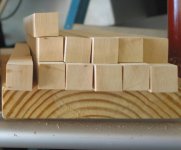
I have talk to many many people about how to select proper wood, epically shaft wood. I get as many difference answers as Quaker's has oats. I am so confused! This summer I purchased approx 200 shaft dowels from many different cue makers here on AZ. I purchase good one's bad ones and everything in between. Now, I have examined them, weighed them bounced them for tone, smelled them, licked them for taste. Now some have nice tight grain, straight grain, 5 gpi, 20 gpi. some are whiter than others. After researching this I realized that sometimes I got screwed, but hey it was an education. My biggest finding was that grading of wood is very subjective. What some CM's call A, others call AA, AAA,or even A+. So how can a beginner sutch as myself decipher what is good or bad when there is such a discrepicency among CM's. This is why I chose to do laminate shafts, and after making quite a few of them I realize that they too have their own problems. I am now ready for good solid maple wood, especially since my taper shaper is due here this week.
My summary of wood! Tell me how far off I am. Its like picking a watermelon. Some say it has to have the right thump, other say it has to be dark green, and even others say that the growth lines have to be close together. Does this sound familure? Well I am beginning to believe that the only way to tell if the watermelon is any good or not is to cut the damn thing open and taste it.
Shaft wood is similar! turn your wood round as described in Hightower?s book! If the wood keeps moving its bad wood. If it stays straight then its good wood to use. Everything after that is personal taste, White vs. dark, solid hit, vs. weak hit, (which probably collates to ring count and spacing of grain line) So if it stays straight its good wood. A friend of mine sells probably 1-200 cues a month from all manufactures imagable, im in his shop everyday looking at shafts and frankly I don?t think that a consumer can tell a difference so long as it is straight. I see such a wide variety of personal wood traits on each cue!
Now, with all of this in mind what is the best way to buy wood. It would seem logical that you need to buy large amounts of wood at cheep prices and play the WILL BE GAME. Will it be a good one or bad one, as opposed to buying a $30 blank that may end up bad anyways. It's a crap shoot, and sometimes people get good at predicting the odds. HOW FAR OFF AM I?????????????????????????????????????????????????????????????