Arizona Open 2026, Yuma, August 13-16

- By loggerhead12
- Main Forum
- 351 Replies
And Shane beats Alcaide 10-8 with just his C+ game.


What do you mean there's only fedor? Shane has 3 also and JUST won it this year.... Who's to say he won't win it in 27 and 28?Like legit, there's only Fedor
Actually there's some Boolean algebra there which excludes the 7 as a remaining ball. English grammar too for that matter.Correct.

"Last 2" is one of the weakest spots in 9-ball. It means you win if you make one of the "last 2" balls on the table - regardless of what those 2 balls are (obviously one will be the 9). Say that the 6-7-9 are on the table. If make a 6-7 combo - there would still be 2 balls left on the table, so you didn't make one of the "last 2" - you made one of the last 3. The game continues. At this point, the "last 2" on the table would be the 7 and the 9. So if you make one of those, you win. But the 7 is wild, so the spots converge and you win making the 7 under either spot. In any case, making the 6 is not a win under this fact pattern.
7 and the last 2 is an interesting spot to me. I think you could game this as the spotter by putting the 8 on the wing and hoping it to goes in on the break some times. If the 7-8 are going to be racked at the front, they will almost always be left on the table. The wild 7 makes the weight just a little more "valuable." You could use this to try to up the bet and offer 7 and the last 3. Matching up can be fun.
-td

Way off topic, but I once loaned this kid my BMX bike, that was only a few months old, back in the mid 90's. I was around 15 at the time, and very gullible. My mother had just paid like $500 for the bike, which was a GT, and a very nice BMX bike. It was like brand new. Anyways, somehow it got a flat tire, and this kid offered to put a new tire tube in, if I loaned him the bike for a few days. Long story short, I was never able to get the bike back.
Me and my mother went to the Police, to tell them about it, and they were just like, well since you gave him the bike (even if it was just a loaner), there is nothing we can do about it. So, according to the police, since I handed over the bike, it no longer belonged to me, lol.
Yeah, I never trusted anyone ever again after that. Really loved that bike too, but was just too trusting.
I play kicks off the point whenever I need to and I’ve made a few at critical times. I developed an aiming system for them but each one is different so you need to shoot a few to calibrate on a table before you start.
Hello friends;
I have known the Ohio crew since 2005. They would come to Detroit and take on local champs every week. I was still in college at the time and didn’t have much cash to gamble with. I still frequented the pool room “Hall of Fame” at the time; house pro being Ronnie Wiseman. Many pros would come and play in the back room and I’d be on the sidelines sweating all the action. Late Jerry Howard, Cornbread, T-Rex, Pagulayan, Miami, and many more come to mind. The back room was non stop action. I’m talking 10s if not 100s of thousands. Freezer and Cardone came one time and lost over 100K.
Moving forward; I moved to FL. Befriended Crosby, Deuel, Mills, and many more.
One day I pop in to my preferred pool room and I run into Scooter. Banging balls on a Diamond. I had to re-introduce meself, but I think he knew who I was; just couldn’t remember the name.
We shoot a cheap set for 100. I win. He doubles. As one does. I agree. I lose. I extend my hand since I’m out of time at that point. I pay him on the spot. We play again the next day and I win back to back. He pays pronto and I take care of his bill.
He asks me if he can shoot with my Revo cue which me wife got for me when they first came out for our anniversary. I told him sure. He asked me if he could practice with it for a few days because he was looking to get one himself. I said yes, no problem. This was January 9, 2025.
That was the last time I have seen this thief and the liar. He has texted me saying it’s on its way and this and that dozens of times with nothing.
I have also lent him money, and got it back in pieces from some woman I do not know.
I think I have given this old friend every chance to make it right. I feel very sad that it has come to this.
I would like my property back. I would also let all fellow players know that this man’s word is worthless. Sadly.
Sent from my iPhone using Tapatalk
Thank you guys for the information. I was just curious because it came from my grandma-in-law which I assume came from her husband. It also came with this insert that written by someone. I love pool but I’m not as knowledge as you guys are. (Just hitting my 30s and have been playing for 4 years now.) I just forgot all about this cue as it was in a case and put into the back of our closet before I started truly getting into it. The cue is straight and the lizard material as well as the cue looks brand new in an older case. Sorry about the misinterpretation on the Adam cue.

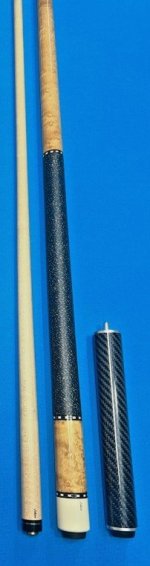
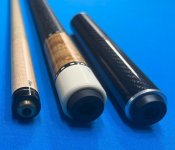
 For Sale: Classic Schon STL-1 Playing Rig with Carbon Fiber Quick-Release Extension Price: **$799.99 USD** Overview: Skip the back order and waitlists. Up for sale is a premium tournament playing rig featuring a classic Schon STL-1 custom pool cue paired with a brand-new 8-inch quick-release carbon fiber extension. Delivers incredible playability, maximum reach, and that legendary, crisp Schon hit. 1. Premium Schon STL-1 Butt 2. Original Schon Maple Shaft 3. 8-Inch Carbon Fiber Extension & Adapter Straightness & Condition:
 Shipping: Securely packed inside a heavy-duty shipping tube and ships fully insured via UPS within 48 hours. Tracking info provided immediately.
 Returns: No returns accepted due to the nature of custom pool gear.
 Payment: Accepting PayPal (Goods & Services preferred, buyer covers the fee), Zelle, or secure credit card invoice.
 Contact: Please send a DM to coordinate payment, calculate shipping, or ask any questions. Thank you for viewing!
Filler kills all of them, not sure what that has to do with being Chinese. You can get a bet down anytime. As a matter of fact, if you wanna play races to 120 you can get it all. PUNK
How would that work?
We could start off by calling them Forman cues. Then we could ask people if thier cue is a Forman or a Helmstetter. And just to push the point a touch we could ask the guy's with those Rare 1960's Adams cues that were made when they were still made them in America, if it's a 'John' Adams? If so, we could tell them it may be even older.

For Sale: Highly Collectible Original Dan Whitten 2x4 Black Leather Custom Hard Case Price: $400 USD + Actual Shipping The Pedigree: Pure pool heritage. This isn't just a case—it’s an investment piece with legendary status. An original era-specific case handmade by founder Dan Whitten. Highly prized by enthusiasts for its rugged build quality. The Build: Hand-selected premium black leather backed by Whitten’s legendary, heavy-duty interior protective tube system. Built like an absolute tank. Specs & Fit: Formatted for 2 Butts and 4 Shafts. Will accommodate up to 31” extended shafts simply by removing the interior foam spacer blocks. Features: Equipped with the original heavy-duty matching black leather shoulder strap and flawless, smooth-gliding zippers. Condition: Player's condition. The leather shows honest wear, surface scuffs, and a distinct vintage patina from tournament travel. While it is not a mint or closet queen specimen, it is far from beat up. Structurally, it is 100% solid, fully functional, and remains an absolute fortress for your cues. Shipping: Buyer pays actual shipping cost via UPS Ground (ships from FL). Returns: No returns accepted due to the nature of custom pool gear. Payment: Accepting PayPal (Goods & Services preferred, buyer covers the fee), Zelle, or secure credit card invoice. Contact: Please send a DM to coordinate payment, calculate shipping, or ask any questions. Thank you for viewing! MINT / TEST HIT ONLY: Mezz Ignite 12.6mm Carbon Fiber Shaft with native United Joint (UJ). Skip the global backlog waitlist entirely! Price: $599.99 USD + Actual Shipping Condition: Mint / Test-hit only. Flawless factory-smooth finish with zero dings or scratches. Weight: 4.3 oz Specs: 12.6mm tip diameter, Ignite Constant Pro Taper, factory Zan Plus2 Medium tip, IG Tip Plate & Ferrule. Joint: Piloted Mezz United Joint. Fits and sits flush on standard Schon and piloted Joss cues (5/16x14 pin). Fit Note: Fits very snug/tight on Schon/Joss pins at first as the internal insert adapts. This is standard for this cross-brand setup. No issues sliding on a Schon STL-1 and Schon SL-14. Hit: Crisp, solid wood-like feel. Zero hollow carbon ring or vibration due to internal silencer foam core. Shipping: Buyer pays actual shipping cost via UPS Ground (ships from FL). Returns: No returns accepted to protect against trial use or part-swapping. Payment: PM your zip code to calculate shipping and arrange payment details.
What are you trying to do?Kinda wild, isn't? I can find dozens of Budweiser, Bud Light and Miller Genuine Draft Cues, but those don't pique my interest.
I won one of the Rich PBR cues on eBay for ~$40 but the seller cancelled and relisted saying it was damaged. My response was that I only wanted the butt sleeve anyway, but no response. eBay, predictably, did fuck all about it of course. So, takeemdown on eBay was that seller. Funniest thing is I had bought 3 or 4 cues from them prior.
For all of that, they got maybe $10 more.
Anyway,, if anyone has a decent shape Miller Lite cue, I'm in the market for a reasonably fair price. Hell, I'd take a good condition Miller Lite butt sleeve.

Kinda wild, isn't? I can find dozens of Budweiser, Bud Light and Miller Genuine Draft Cues, but those don't pique my interest.For the Adam? Probably not a lot. You might find one for $50 to $100. Often pushing $150 though. If it's an auction and two people want it bad it would probably top out at $200.
The problem isn't the price. The problem is finding one. Then of course finding one in good condition.
There are others like McDermott, Huebler, etc that had beer brand cues.
I very much want the McDermott Budweiser cue and case. I just haven't been willing to pay what they have gone for. I do regret passing on one that was brand new with tags. They don't go for anything near what the Snap-On cue and case go for. But when you start pushing $300 for a decal cue I get aggravated. I should have bought one a long time ago. Who would think such a thing would be a good investment?