
Definition of tips of English

Which is one tip of English

  • A. Single red line, half tip diameter from center, but left edge of tip is touching center.

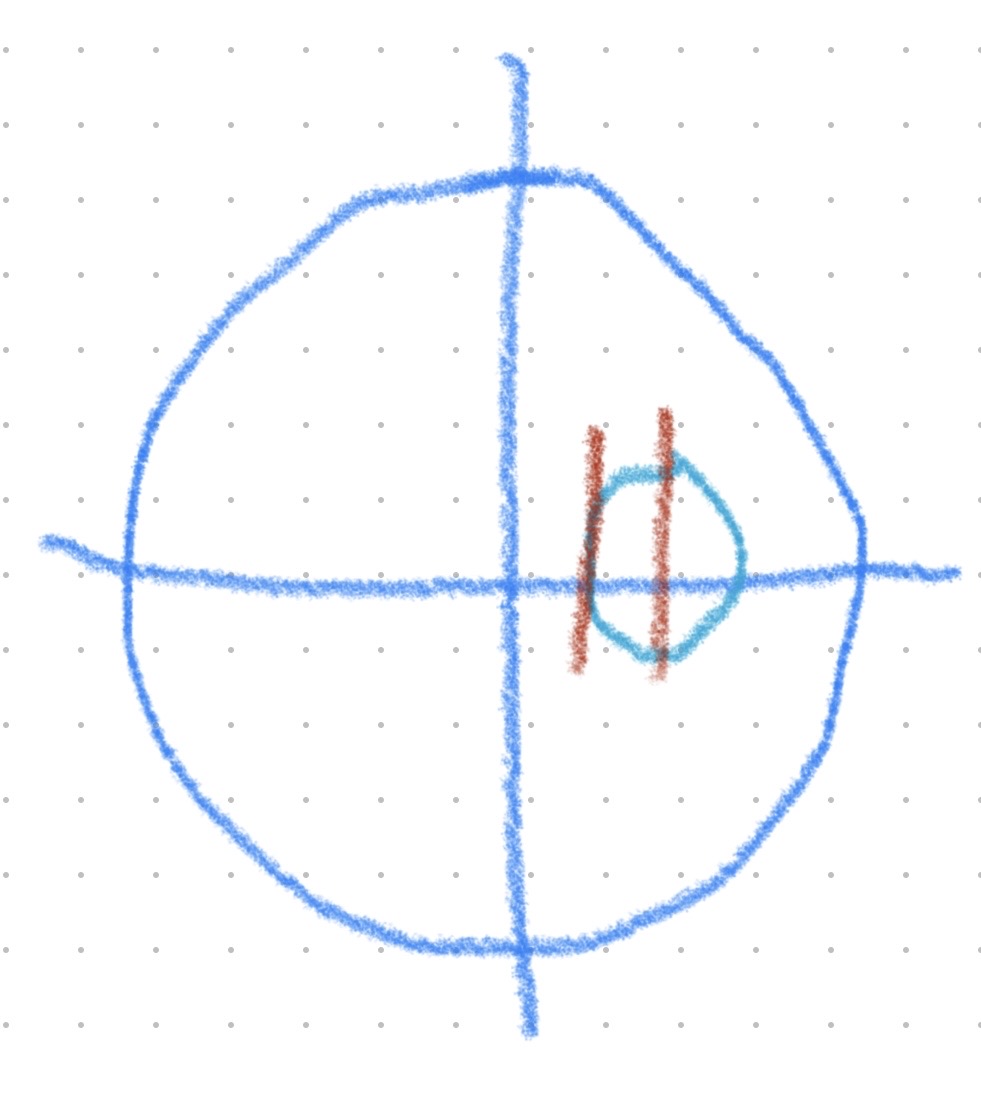
  • B. Two red lines, full tip diameter from center.


Results are only viewable after voting.

nataddrho

www.digicue.net
Silver Member
Which image do you consider “one tip from center”? I am getting different answers from different people.
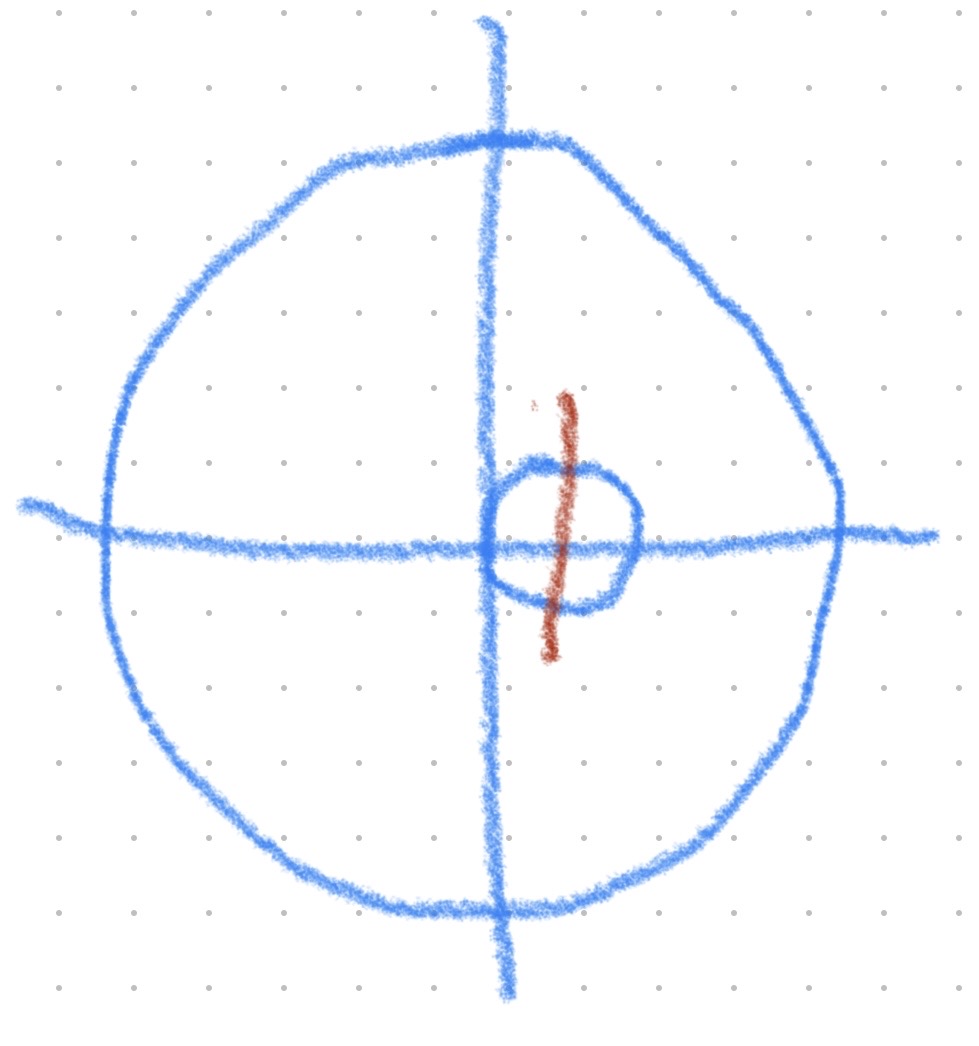
IMG_7595.jpeg
IMG_7596.jpeg


EDIT: Thanks for your responses. I've been asked by a few to add an option to the DigiBall app to show "tips" of English based on the width of the users tip. I've been against doing so and I am using this thread to show that not only does "tips from center" carry two variables with the definition, but that people don't even agree on how to reference it.

The DigiBall reports the tip contact point (where the actual force happens) as a percentage of ball radius from center (acronym PFC). The range is 0% to about 55%. It is independent of tip diameter, tip curvature and ball diameter. This way there will be no more subjectiveness to the measurement and people can have conversations without the fog.

We have never had a way to exactly measure the tip contact point accurately and repeatedly, until now! ;)
 
Last edited:
Yeah, only time this becomes an issue I guess is when trying to explain a shot to someone verbally. To my mind the second one is a tip of right, the first is a half tip of right. I think of it based on the tip center and moving that tip center out from the CB center by the width of one tip, which is what the second one shows.

Now, not all tips are the same size obviously, so this is always going to be a very imprecise form of measurement. I don't tend to talk in tips of English though, I usually talk more in gradations of English. There is a shot with right spin (to me a tip would be about the same as a standard amount of right), a little right (1/2 tip) and a lot of right (near the limit). I generally don't bother trying to describe anything more precisely than that because I just don't see any benefit as the results are not exactly repeatable by someone else with a different cue, tip, stroke, etc.
 
Been a lot of arguing over the years over this. How far from center can you hit the cue ball? When one tip is an inconsistent term naturally when you get out where the cue ball and tip are both curving rapidly you get different conclusions. I am another that avoids "tips of" as a measurement.

No agreement where the tips of english starts, no agreement how many tips are possible to apply.

One version of a tip of english is that it applies half the spin of two tips of english so it is neither a half tip nor a full tip. Then some go by physical measurements but these people are still divided between those that consider a half tip one tip and some consider a full tip one tip. I have been here over twenty years and have yet to see a consensus as to what one tip of english is.

When coaching I find it easiest to point to where to hit the cue ball. On the internet I go with the ever popular, "I am right and anyone that disagrees with me is wrong." Don't bother me with little details like me changing my mind.

For starters what is one tip? 13mm" 12mm? what if I use a smaller tip? There is no fixed measurement of a tip and no fixed starting point for the offset!

"Tips" are a pee-poor unit of measure also a poor starting point. Suppose in math we decided that anything between zero and 1/2 was acceptable to use as zero? I find it makes more sense to measure in MM or fractions of an inch.

Hu
 
Me too, but when coaching someone on a particular shot I find it helpful to use the term as a reference...
^^^ this. It's just a frame of reference, over time, you get a feel for what "your" tips of English do to the shot and when dexcribing what you did, it's a reference point.
 
Just forget “tips” of english entirely.

Use this unit of measurement instead.

⭕️’s in 1/8 of an inch increments.
 
Just forget “tips” of english entirely.

Use this unit of measurement instead.

⭕️’s in 1/8 of an inch increments.

Millimeters work well. The top image is a 6mm, the lower about 13mm.
Knowing that gearing english (in mm) = cut angle(degrees)/5 you can actually do something with it.
 
The width of the tip changes the player's visual of what a tip of english is. And the radius of the tip (dime, nickel, quarter) changes where that "tip of english" contacts the cueball.

So I'm just not a fan of this this conversation at all. This is an aim small, miss small topic for me. Thinking only in terms of top, bottom, left or right is too vague. Thinking in terms of "tips" of top, bottom, left or right is a lot better but it's still vague.

Players should just have a mental spatial awareness of where the curved cueball will be contacted by the curved tip and have all their focus on delivering that precise pinpoint point-to-point contact. And that spot can be generically described to another player vaguely in terms of "tips of english" as a shorthand form of communication. But the player themselves should not be internally mentally modeling on "tips of english". They should simply be picking a pinpoint dot that feels right whether it's one tip out, half a tip out, 0.683 tips out, etc. They shouldn't lock their mental model of delivery into snapping onto a tip-offset grid on the cueball. The shot you need won't always be on that grid. It'll most often be in-between.
 
The width of the tip changes the player's visual of what a tip of english is. And the radius of the tip (dime, nickel, quarter) changes where that "tip of english" contacts the cueball.

So I'm just not a fan of this this conversation at all. This is an aim small, miss small topic for me. Thinking only in terms of top, bottom, left or right is too vague. Thinking in terms of "tips" of top, bottom, left or right is a lot better but it's still vague.

Players should just have a mental spatial awareness of where the curved cueball will be contacted by the curved tip and have all their focus on delivering that precise pinpoint point-to-point contact. And that spot can be generically described to another player vaguely in terms of "tips of english" as a shorthand form of communication. But the player themselves should not be internally mentally modeling on "tips of english". They should simply be picking a pinpoint dot that feels right whether it's one tip out, half a tip out, 0.683 tips out, etc. They shouldn't lock their mental model of delivery into snapping onto a tip-offset grid on the cueball. The shot you need won't always be on that grid. It'll most often be in-between.
Very well said. A spatial awareness of the cue ball surface.
 
1/8'th of an inch increments away from center in all directions using the clock system.

First circle, second circle, third circle.

It works, is precise & totally dependable.
 
I was told to

1. set up a shot across the table and along the baulk line.

2. Hit the cueball with a bit of left.

3. Let the cueball hit the far cushion and bounce back to your cushion.

4. Do it again, with a little more left.

5. When you can get the cueball to hit your cushion one diamond down from the baulk line, that's one tip of english for that cue.


For my cue with a 12mm tip, one tip of left is the right edge of my tip is one mm off of centre cue ball.


Using this method, it's fairly straightforward to learn what one tip and two tips are.
 
its really neither, it is just a way to telling someone about how much you use of english on a shot.

as for each person a tip of english is different . it meanly means instead of a tip, a smaller amount or a larger amount.

and for instance hitting lower off center a tip of english is more spin.

back to the best chalk to use.. and basically one block of chalk is likely past the miscue limit depending on the size of balls you are playing with..
 
A tip width (diameter) is about 3mm, this can be seen by chalking and hitting the 1 ball with a medium speed. A round residue will be left on the ball, yellow is the best color for contrast.

Maximum spin can that can be applied is the transition of white to the stripe on the “high balls”. This distance is 9mm or 3 tips, using the above measurement technique for a tip.


Sent from my iPhone using Tapatalk
 
I always thought this was an objective measurement, and not subjective. Shooting long rail to long rail, one tip of english will bring the cue one diamond up the rail. Two tips of english will bring the cue two diamonds up the rail. Three tips of english would bring the cue three diamonds up the rail. That's a pretty objective measurement in my mind. At least that's what I was taught.
 
  • Like
Reactions: bbb
Back
Top