Fake Szam or a Diamond in the Rough

Tikkitavi

AzB Silver Member
Silver Member
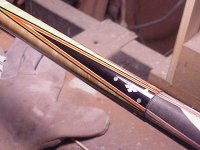
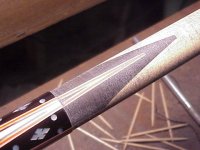
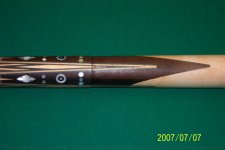
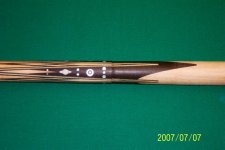
With all the conflict that had occured over apost in the Wanted For Sale forum, I figured you may want to see a fake Szamboti I purchased in the early 90's. First, let me make it clear, that when I purchased the cue I knew that it was not a Gus Szamboti. I liked the quality and visual aspects of the cue, and oh course the hit was amazing. My thoughts were the cue was a very nice custom cue with 3 ivory ferruled shafts. What would I be willing to pay to have the cue made? So, I made a counter offer which he argued but finally accepted. Did I make a bad financial decision? I let you guys be the judge of that. I am sure some of you will recognize the splice of the cue. I will add some more pics later. Off to play pool.
Rik
 

Attachments

  • MVC-006F.JPG
    MVC-006F.JPG
    44.9 KB · Views: 630
  • MVC-007F.JPG
    MVC-007F.JPG
    65.8 KB · Views: 603
A very interesting cue. What I think it is, and what you think it is, is probably two different "thinks".

Palmer used this splice technique in the 1960's, however, their full splice did not run into the maple part of the handle section. In other words, they built their short spliced forearm first out of a long piece of ebony then cut onto a maple handle with a V splice.

Recently, Manwon (Craig Rittel, Full Splice Billiards) posted a picture of an Adam cue which had a similar build technique to yours. From what little I can see of the pics, your maple was joined to the ebony before the cue was spliced and veneered.

My assumption, because of the apearance of the cue and the previous photos I've seen of similar joining technique, is that it's an Adam cue from the 1970's.

However, others looking at it might assume it's a Burton Spain blank because he used a similar joining technique. I just don't know if Burton was selling blanks at that time, but I believe Joel told me he didn't start using that technique until the early 1990's.

Chris
 
Last edited:
And the cue is

Well, I thought this post would had gotten a little more replies. I now will let the cat out of the bag. The cue is actually an early John Showman Cue made with a Burton Spain Blank. So, did I make a good or bad financial decision? What the heck, money is made to spend. The cue IMO is definately a Diamond.

Rik
 
Tikkitavi said:
Well, I thought this post would had gotten a little more replies. I now will let the cat out of the bag. The cue is actually an early John Showman Cue made with a Burton Spain Blank. So, did I make a good or bad financial decision? What the heck, money is made to spend. The cue IMO is definately a Diamond.

Rik
I guess it would depend on what you paid for it (didn't see that in your original post). If it was $500, good on you. If it was $5000, I'm not so sure.

<<== no offense to John's works regarding the numbers above.
 
Tikkitavi said:
Well, I thought this post would had gotten a little more replies. I now will let the cat out of the bag. The cue is actually an early John Showman Cue made with a Burton Spain Blank. So, did I make a good or bad financial decision? What the heck, money is made to spend. The cue IMO is definately a Diamond.

Rik


Well then, the cue is definitely a "Diamond in the Rough". Thanks for the photos. It's a very nice cue.

Chris
 
Tikkitavi said:
Well, I thought this post would had gotten a little more replies. I now will let the cat out of the bag. The cue is actually an early John Showman Cue made with a Burton Spain Blank. So, did I make a good or bad financial decision? What the heck, money is made to spend. The cue IMO is definately a Diamond.

Rik
I agree...it's a diamond, how can you go wrong with a Spain/Showman cue?
 
This cue has the same Burton Spain prong that the Libra had that was recently in the Wanted/For Sale section. Nice cue......and definitely a diamond not c.z.
 
TATE said:
A very interesting cue. What I think it is, and what you think it is, is probably two different "thinks".

Palmer used this splice technique in the 1960's, however, their full splice did not run into the maple part of the handle section. In other words, they built their short spliced forearm first out of a long piece of ebony then cut onto a maple handle with a V splice.

Recently, Manwon (Craig Rittel, Full Splice Billiards) posted a picture of an Adam cue which had a similar build technique to yours. From what little I can see of the pics, your maple was joined to the ebony before the cue was spliced and veneered.

My assumption, because of the apearance of the cue and the previous photos I've seen of similar joining technique, is that it's an Adam cue from the 1970's.

However, others looking at it might assume it's a Burton Spain blank because he used a similar joining technique. I just don't know if Burton was selling blanks at that time, but I believe Joel told me he didn't start using that technique until the early 1990's.

Chris

Very interesting cue. Below is a comparison of the Early Splicing Technique and this cues Splice at the A Joint. Please let me know what you think.

First the Pictured cue in this thread:

spain splice.jpg

The following photo's are of a Adam cue from the 1970's that I recently posted

Use.jpg

splice 1.jpg

Splice 3.jpg

They appear almost exactly the same to me, and that is very interesting because I thought Burton Spain developed his-own unique splice!!

I would have to agree with TATE the pictured cue is an Adam Forearm, unless someone can post some photo of other proof to show other wise.
 
Last edited:
manwon said:
They appear almost exactly the same to me, and that is very interesting because I thought Burton Spain developed his-own unique splice!!

I would have to agree with TATE the pictured cue is an Adam Forearm, unless someone can post some photo of other proof to show other wise.

I am sure Rik checked this with John Showman and it's just as Rik says.

The person who is best at spotting Burton's blanks is Joel Hercek. Joel has an uncanny knowledge of Burton's techniques. The fact is, it is very difficult to tell the difference between a Spain forearm and an Adams - at least the better quality Adam forearms. Burton was good friends with Richard Helmstetter and I am sure he freely shared his knowledge. I have found that one of the clues is also the ebony. Burton used a lot of very dark ebony (Gabon) and Adam went with macassar or rosewood most often. When I see a full slice cue, I also look for black ebony points.

Chris

PS - Craig, that Adam forearm you have has some serious complexity to it! I ought to pick up one of them.
 
Last edited:
TATE said:
I am sure Rik checked this with John Showman and it's just as Rik says.

The person who is best at spotting Burton's blanks is Joel Hercek. Joel has an uncanny knowledge of Burton's techniques. The fact is, it is very difficult to tell the difference between a Spain forearm and an Adams - at least the better quality Adam forearms. Burton was good friends with Richard Helmstetter and I am sure he freely shared his knowledge. I have found that one of the clues is also the ebony. Burton used a lot of very dark ebony (Gabon) and Adam went with macassar or rosewood most often. When I see a full slice cue, I also look for black ebony points.

Chris

PS - Craig, that Adam forearm you have has some serious complexity to it! I ought to pick up one of them.

Good Luck finding one Chris, they are not that common, but who knows with your connections and eBay it may not be that tough. I also agree, I think these cues are good collector items, first like you said they are very complex. Second because they do truly show the craftsmanship of past years. It is a shame they do not have the value they should for the work that is there.

Have a good day Chris.
 
For all with questions concerning the maker of the blank used to make this cue. Here is the reply I recieved from Joel Hercek when I was researching the origins of the cue.

Richard:

Yes that is one of Burt's blanks. The blank was made sometime around 1992, sorry I can not Identify the maker of that cue, it could be any number of cuemakers.
It's possible that the Blank was one of my earlier ones since I continued to sell blanks the first two years of my making cues. More then likely though, it's one of Burton's.
Interesting, the inlay design looks like an old Balabushka design, someone wanted a very traditional look on that cue.

Best Regards

Joel Hercek


With that and the fact that John Showman contacted me with pictures of him making the cue and told me that he had purchased this and a couple of more blanks from Burton Spain. Which he still has one hanging, that I have been trying to buy from him. I have no doubt that it is 100% a Burton Spain Blank.

Rik
 
Tikkitavi said:
For all with questions concerning the maker of the blank used to make this cue. Here is the reply I recieved from Joel Hercek when I was researching the origins of the cue.

Richard:

Yes that is one of Burt's blanks. The blank was made sometime around 1992, sorry I can not Identify the maker of that cue, it could be any number of cuemakers.
It's possible that the Blank was one of my earlier ones since I continued to sell blanks the first two years of my making cues. More then likely though, it's one of Burton's.
Interesting, the inlay design looks like an old Balabushka design, someone wanted a very traditional look on that cue.

Best Regards

Joel Hercek


With that and the fact that John Showman contacted me with pictures of him making the cue and told me that he had purchased this and a couple of more blanks from Burton Spain. Which he still has one hanging, that I have been trying to buy from him. I have no doubt that it is 100% a Burton Spain Blank.

Rik

Thanks, Rik! It helps us all to have this sort of detail in identifying cues. John Showman definitely has a lot of good old stuff and is an old-school cuemaker. It's uncanny how close that Adam forearm is to the Spain, especially since the Adam was built almost 20 years before!

You have yourself a very interesting and historic cue there.

Chris
 
Tikkitavi said:
Well, I thought this post would had gotten a little more replies. I now will let the cat out of the bag. The cue is actually an early John Showman Cue made with a Burton Spain Blank. So, did I make a good or bad financial decision? What the heck, money is made to spend. The cue IMO is definately a Diamond.

Rik


very nice cue. u never told us how u came to find out it was a john. how did you pull that name out of a hat? lol
 
dave sutton said:
very nice cue. u never told us how u came to find out it was a john. how did you pull that name out of a hat? lol


To answer your question. After spending countless hours of research (about 12) and talking to cue makers like Dale Patten ( what a wonderful man ) , Joel Hercek, Barry Szamboti, Danny Tibbitts, Mike Johnson, and about twenty others. ( Who where all so knowledgable and helpful.) I decided to cheat. In March of 2004, I listed the cue on Ebay as "The Cue with No Name" with a opening bid of $10000.00. In the description, I made it clear the cue was not for sale and that I was looking for any information on the maker of the cue.
After about 30+ messages, I recieved the following message:

Dear rikgraham,

I believe that's one of my cues but It should be only about 11 years old. It's one of the first full splice blanks that I bought from Burton. If you need anything else please call. John Showman (727)724-####

The next day I called John and he knew the cue. He even sent me copies of pics with him with the cue.

I hope that answered your question.

Rik

P.s. Yes, I keep copies of all emails relating to cues. Never know when you might need them for a reference.
 
Back
Top