Thank you, she is so precious and fragile and amazing. I have so much more respect for my parents now and for what life is about than ever before.
When Chas was speaking of the cue cases he makes then he did hand stitch them but he also had/has a sewing machine that is used as well whenever he wants/needs to.
Hand stamping vs. Machine embossing:
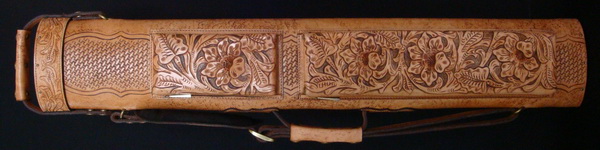
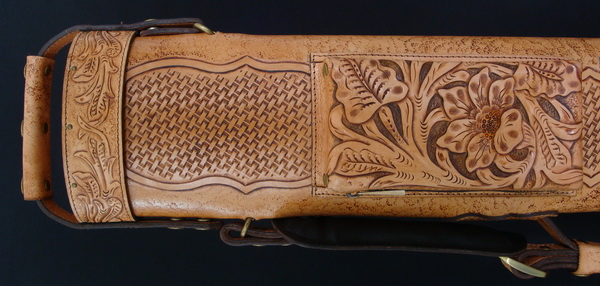
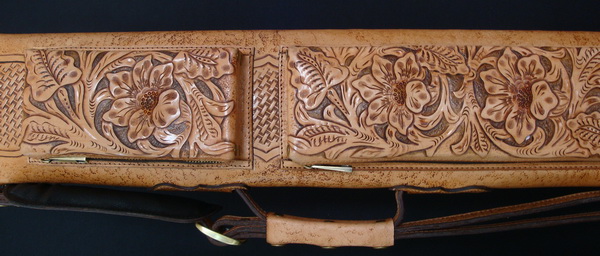
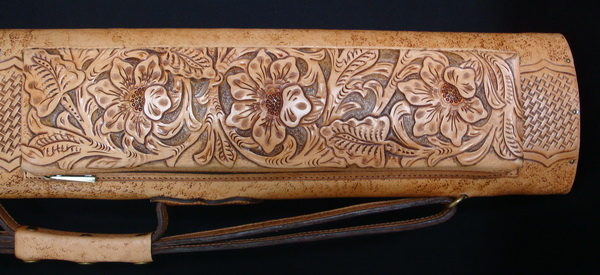
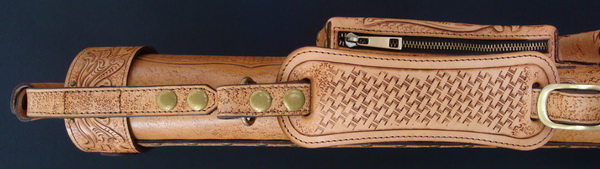
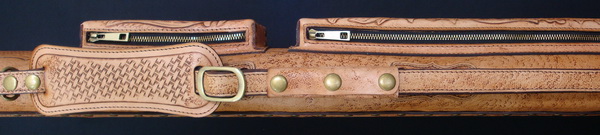
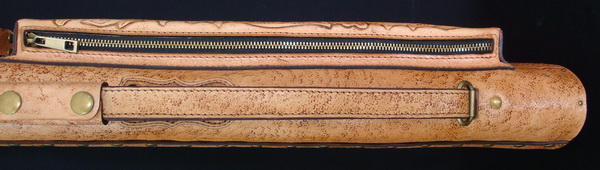
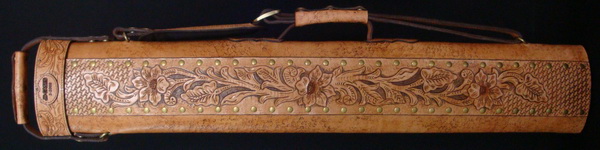
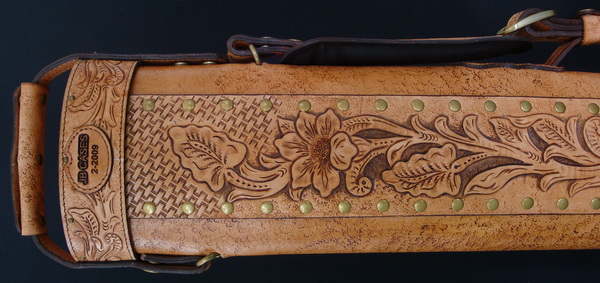
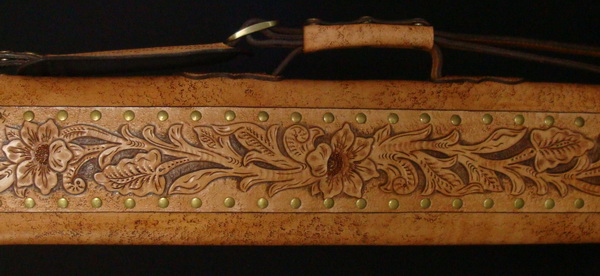
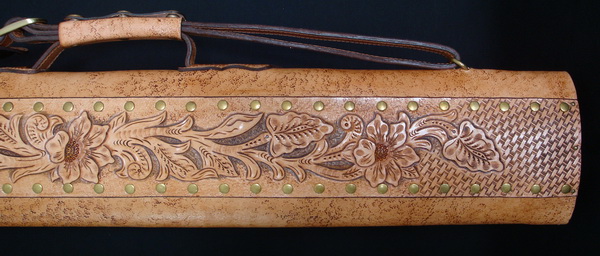
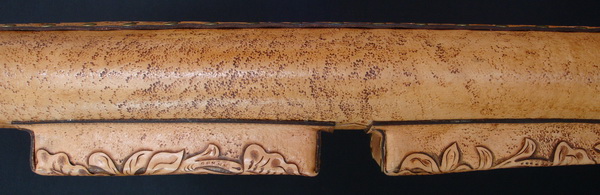
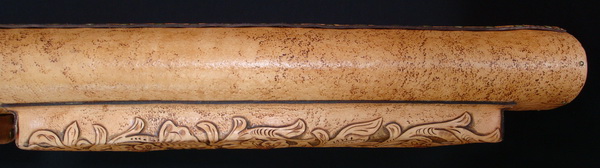
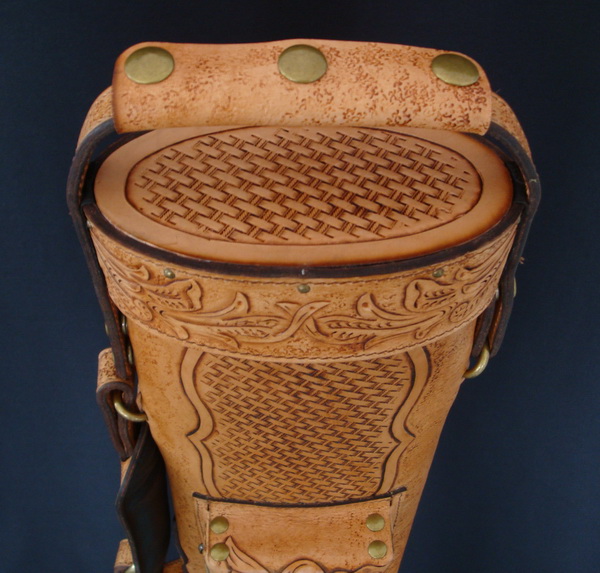
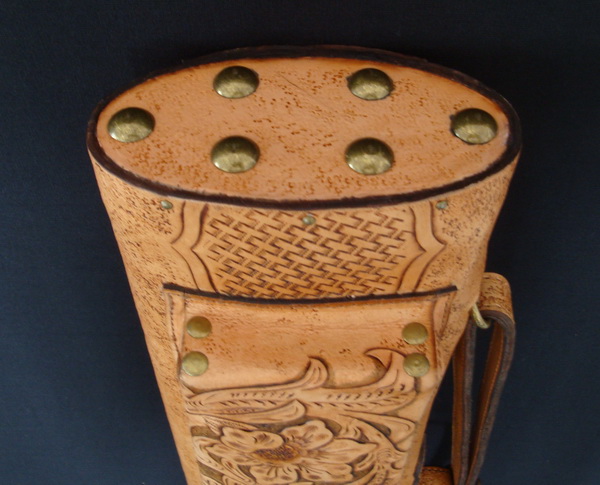
First all of our decoration where we say it's tooled are HAND tooled meaning that the impression is set by hand and the tool is struck by hand one at a time.
Machine embossing refers to making the impression by fitting the stamp or die into a press and having the impression made through the pressure of the machine, be it by manual lever or pneumatic pressure. Scrollwork is done this way were a strip of leather is passed between rollers and the impression is scrolled onto the leather. Another form of machine embossing refers to making a larger pattern by hand and then from that pattern a negative mold is made and then that mold is used to impress the original pattern endless times onto the leather.
When leather is hand tooled - meaning that all the decorative work is done by the maker and using inert non-mechanical tools, the maker has the freedom to be expressive in ways not possible with machine embossed tooling. For example the maker can vary the depth of each stamp by adjusting the moisture level of the leather and the striking force on the stamp. The maker can adjust the angle of the stamp to achieve different effects. When the stamp is done at different angles then the it will catch the light differently and when you see examples of this done the genius of the technique becomes obvious.
The carver can add any sort of flair that he or she wants to beginning with the initial carving followed by the modeling and stamping. This is evident when the leather worker's guilds do contests where all the toolers start with the same pattern and the results are dramatically different. Here is an example of a Ron Ross pattern done as a contest. You can see that the interpretations and skill of the carver's is different from piece to piece
http://www.iilg.net/contests_past/2000sheridancheckbook/contestentry.html
I guess the best way to say it would be comparing a color copier with an artist and a blank canvas. One can take an original piece and copy it with various settings to play with the color and contrast but the essential design never changes. An artist can take a photo and transform it on a blank canvas a million ways and every one of those ways is unique.
For Sheridan carving in particular there is one technique that cannot be duplicated with machine embossing to my knowledge. That is the lifting of the petals on the flowers. The very best Sheridan work is characterized by the lifelike three-dimensional flowers where the petals have a high lift to them. This lift and deep lines were pioneered by Don King of Don King Saddlery which is located in Sheridan Wyoming, hence the Sheridan style of tooling. A machine embossed piece cannot sculpt the leather in this way. Don King invented tools for this purpose.
How does one tell the difference? Machine embossed pieces will often have a sort of flat look to them that is not really crisp. Depending on the size of the die plate they will look very repetitive. Only the leather houses willing to spend a lot of money will make large plates that do not show repetition. When you look at a machine embossed piece you can see that the impressions and patterns are exactly the same throughout the piece. When you look at a hand tooled piece you will see that there are differences throughout the piece, especially where the same pattern is repeated. A touch here, a slight flair there, little things that were done unconsciously or on purpose.
As in pool the very best make it look deceptively easy. The very best execute on a level that seems as if it couldn't have been done by hand. Look at Chester Hape's saddles and you will see repeated patterns that are incredibly intricate and precise and it's only on closer inspection do you see the very slight differences that indicate hand tooling. Once you know that the saddle is all done by hand then the enormity of doing such a piece becomes apparent.
It's obvious to me that a hand tooled piece should be more expensive when comparing apples to apples. But the thing is that one is not always making an apples to apples comparison.
For example every embossing die has to start with some kind of master that was made by hand or laser engraved or cnc router engraved. This step is artistic on some level and the quality of the die can be crude or very detailed and intricate depending on the care that went into making it. Then there is the application of the pattern and how well that is arranged which can be done artfully so that the result is very beautiful or carelessly as if someone went nuts with a rubber stamp.
Then for the hand tooling there are many many levels here as well. Let's leave the actual skill of using the tools behind and focus on the design aspect. These days there are patterns which are readily available through books and tutorials and things called Craft-Aids which are ready made plastic sheets with patterns engraved on them for easy transfer to leather. So with this the leather worker has a good portion of the work done for them if they don't draw their own patterns. So to me a piece that is done using a pattern from someone else is like building a cue using a blank from someone else. It might turn out great but it's built on someone else's work as well. That type of piece to me is worth a little less than an all original piece. But JUST A LITTLE because now we move into the execution.
As I mentioned above you can really see the differences in hand tooling when you view the pieces created by different artists using the same pattern. The real magic lies in what the tooler does with the basic pattern. Working leather is a fairly easy thing to learn to do. Anyone can get a basic set of tools from Tandy leather or anyplace that sells them and follow the directions and end up with a carved and tooled flower. It's very low tech at the beginner level. As with anything in life practice makes perfect however and this is no exception. There are so many different methods to working the leather from how moist to make it, which tools to use in which way, which blade to use, how much pressure on the stroke and so on that there are many books and videos and online tutorials dedicated to the top level of leather tooling.
So is a bad carving worth more than a good embossing job?
No. It's not. When the totality of the piece is taken into consideration then one must judge how well the decoration was executed. If the embossed piece looks great and tight then it's a good piece. If the carved piece shows a lot of errors then it's not a good piece. But if you have two pieces where the carving is great and the embossing is great then the carved piece should be worth a lot more.
But becoming knowledgeable in what is "good" and what needs improvement as far as leather decoration is as much of an adventure as learning the same thing about cues.
As cue cases become more expensive and collectible in their own right. (well I suppose that they have already), I expect for folks to start judging them as stringently as they do for cues when it comes to the expensive ones. As in cues when a case is sold by beginners at a lower price point then flaws are to be expected and tolerated. In the upper regions of price however there is no reason to tolerate beginner level work and the way to see the difference is to educate oneself on what master level work is.
Our cases are not master level yet in regards to the Sheridan style of tooling, when they get there the price will reflect it.

Well golly, glad Jessie slept through all that. She didn't last night. Thank you everyone for your support and encouragement. I only got frustrated once last night and the nurse showed me what to do and now I am becoming quite adept at figuring out what she needs and wants.
Here is a picture of the incomparable Jessie Barton, the world's future greatest case maker (in her spare time)






 I was wondering when I would hear something about it. Been thinking for about the last month ..... someone's due to be a Dad here directly. Best wishes to the three of you. :wink:


