the amboynia collectionivory joint pins!!

Charlie Edwards said:
Until I see one, I ain't believing ivory pins. Post a picture of them, please.

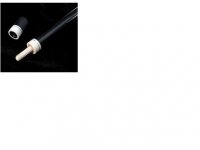
They're ivory pins, and quite strong. I"ll have to check, but I believe a photo the pin and the entire collection was in the May '04 InsidePOOL Magazine.

attachment.php


And there's no reason to think that you coudn't play with these cues if you wanted to.

Fred
 

Attachments

  • Ivory Pin.JPG
    Ivory Pin.JPG
    8.9 KB · Views: 282
Last edited:
Cornerman said:
Less weight, I would imagine.

Fred

Titanium would be the best material for strength and weight reduction :)

I was wondering about the original post mainly because traditional metal pins are many times stronger than wood or ivory variants. I just don't see the logic behind using substantially weaker material unless the cue maker is trying to achieve a specific hit-characteristic. Even if the pin can handle the load stresses initially, how will it do 50+ years from now? If the cue will only be a display piece, then ivory pins would be fine, but the playabiliy/longevity questions still leaves me wondering...
 
lord_shar said:
Titanium would be the best material for strength and weight reduction :)

I was wondering about the original post mainly because traditional metal pins are many times stronger than wood or ivory variants. I just don't see the logic behind using substantially weaker material unless the cue maker is trying to achieve a specific hit-characteristic. Even if the pin can handle the load stresses initially, how will it do 50+ years from now? If the cue will only be a display piece, then ivory pins would be fine, but the playabiliy/longevity questions still leaves me wondering...

Shar,

I think you are correct. From a playability persepective it doesn't make any sense....I would think it's simply to say that it was done....and the exclusivity of it. Cues have also been made with ivory forearms and entire butt sections, but as many of us saw in Valley Forge, that's definitely not the most stable way to make a fancy cue, even as a display piece. Two of them cracked with the temperature and humidity variances while at the show.

It remains to been seen how a lot of the really fancy stuff that's being made nowadays will hold up over time. Just hope I'm around 50 years from now to find out.

Sean
 
Last edited:
lord_shar said:
Titanium would be the best material for strength and weight reduction :)
I think you mean strength to weight ratio. Big difference. Does Titanium have a lower density than ivory?

I was wondering about the original post mainly because traditional metal pins are many times stronger than wood or ivory variants. I just don't see the logic behind using substantially weaker material unless the cue maker is trying to achieve a specific hit-characteristic. .
I'll turn the logic around. Is there any reason to use a substantially stronger material? What type of strength is needed in a threaded cue joint and why?

I think the answer lies in the fact that many billiard cues still enjoy a wooden thread after decades of service.

Even if the pin can handle the load stresses initially, how will it do 50+ years from now? If the cue will only be a display piece, then ivory pins would be fine, but the playabiliy/longevity questions still leaves me wondering...


But to the question of ivory in the pin, I think it's mostly for looks. But, it's not as weak as most would think. That should be enough to not bother with asking any further questions. It's not like Jerry was saying that Ivory is the ideal or even better structural material for using it in the pin. It looks good. It feels good. And it works. That's about it. Guessing about future hold-up is pointless in this case. Whether or not it will of course will remain to be seen. That shouldn't preclude someone from buying and enjoying the ivory pinned cues today.

Fred
 
Last edited:
lord_shar said:
Titanium would be the best material for strength and weight reduction :)
I was wondering about the original post mainly because traditional metal pins are many times stronger than wood or ivory variants. I just don't see the logic behind using substantially weaker material unless the cue maker is trying to achieve a specific hit-characteristic. Even if the pin can handle the load stresses initially, how will it do 50+ years from now? If the cue will only be a display piece, then ivory pins would be fine, but the playability/longevity questions still leaves me wondering...


It's great to say that titanium is the "best" but you seem to ignore that the pin really holds no stress when the cue is screwed together properly. Once a cue is tightened correctly all the load is on the surface where the cue touches, sure there would be some stress if you attached a "pulling" force to each end, but that isn't the case, at least I hope you aren't playing tug-o-war with your cue. So the main point to the cue is to hold the 2 together and also act as one with the rest of the cue when vibration travels threw the joint area, this would be the reason why wood might be the best to give the feedback of a 1 piece cue. Sure in this case Ivory was used just to make these cues stand out and to make them a bit *fancier* as it where, but the fact is the material is more then strong enough to work in this application.

As for Sean's comments on the cues that cracked. Ivory in large chucks has never been stable, that Black cue would have cracked no matter what, you can't take a piece that big carve it and do artistic relief and not expect it to crack. It's the reason you'll find many Ivory handle cues in sections, must cuemakers know not to try and use a piece that big. Also most know to core the ivory; I guess Richard didn't know this stuff. The word is he is going to make that cue again, if he does I believe it'll crack again. It's just a big fact of Ivory that it moves and cracks when used in big chunks, the moisture content in Ivory changes and when it does the piece shrinks and moves. I'm not an Ivory expert but maybe the old mastodon ivory would be a better choice? My point is to blame the VF convention center is a joke, those cues were not stable and would have cracked down the road, maybe they weren't helped by the conditions (read display case) but I wouldn't blame the room. just my opinion of course.

Jim
 
cueaddicts said:
Cues have also been made with ivory forearms and entire butt sections, but as many of us saw in Valley Forge, that's definitely not the most stable way to make a fancy cue, even as a display piece. Two of them cracked with the temperature and humidity variances while at the show.


Sean

Sean-
Do you mean that carved ivory Richard Black that Bill Grassley had at his booth? Is that what cracked?
 
pharaoh68 said:
Sean-
Do you mean that carved ivory Richard Black that Bill Grassley had at his booth? Is that what cracked?


That would be the cue, she cracked the whole way down, top to bottom.

Jim
 
JimBo said:
That would be the cue, she cracked the whole way down, top to bottom.

Jim

That could be one of the funniest things I've ever heard. I mean, its sad for Bill because that must have cost him a lot of money but, then again, I have to ask, what the hell would anyone be thinking buying a solid stick of carved ivory for a pool cue? I mean, I have my opinion of that cue and I'll keep it to myself so as not to offend anyone, but based on stability of the material alone, that was a risky venture! Thus furthering my theory that Richard Black is NOT the brilliant, top-notch cuemaker that so many claim he is.
 
JimBo said:
It's great to say that titanium is the "best" but you seem to ignore that the pin really holds no stress when the cue is screwed together properly. Once a cue is tightened correctly all the load is on the surface where the cue touches, sure there would be some stress if you attached a "pulling" force to each end, but that isn't the case, at least I hope you aren't playing tug-o-war with your cue. So the main point to the cue is to hold the 2 together and also act as one with the rest of the cue when vibration travels threw the joint area, this would be the reason why wood might be the best to give the feedback of a 1 piece cue. Sure in this case Ivory was used just to make these cues stand out and to make them a bit *fancier* as it where, but the fact is the material is more then strong enough to work in this application.

...<SNIP>...

Since the pin is holding both halves of the cue together, then each stick half is inherently pulling the pin in two opposing directions. The load would have to be distributed accross the pin's threads in addition to the touching joint collar surfaces. At least this is my impression... is this incorrect?

The ivory pin is probably fine from stresses moving along the cue's length, but would breaking subject the pin to any horizontal or side-based loads?

I often see mountain bike frames and components getting torn apart by inadequate engineering, so I tend to be a proponent of overbuilding for stress instead of underbuilding. As a result, please take my text with a grain of salt :)
 
lord_shar said:
Since the pin is holding both halves of the cue together, then each stick half is inherently pulling the pin in two opposing directions. The load would have to be distributed accross the pin's threads in addition to the touching joint collar surfaces. At least this is my impression... is this incorrect?

To an extent it is correct, except the use of the cue is to hit balls, when you do that it pushes the cue together, but since the joint is butted up against itself the energy transfers threw the cue. Now if you didn't have it together all the way the pin threads would have to deal with a load.

The ivory pin is probably fine from stresses moving along the cue's length, but would breaking subject the pin to any horizontal or side-based loads?

This is correct, I believe this to be very bad for Ivory or any pin, the one difference might be the way Ivory reacts to temp swings (cold to hot) SO if it were to take a smash from the side or if you took it from the -12 trunk of your car into an 85* pool room you may be looking for a new pin.
I often see mountain bike frames and components getting torn apart by inadequate engineering, so I tend to be a proponent of overbuilding for stress instead of underbuilding. As a result, please take my text with a grain of salt :)

I think in most cases a mountain bike takes on more abuse then a pool cue, but that's just MHO.

Jim
 
JimBo said:
I think in most cases a mountain bike takes on more abuse then a pool cue, but that's just MHO.

Jim
You haven't seen my bike and my cue.:eek:
I guarantee you, my cue has more mileage.:D
The bike just hangs upside down in the garage.
The cue gets a beating almost daily.:eek:

That ivory join though, I don't know of any other maker who dares make that thing.
 
lord_shar said:
The ivory pin is probably fine from stresses moving along the cue's length, but would breaking subject the pin to any horizontal or side-based loads?

I would have thought the pin would be suspect under side loads, but Jerry put a side load on this pin, and it didn't break or crack. It bent and recovered.

JimBo said:
This is correct, I believe this to be very bad for Ivory or any pin, the one difference might be the way Ivory reacts to temp swings (cold to hot)
This by far would be the number one concern with the use of Ivory, not its inherent strength (compressive, tensile, or shear). I have to assume that Jerry did some wonderful finishing and sealing to combat the potential problem.

Fred
 
Last edited:
Back
Top