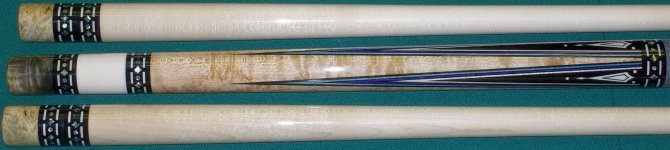
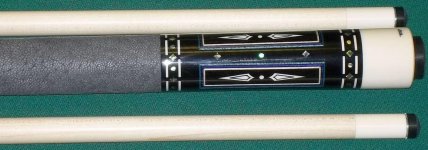
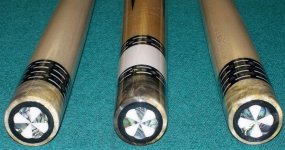
Even though a cue is custom, alot of cuemakers have some constants they don`t really want to change. Typical things can be:
- joint diameter.
- butt diameter.
- shaft and butt taper.
- joint pin.
Construction methods can be specific to a cuemaker based on what he or she feels is best and part of their "signature" Some only make full length core cues, some will use metal in the A joint, some will only use phenolic or wood, some will not use ivory in their cues. Ferrule materials, length and construction might not be negotiable either.
It`s not becuase the builder is a d**k, but the way their equipment is set up. Dialing in you lathe, tapering setup etc. can take alot of time, why mess with a setup that is perfect.
This for the most part really isn`t a issue as most pool cues share fairly similar measurements, shafts is usually between 12 and 13mm, joint collar is usually about .840" ish and butt diameter is about 1.25" some go a little thinner, some go a little thicker, but not by much. You can read until your blue in the face about different joint pins, pilot vs flat faced etc, but if it`s done right they all will feel like one piece of wood.
The same can be said for ferrules, I don`t think you ever will find a consensus on threaded vs untreaded, capped vs tube, tennon size, thread pitch, ferrule material etc.
Most makes their cues around 17-21oz, the avereage will be just around 19, maybe slightly lighter.
Very light cues present the maker with more limitations in woods and materials used, heavier than 21oz certainly isn`t a problem if you use dense woods, but a heavy cue can feel sluggish.
I hope this helps.