
what type of glue is this?

Dave38

theemperorhasnoclotheson
Silver Member
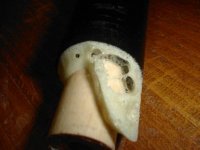
I recently bought a pre-cored front from a pretty well known cuemaker/supplier and noticed that the glue that had spilled out, was an off white-almost yellow foamed compound. Anyone else see this type before? It almost looks and feels like 'Great Stuff ' foam insulation. I have only seen the hard, brown poly-glue, gorrilla glue color. I broke off a piece very easily, and am concerned about it holding up. Any opinions?
Thanks,
Dave B
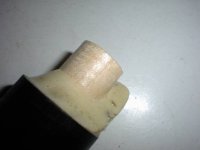
glue1.jpg

glue2.jpg
 
Last edited:
why dont you call your supplier and ask? that would be the easiest and best way to figure out what glue it is.
 
looks like elmers polyurethane glue same family as gorilla glue one nice thing about that type of glue it penitrates the wood in both directions you cant ask for anthything better it is also 100% waterproof you have no reason to worry about it .
www.briannaproducts.com
since 1988
 
Its probably gorilla glue expanding foam type of glue works great on 2 flat surfaces.......Dave
 
brianna187 said:
looks like elmers polyurethane glue same family as gorilla glue one nice thing about that type of glue it penitrates the wood in both directions you cant ask for anthything better it is also 100% waterproof you have no reason to worry about it .
www.briannaproducts.com
since 1988
I have asked in a non-prying way and was told it is a proprietary method. I have a bottle of elmers poly glue and it looks exactly like the gorilla glue. Do they make more than one type? This stuff broke off real easy, whereas gorilla and elmers, I have had to scrape it to remove it from where it spilled.
Dave38
 
Last edited:
there is Mike, alot more than most poly glues I've played with, that's the concern I have. How effective can this type of glueing be if there are air pockets up inside the sleeve? It's an ebony front, and I was going to put holly points into it(once I have practiced enough times):D and now I'm rethinking that and may only do a solid front, maybe for breaking. This would be my first attempt with a cored front, and I don't want to put alot of work into something that may come apart later, or not hit as solid as it should. Thanks for the help guys,
Dave
 
Dave38 said:
there is Mike, a lot more than most poly glues I've played with, that's the concern I have. How effective can this type of gluing be if there are air pockets up inside the sleeve? It's an ebony front, and I was going to put holly points into it(once I have practiced enough times):D and now I'm rethinking that and may only do a solid front, maybe for breaking. This would be my first attempt with a cored front, and I don't want to put a lot of work into something that may come apart later, or not hit as solid as it should. Thanks for the help guys,
Dave

You are right but you are still assuming, Points would add structural strength and if you don't like what you see when you cut the points, then you can stop, call the company and tell them what you found. If you leave it solid, you still might have problems, If you are still practicing then Holly, -----------------------------------------------------------------------------------
-------------------------------------------------------------------------
(Catch my breath)
--------------------------------------------------------------------
---------------------------------------------------------------------
Those dashes are for all the bad words I was thinking of that go with working with Holly on a bad day.
 
Dave38 said:
I recently bought a pre-cored front from a pretty well known cuemaker/supplier and noticed that the glue that had spilled out, was an off white-almost yellow foamed compound. Anyone else see this type before? It almost looks and feels like 'Great Stuff ' foam insulation. I have only seen the hard, brown poly-glue, gorrilla glue color. I broke off a piece very easily, and am concerned about it holding up. Any opinions?
Thanks,
Dave B
View attachment 46070

View attachment 46071

It is without any shadow of a doubt some type of polyurethane glue. Generally used when the coring process is of sub-standard. I'm not saying that the fore you have is not quality but think about it for a second.....
OK, your done thinking. If the core is done correctly and the tolerances are what they should be why would an expanding type glue need to be used?
Also, the other problem that may or may not be inherent is glue compatibility. What type of glue would you use to hold any points and/or veneers into place? If you don't know what type of glue it is how can you be sure that what you are going to use will be compatible and stand the test of time?
These are just a few of several questions I would ask myself before putting any length of time into the project.
 
I completely agree with Lee, it looks like Elmer's polyurethane glue. I am not saying it is since I don't know, but it is a dead ringer for it. I used some to glue down a T mold between my tile around my fireplace and wood floor. It expanded like that, and I had to remove the residue. It is probably half the cost of gorilla glue (or maybe even less) if I remember correctly.

I am not saying I would trust it or it would be ok, but there might be air gaps like that on the edges of expansion simply because it is expanding into no resistance space. The inside may be fine.

It may be more trouble than it is worth, but you could buy a bottle, bore a long sleeve and glue a plug inside and observe the expansion to see if it looks identical. Then you could slice up the sleeve lengthwise and observe for yourself how the glue behaves between the two pieces.

Kelly
 
i know at least 5 or 6 top cue makers that use this type glue to assemble there cues this glue penirates the wood i dont understand why you think it is bad to use this even if its a perfect fit before you glue this type of glue is unbeatable i think you are worrying for nothing you should be fine
 
Kelly_Guy said:
It may be more trouble than it is worth, but you could buy a bottle, bore a long sleeve and glue a plug inside and observe the expansion to see if it looks identical. Then you could slice up the sleeve lengthwise and observe for yourself how the glue behaves between the two pieces.

Kelly
I have some time this weekend, so I think I'll try Kelly_Guy's idea,( It'll help me sleep better at nite:) ) Seriously, thanks for the opinions guy, I really appreciate it.
Have a great weekend,
Dave
 
Liquid Nails makes a glue called RHINO ultra glue,it foams up and out like the pics. you posted.set time is 20min. if wood is damp and 40 min. if wood is dry. it may sound like i have that turned around but that is what it say on the bottle,lol.seem to work great and not a bad price. later Jeff
 
hawk4863 said:
Liquid Nails makes a glue called RHINO ultra glue,it foams up and out like the pics. you posted.set time is 20min. if wood is damp and 40 min. if wood is dry. it may sound like i have that turned around but that is what it say on the bottle,lol.seem to work great and not a bad price. later Jeff

Moisture can be an accelarator for glue. I believe someone here posted once that they breath on the back of a tip before applying CA to apply just a slight amount of moisture to the tip.

Kelly
 
It is Gorilla (polyurethane type) glue. Although I would prefer a slow setting epoxy for the adhesive and a laminated maple core, I've seen a few of those pieces used as cue handles with zero problems. YMMV.

Martin


Dave38 said:
I recently bought a pre-cored front from a pretty well known cuemaker/supplier and noticed that the glue that had spilled out, was an off white-almost yellow foamed compound. Anyone else see this type before? It almost looks and feels like 'Great Stuff ' foam insulation. I have only seen the hard, brown poly-glue, gorrilla glue color. I broke off a piece very easily, and am concerned about it holding up. Any opinions?
Thanks,
Dave B
View attachment 46070

View attachment 46071
 
jazznpool said:
It is Gorilla (polyurethane type) glue. Although I would prefer a slow setting epoxy for the adhesive and a laminated maple core, I've seen a few of those pieces used as cue handles with zero problems. YMMV.

Martin


Slow setting is best for me also. Then again 5 or 6 top cuemakers can't be all wrong, could they?
I have to disagree with the laminated core though.......PH is my top choice,
I have also used some wenge and like it very well. I have seen cant boards of this species that have been laying at the mills for years that are still perfectly straight and have no checks or cracks in them after going through brutal cold winters and muggy hot summers. Very stable wood. Plays nice also.

Have too get some updated pics to you Martin. Vens coming through pretty nice so far.
 
polyur glues

make a strong durable bond. Yes, moisture is used to both accelerate and help the glue more firmly bond with the materials. It tends to foam wherever it seeps out as it expands. I have used it for repairing problem furniture, and I am amazed at the strength it gives joints. The only fault I could imagine using it for cues is if the joint is not tightly clamped when the glue is setting it may make some ugly glue lines. But do not doubt that a properly prepared and clamped joint will be strong!
 
Hi Dave, I'd love to see the updated pics. I like purpleheart as a coring/ handle wood also.

Martin


BarenbruggeCues said:
Slow setting is best for me also. Then again 5 or 6 top cuemakers can't be all wrong, could they?
I have to disagree with the laminated core though.......PH is my top choice,
I have also used some wenge and like it very well. I have seen cant boards of this species that have been laying at the mills for years that are still perfectly straight and have no checks or cracks in them after going through brutal cold winters and muggy hot summers. Very stable wood. Plays nice also.

Have too get some updated pics to you Martin. Vens coming through pretty nice so far.
 
olsonsview said:
make a strong durable bond. Yes, moisture is used to both accelerate and help the glue more firmly bond with the materials. It tends to foam wherever it seeps out as it expands. I have used it for repairing problem furniture, and I am amazed at the strength it gives joints. The only fault I could imagine using it for cues is if the joint is not tightly clamped when the glue is setting it may make some ugly glue lines. But do not doubt that a properly prepared and clamped joint will be strong!
Gorilla glue is definitely not a good idea to use on joint collars or buttsleeves or ferrules.
I really wonder if gorilla glue dampens the hit of cored cues since it is a poly ureth glue. Epoxy hardens up really hard.
 
I have been coring cues for years and have never had a problem with the poly glue. The elmers just changed the formula about a year ago and went from being like honey to being like water. It is much runnier than it used to be. That is ok but it required retesting and changing the fit of the core to the outter wood. I cut up every cue I don't finish and inspect for problems and have never seen any of the foam in the pictures in this thread inside the cues. The bond looks good and solid just like epoxy. I feel if you see foam internally you are doing something wrong. The glue is very strong and if used properly there should be no problems. Just make sure you have your clearances correct. Chris.
 
Back
Top