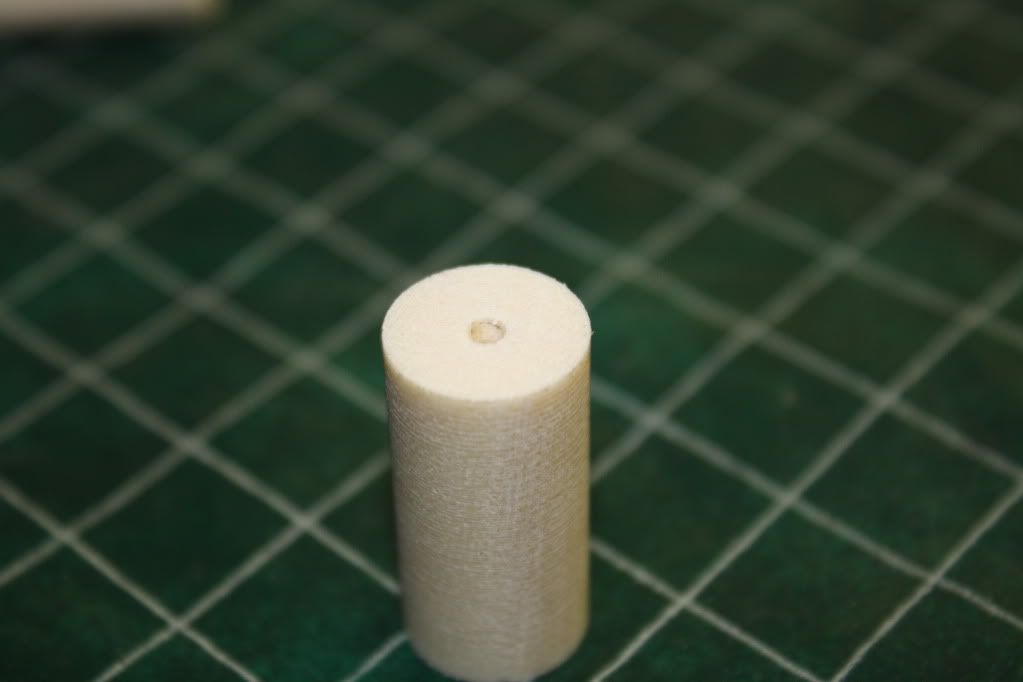
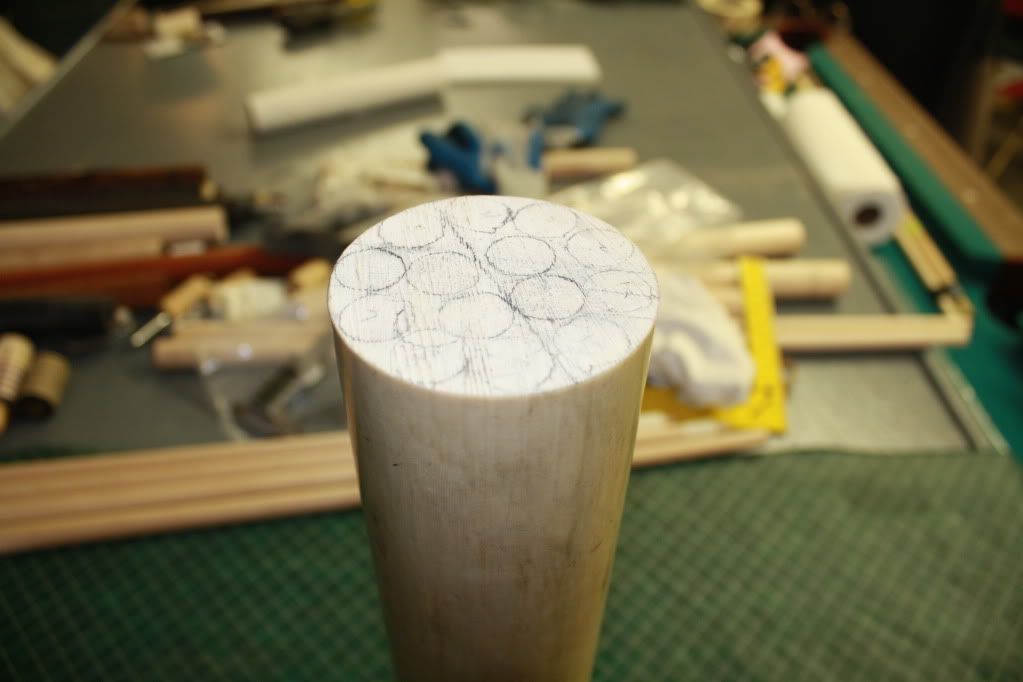
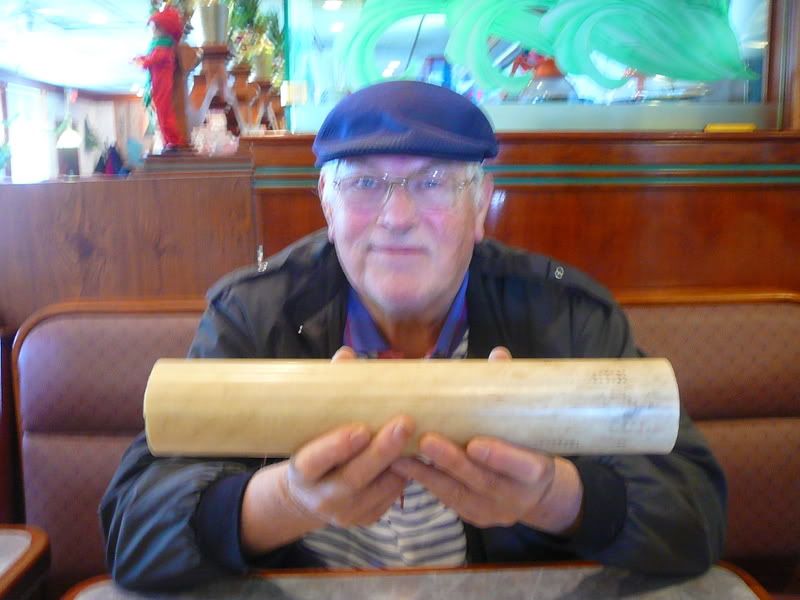
could this possibly be cut into ferrules? Does it look any good?
Hi,
I would slice it on a bandsaw, put 60 degree centers on both ends and cut it between centers with my tool post router.
Anyone have a shaft large enough for this huge Micarta Ferrule?:rotflmao1:
I weighed these ferrules and they are a little lighter than Juma. Because the rod is so heavy I assumed they were heavier than other ferrules but I was wrong.
Material Description:
General Electric 1960s Micarta Material used for 345,000 KVW Power Grid Insulators. Great ferrule material, hits better that Ivory and won't crack.
This material has the sheet aggregate spiral woven within the resin for a very tight and dense cross section. It is denser than the flat sheet Westinghouse micarta that was laminated and has been used by some cuemakers for micarta ferrules.
I bought this rod from Ken ( Stupendous ) Mortensen who aquired it in the 70s. Ken was a cue maker for over 40 years starting with Bert Schrager in California and was the featured Pantograph artist at Schuler Cues for many years.
Real Micarta is a very expensive material because of it's hit, history as a ferrule material, what cuemakers used them, and now it's demand because of it's scarcity as it has not been manufactured for many years.
I would venture to say that any material that was designed to be an insulator for a 345,000 KVW power grid should have some incredible density and resistant structure due to the tight spiral weave and the resin chemistry.
This material is not commercially available and all of the material that was in the field was replaced and remediated because of the asbestos formula.
If you are looking for the real old school micarta, this is the good stuff.
Rick G
These ferrules shown were cut between centers with a router bit. When single pointed at a higher speed on the lathe the RMS finish is is very smooth while taking light cuts and it polishes out real nice.
Stew Mortensen