
You are using an out of date browser. It may not display this or other websites correctly.
You should upgrade or use an alternative browser.
You should upgrade or use an alternative browser.
Latest activity
Filters
Show only:
JOSS CATALOGS

- By Chopdoc
- Cue & Case Gallery
- 86 Replies
If Dan couldn't ID it by the number there is little chance we can.Anybody know the model number for this cue? I have an email from Dan from 2021 stating it's a Joss but he doesn't have any records of it.
It says Joss on the joint with serial number F00049 with the 9 slightly askew. It has 6 points all the same size. I don't know when it was built, the woods or materials used, or anything like that. I bought it new and I've had it since 2006 - that's all I know.
Thanks in advance for any info.
Where did you buy it? From what dealer or distributor? That could help. More detailed pics of the forearm might help to. The butt sleeve is clear but the forearm is fuzzy.
I am digging into it myself. If @CajunPopeye looks, and I look, and Dan looked...and we can't find it...well, it could be pretty tough.
I just put an agentic AI on the task. This is the AI output, edited by me:
The "F" Prefix: Joss used letter prefixes to segment their production batches or to track specific limited editions, distributor exclusives (such as those made for major retailers like J&J America, Cue&Case, or Cuestix), or particular structural designs (like specific joint layouts).
If we can figure out the distributor or dealer they might be able to help.
Since you purchased the cue brand new in 2006, it was likely built between 2005 and 2006. Joss operates as a small custom shop that regularly produced standard model templates built with custom wood choices, modified point structures, or unique veneer color combinations requested by a buyer or distributor. They also made small batches of 50 to 100 cues featuring distinct geometric designs or unique inlays that were sold directly at trade shows or distributed exclusively to select billiard suppliers without ever appearing in standard retail catalogs.
Because your cue features a highly intricate design—characterized by complex window inlays in the butt sleeve and multi-colored veneers lining the sharp forearm points—it strongly points to being one of these limited, uncataloged custom runs. Without an archived internal build sheet matching prefix "F" to its corresponding work order, the exact model number remains a mystery even to the maker.
AI then asked the same things I want to know:
If you want to try and dig deeper, can you tell me:
- Where you bought it in 2006 (e.g., a local pro shop, an online distributor like J&J America, or a trade show)?
- The exact wood types (is that cocobolo or a stained maple in the butt sleeve)?
My thoughts, let's get answers to those two questions to get more traction.
And...it is possible this is 1/1.

National and Gandy Cue History
- By Chopdoc
- Billiard and Pool History in the U.S.
- 29 Replies
So, I have these pictures posted elsewhere, but to keep things together I'll post them here. Forgive me if it is redundant.
This was a shipping accident. I plan to have the cue reconstructed, all the breaks are on the glue lines. It is an HC-140.
An interesting point is that this gives us an opportunity to see the construction, which is pretty standard A joint construction, nothing special except the Vinyl veneers. I will note the forearm is a nice piece of BEM which contributes to my willingness to have it rebuilt. It is remarkable to see how nice some of the wood is in the cues. Real ebony, nicely figured BEM, Brazilian rosewood, cocobolo, and more. I do think these cues have been underappreciated.
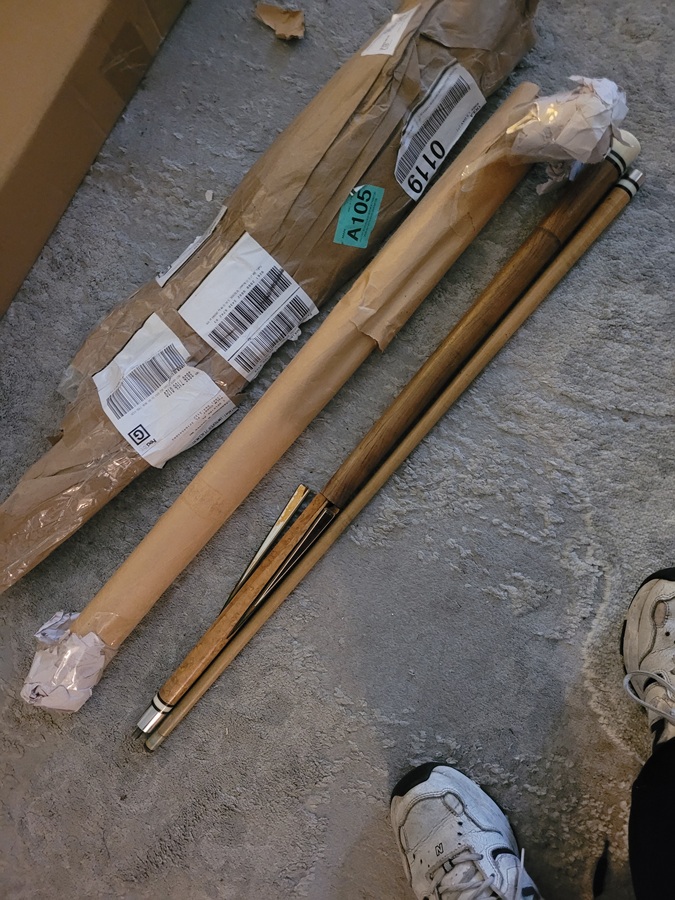
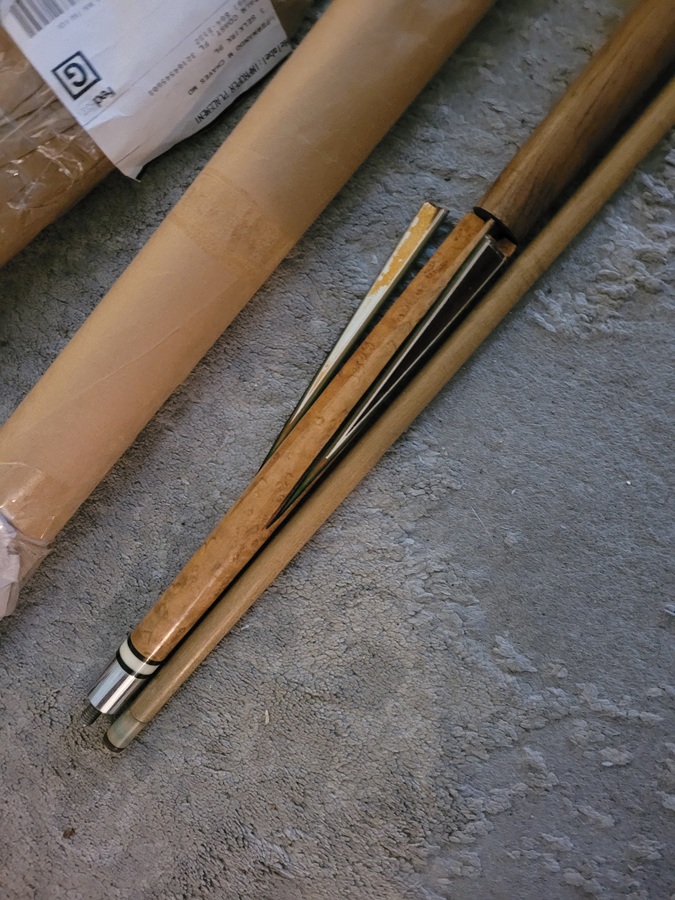
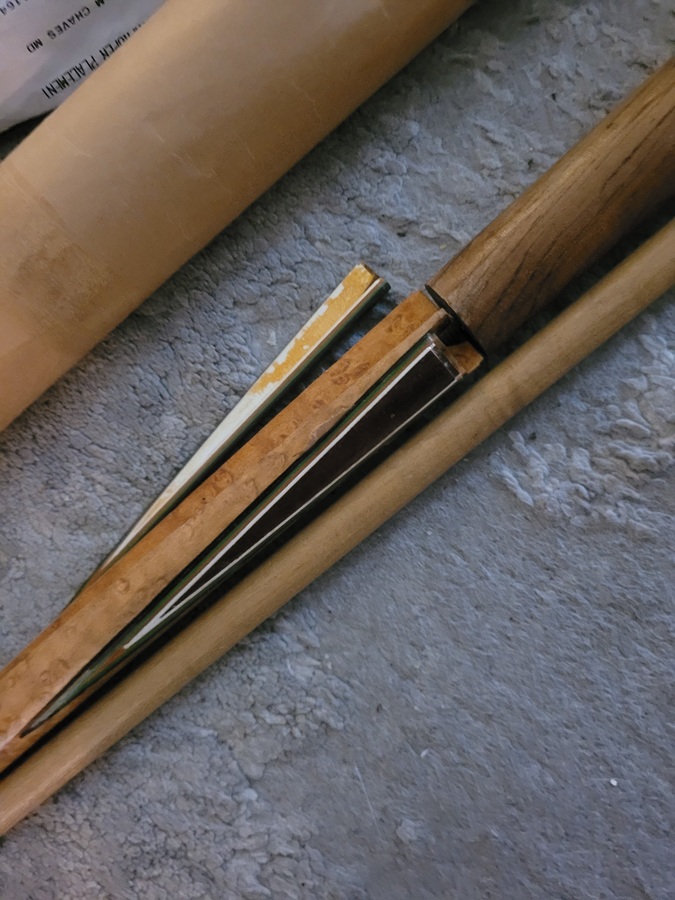
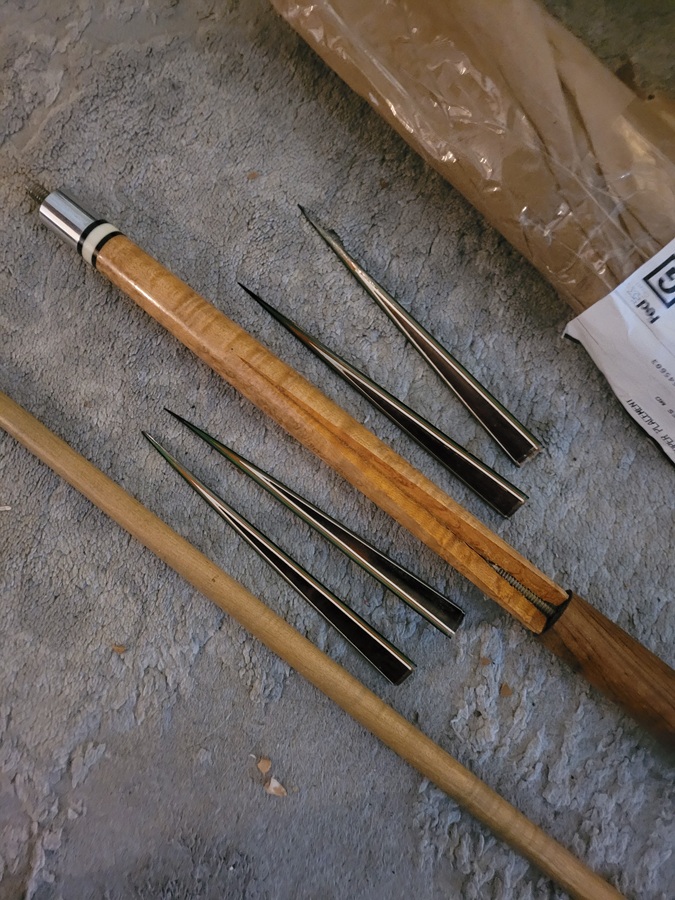
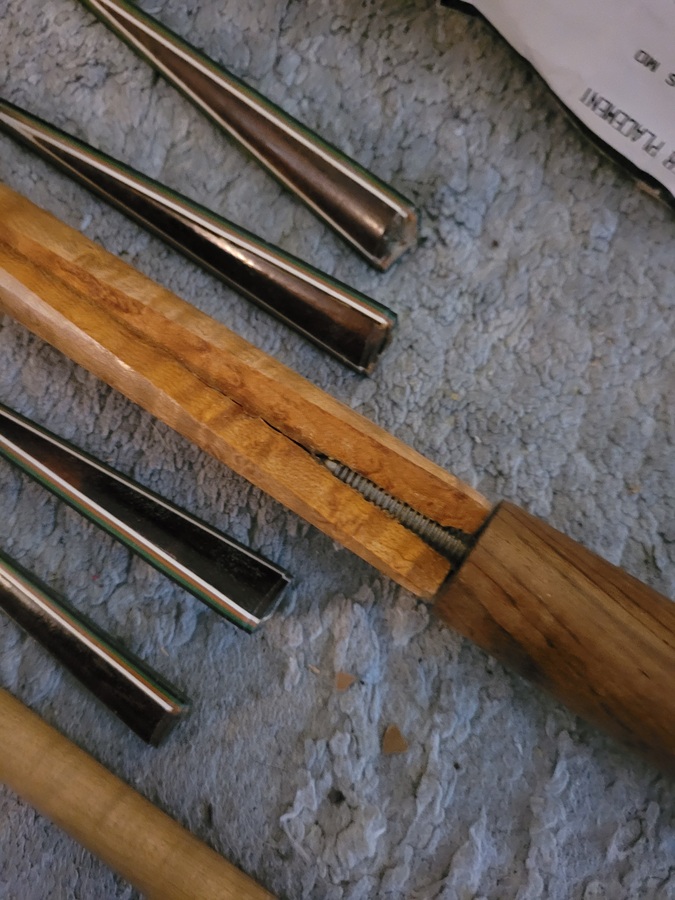
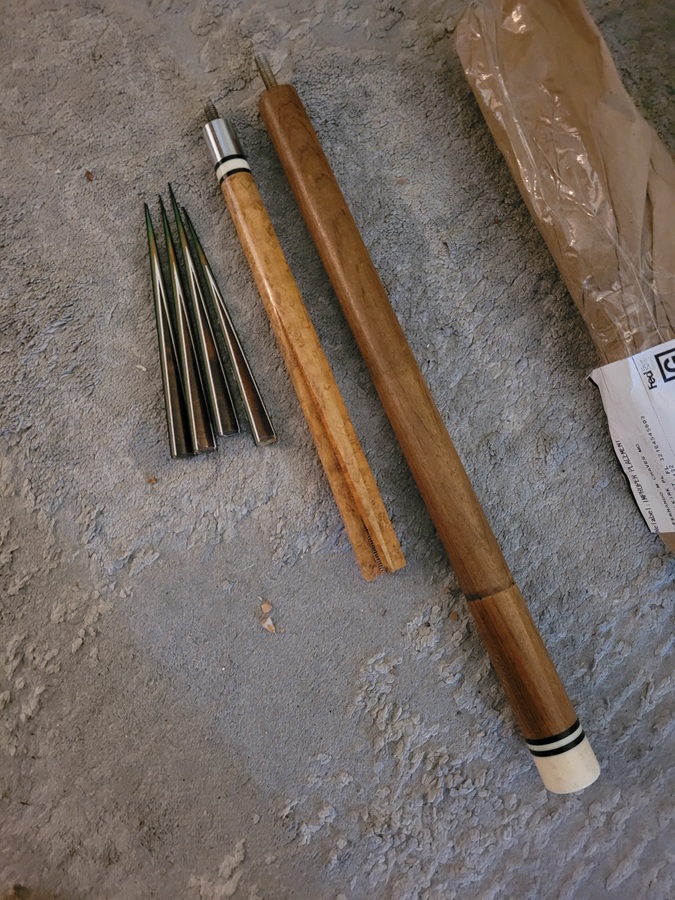
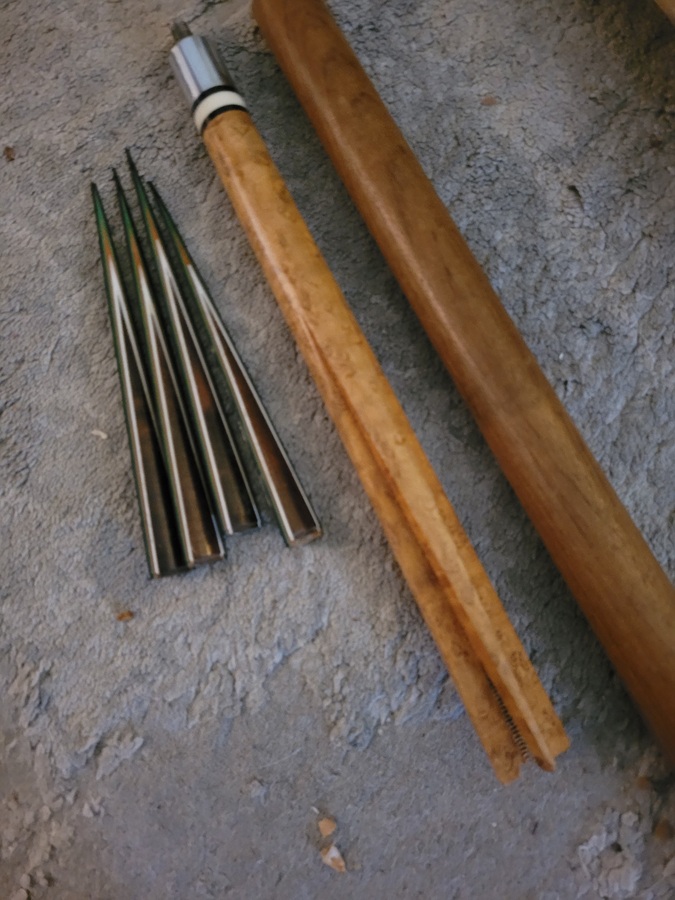
This was a shipping accident. I plan to have the cue reconstructed, all the breaks are on the glue lines. It is an HC-140.
An interesting point is that this gives us an opportunity to see the construction, which is pretty standard A joint construction, nothing special except the Vinyl veneers. I will note the forearm is a nice piece of BEM which contributes to my willingness to have it rebuilt. It is remarkable to see how nice some of the wood is in the cues. Real ebony, nicely figured BEM, Brazilian rosewood, cocobolo, and more. I do think these cues have been underappreciated.
Why not switch the position of the 1 and 9 in 9-ball to make it more interesting?

- By HawaiianEye
- Main Forum
- 79 Replies
Take your medications.Bustamente, the hardest and most productive player for years has a high run of 7 racks...
Why not switch the position of the 1 and 9 in 9-ball to make it more interesting?
- By HawaiianEye
- Main Forum
- 79 Replies
My opponent thought it was a bad dream.Was that a dream...?
Shipping cue
- By Chopdoc
- Main Forum
- 80 Replies
Well folks, here is the happy ending.
The seller responded immediatley. They offered a return for refund...but I want the cue. Honestly, I got it cheap as an "unknown". The shaft is worth double what I paid.
A little while later they refunded my money and said keep it. They said they had packed it in a box, but FedEx took it out of the box, slapped the labels on it you see in my pictures, and sent it like that. I have no reason to not believe them.
The wrapping and padding he had looked adequate to put in a box or tube. But without a box or tube no way. He is a volume seller, seems to know his business. I do think the shipper is at fault.
He sent me my refund and opened a claim with the shipper based on my pictures.
So, the adventure will be to have the cue rebuilt. All the breaks are on the glue lines. I think it can be reassembled.
If nothing else, it provides some documentation of the construction of these cues, which is pretty standard and not surprising, but at least we have some documentation for posterity.
National and Gandy Cue History

- By WildWing
- Billiard and Pool History in the U.S.
- 29 Replies
You're welcome. I've had at least a few cues made that resembled cues of the past, could have been Paradise, could have been Gandy. Simple points, no bumper, that's how old school cues were made in the day. I'll be interested to see how this thread goes.Thank you so much. That means a lot coming from you.
It is a labor of love, and a passion for preserving the history.
I do plan to complete both the National and Gandy catalogs of that era.
The dream is to reproduce the flyer pictures.
All the best,
WW
National and Gandy Cue History
- By Chopdoc
- Billiard and Pool History in the U.S.
- 29 Replies
Thank you so much. That means a lot coming from you.Great thread, Doc. These are very historic, old-school cues.
It is a labor of love, and a passion for preserving the history.
I do plan to complete both the National and Gandy catalogs of that era.
The dream is to reproduce the flyer pictures.
Palmer/Szamboti
- By maha
- Main Forum
- 10 Replies
i dont think gene used szamboti blanks. spain or davis yes.
gus wasnt around yet. i think he made a few full cues in phili. around just before gene died . but gus wasn't noted in that time frame for anything.
more mid 70's gus showed up. and gene was long gone and pete was running the show.
gus wasnt around yet. i think he made a few full cues in phili. around just before gene died . but gus wasn't noted in that time frame for anything.
more mid 70's gus showed up. and gene was long gone and pete was running the show.
Pivot Point
- By maha
- Main Forum
- 27 Replies
good players in the past naturally moved it to keep accurate shots without thinking.I don’t think any pool player on the planet knew about the pivot point, except maybe 10 guys, until the YouTube era of pool. It’s a non factor.
and unless its way out of wack it isnt going to make you miss.
John Davis blank finished by Paul Drexler
- By 4scarecrow
- For Sale Items
- 7 Replies
Martin at Superiorcues was THE retailer of John Davis blanks for quite some time. I looked at them all and bought a few. This blank was among them. Looks like Paul cut it and added the handle section. Very nicely executed build.
Pivot Point
- By maha
- Main Forum
- 27 Replies
i dont deflect much at all so no worries. and while doing a shot that will, i aim not at a different spot on the cue ball but where the object ball is going. in other words say more to the right side of the pocket.
generally on hard inside english shots where the cue ball has to go up and down the table.
i dont know what you guys are doing to have to have special shafts because your cue balls are squirting too far off line to make a shot.
generally on hard inside english shots where the cue ball has to go up and down the table.
i dont know what you guys are doing to have to have special shafts because your cue balls are squirting too far off line to make a shot.
Load more