Some thoughts about storing wood...

Newton

AzB Silver Member
Silver Member
I know this topic has been discussed earlier but reading some of the earlier
posts makes it difficult to conclude.
So I thought I would post some thoughts and possibly get flamed or not in the process :smile:

My wood is bought in different forms/shapes where I have wide
boards - kiln dried - 2" thick, and also 51x51mm,38x38mm squares.

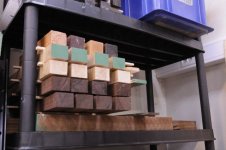
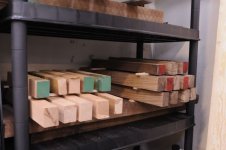
I cut the boards in 2"x2" squares and lay them on my shelf for further
"breathing" and potential darkening of colors.

Now I'm at a cross road where I'm considering turning these down to dowels
and potential hanging these up.

The purchased squares has all wax on them and my idea is to get these
"cleaned" and turned as well.

My approach is that I would park these in the shop - turned round to let
them breath and adjust to the climate in my shop. There is no dehumidifier
in the shop but there is a "heat pump" mounted which suppose to keep a
decent temperature in the shop. (Heat pump is as a AC but works the
opposite way). The humidity would most likely change some how during the
year - I have no device to monitor this - but I feel this is a approach I would
like to use. In this way I hope that the wood would adjust and live through
the climate I have and potentially get the movement it suppose to get while
I'm taking passes on it.

However, I have read that some store the squares sealed for years and
don't cut these before the wood is supposed to be used. I guess in this way
some hope to keep the RH of the wood it has when it comes from the kiln,
and seals this (and possibly use Nelsonite or other woods stabilizers) with
epoxy and then put finnish on the cues. For me this sounds like a "loaded
gun" which waits to get shot/warped if exposed to climate changes. I guess
sealing butt and joint ends is a must so no humidity could pass through the
ends of the cue...

I would most likely only sell a cue every now and then in the local marked
(i.e same climate) but I would for sure like a potential owner to be able to
travel to the higher humidity areas without any potential warpage in the cue.

Now, which thought do you believe would cause most problems for me ?

Kent
 
i have a big walk in closet in my house. i keep all my woods indoors. in nj we have crazy weather. i hang anything round and have shelves for everything square. i have shelves that are like normal wire type. i keep my square wood spread apart so it can breath. i flip them over once every month or two. date everything. thats about it. nothing beats hanging tho. climate controled is improtant tho. ac will dry it out in the summer and heat in the winter. i dont measure humidity either altho i should. i just take my time turning. i turn wood round. then on the second pass if it moved i mark it with an x. on the third if it moves again i mark it with another x. if it moves again i scrap it.
 
Take the wax off the wood and let them sit, adjust to the climate/humidity. Wait awhile before turning round. Just a suggestion. Different schools here, some like myself have wood sit around for along time and then cut, and take slow cuts. Some don't have the time to wait. We could start the discusion of which is right or wrong but it's been discused but I'll just say that is opinion and everyone is different
 
You are in dilemna.
First thing you need to decide on is how are you going to use the woods.
Are they going to be forearms, handles or points.

If they are going to be forearms/handles for sure, I'd cut them round after true-centering down to about 36MM round ( if they are already dry and have sit a while in your shop ) . I don't see why you need to let dry wood sit for years at 2" square if you are going to use them as forearms or handles.
They are too thick and their grain orientation might not even be close to the blank or finished size.
 
You are in dilemna.
First thing you need to decide on is how are you going to use the woods.
Are they going to be forearms, handles or points.

If they are going to be forearms/handles for sure, I'd cut them round after true-centering down to about 36MM round ( if they are already dry and have sit a while in your shop ) . I don't see why you need to let dry wood sit for years at 2" square if you are going to use them as forearms or handles.
They are too thick and their grain orientation might not even be close to the blank or finished size.

And core them too.
 
I know this topic has been discussed earlier but reading some of the earlier
posts makes it difficult to conclude.
So I thought I would post some thoughts and possibly get flamed or not in the process :smile:

My wood is bought in different forms/shapes where I have wide
boards - kiln dried - 2" thick, and also 51x51mm,38x38mm squares.

I cut the boards in 2"x2" squares and lay them on my shelf for further
"breathing" and potential darkening of colors.

Now I'm at a cross road where I'm considering turning these down to dowels
and potential hanging these up.

The purchased squares has all wax on them and my idea is to get these
"cleaned" and turned as well.

My approach is that I would park these in the shop - turned round to let
them breath and adjust to the climate in my shop. There is no dehumidifier
in the shop but there is a "heat pump" mounted which suppose to keep a
decent temperature in the shop. (Heat pump is as a AC but works the
opposite way). The humidity would most likely change some how during the
year - I have no device to monitor this - but I feel this is a approach I would
like to use. In this way I hope that the wood would adjust and live through
the climate I have and potentially get the movement it suppose to get while
I'm taking passes on it.

However, I have read that some store the squares sealed for years and
don't cut these before the wood is supposed to be used. I guess in this way
some hope to keep the RH of the wood it has when it comes from the kiln,
and seals this (and possibly use Nelsonite or other woods stabilizers) with
epoxy and then put finnish on the cues. For me this sounds like a "loaded
gun" which waits to get shot/warped if exposed to climate changes. I guess
sealing butt and joint ends is a must so no humidity could pass through the
ends of the cue...

I would most likely only sell a cue every now and then in the local marked
(i.e same climate) but I would for sure like a potential owner to be able to
travel to the higher humidity areas without any potential warpage in the cue.

Now, which thought do you believe would cause most problems for me ?

Kent
It would depend on where you live. Letting the wood equal out to the local environment may not be such a good idea if you live in Guam or maybe Nevada. It would be too extreme compared to where the finished cue may be shipped. You can make yourself a room for storing your wood and keep the environment at around 80 degrees and 50% humidity and feel the wood/cue will be fine when you ship it. It will also serve as a place to dry your own wood as well if you are cutting your wood from boards. Boarded wood is not usually at a very consistent MC. In fact instead of being say 8% moister it may be 150% moister. There may be more weight in water then wood with some wood you buy for general use.
 
Thanks all for the feedback.

The general idea is to use these as forarms and handles, but I would be ripping
some boards for inlays on the larger squares.

I would start tomorrow turning some of the squares down and see how it goes.
They are all well dried - well using a normal meeter with spikes to check.
When it comes to the waxed squares - I'm not sure what to do. I'll sleep on it
and see what I come up with :scratchhead:

Norway has for sure not a very hot climate where it's pi$$ing down with rain
at the moment :joyful:

Kent
 
I know this topic has been discussed earlier but reading some of the earlier
posts makes it difficult to conclude.
So I thought I would post some thoughts and possibly get flamed or not in the process :smile:

My wood is bought in different forms/shapes where I have wide
boards - kiln dried - 2" thick, and also 51x51mm,38x38mm squares.

I cut the boards in 2"x2" squares and lay them on my shelf for further
"breathing" and potential darkening of colors.

Now I'm at a cross road where I'm considering turning these down to dowels
and potential hanging these up.

The purchased squares has all wax on them and my idea is to get these
"cleaned" and turned as well.

My approach is that I would park these in the shop - turned round to let
them breath and adjust to the climate in my shop. There is no dehumidifier
in the shop but there is a "heat pump" mounted which suppose to keep a
decent temperature in the shop. (Heat pump is as a AC but works the
opposite way). The humidity would most likely change some how during the
year - I have no device to monitor this - but I feel this is a approach I would
like to use. In this way I hope that the wood would adjust and live through
the climate I have and potentially get the movement it suppose to get while
I'm taking passes on it.

However, I have read that some store the squares sealed for years and
don't cut these before the wood is supposed to be used. I guess in this way
some hope to keep the RH of the wood it has when it comes from the kiln,
and seals this (and possibly use Nelsonite or other woods stabilizers) with
epoxy and then put finnish on the cues. For me this sounds like a "loaded
gun" which waits to get shot/warped if exposed to climate changes. I guess
sealing butt and joint ends is a must so no humidity could pass through the
ends of the cue...

I would most likely only sell a cue every now and then in the local marked
(i.e same climate) but I would for sure like a potential owner to be able to
travel to the higher humidity areas without any potential warpage in the cue.

Now, which thought do you believe would cause most problems for me ?

Kent

I am with you Newton, I am all for turning everything round and hanging it if you have room, if not stacking it round on shelves will also work. I normally turn my dowels to 1.4 OD for storage and seasoning, I have been told and I believe that Wood will dry more evenly and adjust to it's environment better if it is a dowel than in any other form. While no method is Perfect, this is certainly a method that will work very well and serve your needs. In addition, while I have only been buying and storing wood for around 8 years, I have had no checking or cracking of wood that was stored this way, but I have some problems with boards and squares.

But, you can always try different method's and find the best for you.

Take care Newton
 
Last edited:
Shaft Wood from 5/4 Maple Stock

Hi,

A lot has been said here concerning the handling and seasoning of wood for cue production. Everyone has their own bend to the brim. The bottom line is make sure your process control and construction produces a straight and stable product. If you live in Guam or Nevada you will be tested more that in the midwest where I live. I like the 4 seasons and think it helps my wood's stability.

As far as shaft wood goes, one thing I have observed is that 5/4 vacuum kilned dried hard maple planks seem to produce better ( more stable ) shafts than 4/4 stock and the cost difference is very small per unit. I think the thicker planks hold their structure and straightness better through the drying process.

I have talked to my supplier's source in Northern Michigan and they told me that after they vacuum kiln the wood down to 4% moisture they re-hydrate the chamber back up to 6 to 7% moisture load. The re hydration is a tempering process.

I hand pick my quarter sawn planks at my hardwood supplier. I am lucky because they store all of their hardwood indoors, not outside or in cold storage. I call them a day before I get there and they have a bunk of wood for me to pick through. When I first started doing this I was buying small amounts of 4/4 stock enough to do about 30 shafts at a time. Most of the boards I picked out had a slight curve or crown to them and I was not happy with many of my finished shafts. These shafts were still better than dowels on the internet.

After cutting them on the band saw and turning them down to 1" dowel in my doweling machine I store them in a vertical rack. In 2005 I asked for a bunk of 5/4 stock for me to pick through. To my suprise, I found that many of the planks were straight as an arrow in both axises. Many of the boards are like T squares.

So my job became much easier because I hand picked all the perfectly straight planks and put them in a stack. I then classify the stack and reject boards that are not 1/4 sawn or have too much sugar.

After I put the squares through the doweling machine there is a much greater degree of straightness from the 5/4 stock dowels when I roll them. As I take more cuts on the pieces with my table saw tapering machine I am getting a much better shaft. Over 90% of my shafts do not oscillate in the center at 1500 rpm when I put them between centers on my wood lathe for sanding and sealing. The ones that do vibrate are due to lighter density and I reject them.

My point here is that picking your shaft wood is just as important as how you store them. Most of the dowels I bought online where not that good. Since I got my doweling machine and hand pick 5/4 planks, my shaft wood is high quality and the cost is less than $3.25 per unit with factoring in the rejects without costing my time.

I think that most of the dowels I bought online where someones rejects. Now that I control the entire process, I know my shafts are all A++. I think most cue makers will agree that the shaft is the most critical component of the cue concerning the hit.

Rick Geschrey
 
Last edited:
One tiny point

If you purchased squares of wood that are waxed, then are they even kiln dried at all? I doubt it. The waxing keeps them from twisting if they were cut wet and then waxed to ship to the various suppliers. Usually dried woods will not be waxed. You had better get a good wood moisture meter and test the wood before making any assumptions, or just treat them as wet wood and acclimate accordingly.
 
If you purchased squares of wood that are waxed, then are they even kiln dried at all? I doubt it. The waxing keeps them from twisting if they were cut wet and then waxed to ship to the various suppliers. Usually dried woods will not be waxed. You had better get a good wood moisture meter and test the wood before making any assumptions, or just treat them as wet wood and acclimate accordingly.

I could be wrong but I am of the understanding that many hardwoods can't be kiln dried. In fact, I believe there are some woods that can't even be air dried without checking, twisting and warping. The moisture change is to quick for them. Most moisture escapes from the end-grain hence it is sealed allowing a slow moisture change through the face of the wood. When my wood arrives, I let it sit for a couple of months and remove the seal on ends and turn it round, as large of a diameter as possible, and weigh it. I then hang in a cabinet and every few months I go back and weigh again. When there is no weight change I then proceed with my normal turning schedule to size. I have some beautifully figured cocobolo and bocota that I have hanging air drying. I paid top dollar for these pieces as they are remarkable. It was around 20% when I received it and upon looking a few weeks ago one of the pieces of bocota had splits along it's length. This is just with air drying.

DSC_0001-22.jpg


DSC_0003-12.jpg


I'm now to old to wait for many of the beautifully grained woods to acclimatize for use in cues and wish I could buy all kiln dried.

Dick
 
I once bought a large cant of Ebony that had been sitting in a wood sellers warehouse for 7 years. I brought it home and left it in my garage. 2 weeks later I looked at it and noticed a large amount of checking and brought it into the climate controlled part of my shop and left it for almost 2 years. Recently I started cutting and found the checking went through the whole piece and I could mostly cut inlay slabs instead of the 4/4 boards that I originally wanted.
All the checking was my fault, just as the checking in the bocote is your fault. By taking the sealer off the ends to soon you allow water to escape too fast. You need to have a moisture meter to check the moisture level when the wood comes into your shop and use appropriate steps from there to insure the wood will cure right.
Most exotics can be kiln dried, the trouble is the time it takes to do it correctly is not worth the trouble for most importers as they can currently sell all the wood they bring in - dry or not. So instead the end user has to dry it and normally there is some degrade in the process. Many times we buy wood from suppliers with large warehouses of wet wood. You bring it into your shop and suddenly it is cracking because it is losing moisture too fast. In my case I should have stretch wrapped the ebony to stop moisture transfer as much as possible because even though it had been in the US for 7 years it was still very wet.
Almost all the woods that I buy are not kiln dried and sit in the shop for 1 to 2 years before I start to turn them. Turn them too soon and you get to the higher moisture content area that evaps too quickly, resulting in the cracking your getting.
 
The other problem with getting kiln dried lumber is cost. Most end users do not want to pay the extra cost for having wood kiln dried. Case in point - recently I tried selling 5 pieces of beautiful kiln dried Tulipwood squares on AZ. It took a bit and only ended up selling the 5 because one person who received their 2 pieces ordered the last 2 pieces. I can only think that the cost was more than most were willing to pay. So instead they hold onto wood for years before it is ready to use and have some degrade that increase the average cost per piece instead...
 
Hello Mr Newton, I'm glad you brought this subject to light, I'm cutting in with a Purple Heart question, please don't mind.
When storing Purpleheart wood, I'm told should it hang indoors in a sunlit window, it will become incredibly dark, is that right? Thank You
 
I once bought a large cant of Ebony that had been sitting in a wood sellers warehouse for 7 years. I brought it home and left it in my garage. 2 weeks later I looked at it and noticed a large amount of checking and brought it into the climate controlled part of my shop and left it for almost 2 years. Recently I started cutting and found the checking went through the whole piece and I could mostly cut inlay slabs instead of the 4/4 boards that I originally wanted.
All the checking was my fault, just as the checking in the bocote is your fault. By taking the sealer off the ends to soon you allow water to escape too fast. You need to have a moisture meter to check the moisture level when the wood comes into your shop and use appropriate steps from there to insure the wood will cure right.
Most exotics can be kiln dried, the trouble is the time it takes to do it correctly is not worth the trouble for most importers as they can currently sell all the wood they bring in - dry or not. So instead the end user has to dry it and normally there is some degrade in the process. Many times we buy wood from suppliers with large warehouses of wet wood. You bring it into your shop and suddenly it is cracking because it is losing moisture too fast. In my case I should have stretch wrapped the ebony to stop moisture transfer as much as possible because even though it had been in the US for 7 years it was still very wet.
Almost all the woods that I buy are not kiln dried and sit in the shop for 1 to 2 years before I start to turn them. Turn them too soon and you get to the higher moisture content area that evaps too quickly, resulting in the cracking your getting.

The bocota that you see there does not have any checks in it. Checks are splits or cracks running from the end grain up from moisture leaving to quickly from the end grain This never occurred in this case. These are splits and separations along the face grain caused from, I imagine, loss of moisture to quickly from the side grain.

Your synopsis enhances my argument that some hard woods are to dense for kiln drying. If air drying unsealed wood causes these splits just what would happen when forced drying occurs?

Your having trouble selling kiln dried tulip wood could be because of many reasons other than the difference in cost. I, myself, very seldom will buy any material, especially figured woods, from another cue maker as chances are, I would be getting nothing but his rejects. Another reason is that there is no insurance that the wood is kiln dried at the premium price offered and there is no recourse for such a small order. I buy all my woods through a few dealers that I have been doing business with for years and have learned to trust after eliminating many others.

Dick

Dick
 
Hello Mr Newton, I'm glad you brought this subject to light, I'm cutting in with a Purple Heart question, please don't mind.
When storing Purpleheart wood, I'm told should it hang indoors in a sunlit window, it will become incredibly dark, is that right? Thank You

Actually, this is exactly backwards. When storing purple heart it should be in a cool, dark place. Sunlight will turn it brown after awhile It is true that once the wood has been turned and sanded and ready for a finish that hanging in the sun or other warm place will enhance and bring back the color.

Dick
 
Dick,
Then I guess you would be surprised to be able to kiln dry Ebony, Tulipwood, Cocobolo, Bocote, Kingwood, Koa and most others. Also you can kiln dry most burl.
As for second guessing whether or not I am lying about something being kiln dried and worried about buying it because of that unknown factor that I can only feel sorry that you missed out on some beautiful kiln dried wood.
I can, on the other hand, understand your feelings about buying wood from another cue maker. I sold wood to cuemakers for several years and there are many pieces that I would love to have now that I am also making cues. But I still sell wood at times to other cuemakers. As for the tulipwood, I have 22 pieces of 20+ years old tulipwood upstairs in storage that are not for sale. If I did list them then by your logic you would not buy them anyway because they probably are not over 20 years old and probably not very good color anyway. The 5 squares I just sold I just bought from one of my suppliers. He kiln dries the wood himself. So, instead of having a blanket assumption that your getting less than the best maybe your should ask questions. If you have some reason to believe that I am lying to you than fine, you can believe what ever you like. But please have some firm footing to base your reasons on, not just that you have assumptions based on dealing with someone else.

Bob Danielson
 
Dick,
By definition a check is a crack in the wood structure of a piece, usually running lengthwise. Makes no difference if it goes to the end or is in the middle, it is still a check.
 
I could be wrong but I am of the understanding that many hardwoods can't be kiln dried. In fact, I believe there are some woods that can't even be air dried without checking, twisting and warping. The moisture change is to quick for them. Most moisture escapes from the end-grain hence it is sealed allowing a slow moisture change through the face of the wood. ....

Dick, I think your spot on. Sealing the ends is a must on some wood since the
wood breaths easier in the ends, hence dries to fast and cracks in the end.

I have been in our families EDIT:woods since i was a kid cutting wood for our fire
(yes we still use fossil "fuels" to heat houses over here). My father always
leave the branches attached so the leafs could suck the tree as empty as it
can and for sure the ends has cracks which might be hugh.
The wood is usually so dry this way that we can part them with a normal axe
without any problems.

Now, if you buy wood from good sources which has had the wood in storage
for a good time, then the water content should be pretty low.
The boards I have bought has been in storage at the dealers professional
storage and the wood is very dry.
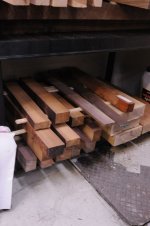
The last wood I bought was african blackwood and this had still it's wax on
both ends (first pic).
However, in the last batch there was tulipwood which was all wrapped in wax......
I guess I would open some of the mid surfaces to let it breathe but keep the
ends waxed for now, since it's not planned to be used for a while.

All, thanks for the discussion and any further additions are most welcome.

Kent J
 

Attachments

  • 6.jpg
    6.jpg
    35.4 KB · Views: 182
  • 4.jpg
    4.jpg
    38.6 KB · Views: 182
  • 3.jpg
    3.jpg
    35.9 KB · Views: 177
  • 2.jpg
    2.jpg
    36.7 KB · Views: 193
Last edited:
Dick,
Then I guess you would be surprised to be able to kiln dry Ebony, Tulipwood, Cocobolo, Bocote, Kingwood, Koa and most others. Also you can kiln dry most burl.
As for second guessing whether or not I am lying about something being kiln dried and worried about buying it because of that unknown factor that I can only feel sorry that you missed out on some beautiful kiln dried wood.
I can, on the other hand, understand your feelings about buying wood from another cue maker. I sold wood to cuemakers for several years and there are many pieces that I would love to have now that I am also making cues. But I still sell wood at times to other cuemakers. As for the tulipwood, I have 22 pieces of 20+ years old tulipwood upstairs in storage that are not for sale. If I did list them then by your logic you would not buy them anyway because they probably are not over 20 years old and probably not very good color anyway. The 5 squares I just sold I just bought from one of my suppliers. He kiln dries the wood himself. So, instead of having a blanket assumption that your getting less than the best maybe your should ask questions. If you have some reason to believe that I am lying to you than fine, you can believe what ever you like. But please have some firm footing to base your reasons on, not just that you have assumptions based on dealing with someone else.

Bob Danielson[/QUOTE

I don't want to start a pissing contest but, as I said, there can be a number of reasons that you had trouble selling your wood other than just your one assumption that all cue makers are tight a$$es. I gave reasons why I seldom buy from cue makers and I believe they are sound and others may feel the same way or have other reasons. I may lose deals because of it but so be it. I didn't just single you out but I can plainly see that you took it to heart. Like I said, I've been buying cue wood for many years and through experience I have vender's I trust and that is where I buy and like I said, I seldom buy from cue makers and I never sell to one. I've had a number of cue makers and others in my shop and see wood or partially completed or broken cues and want to purchase and I have always refused.


"But please have some firm footing to base your reasons on, not just that you have assumptions based on dealing with someone else."

You may be a wonderful critter and have the best offerings and best prices in town but I am relying on my past experience and common sense. At my spot in the cue making world I've got most bases covered as far as suppliers and see absolutely no reason to change my model which has served me well for sometime. I've got lots of wood that I have bought in the past from places that will never go into a cue. Most from dealers, sight unseen however, who are no longer on my buy list. I may lose out on some deals but I also am not adding to my scrap pile.

Dick
 
Back
Top