

You are using an out of date browser. It may not display this or other websites correctly.
You should upgrade or use an alternative browser.
You should upgrade or use an alternative browser.
Great shaft wood
- Thread starter Graciocues
- Start date


Very lucky
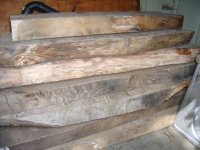
I got very lucky. Great price and it plays better then kiln dried.
RocketQ said:Talk about being in the right place at the right time.
I got very lucky. Great price and it plays better then kiln dried.

you making extra?
No extra
After I made a test shaft I went back to get more and he sold it all to a wood working school. I talked to the school telling them the Maple is too hard on your equipment and is perfect for cue building and they wouldn't sell. The wood has chrystalized and very hard to cut. If you look at the 1" squares you can see how it burned up my saw blade, a new blade on a good jet table saw.
I wanted to sell but don't have enough to sell. I try to keep them on my cues.
poolplayer2093 said:you making extra?
After I made a test shaft I went back to get more and he sold it all to a wood working school. I talked to the school telling them the Maple is too hard on your equipment and is perfect for cue building and they wouldn't sell. The wood has chrystalized and very hard to cut. If you look at the 1" squares you can see how it burned up my saw blade, a new blade on a good jet table saw.
I wanted to sell but don't have enough to sell. I try to keep them on my cues.
Last edited:
25% is strait, a few have a little runout, and the rest is for building butts.

Not wanting to rain on your parade. Prounounced curl is not a desireable charateristic of great shaft wood, mostly because of stability and potential for movement later. Sure looks cool though. Is there much hard maple grown in Washington state? I know big leaf maple is plentiful.
Martin
Martin
Graciocues said:A recently finished shaft. Look at the striping.
You're not raining on my parade. Properly prepared shafts are stable. Hard maple is not common here and I have no idea if it is. The qualities with aged maple is the chemical reaction between the sap and natural moistures in the wood. Crystalized Wood/Petrified Wood. We've all seen shafts built from maple pulled out of the Great Lakes. Very hard hitting, almost too hard to play with. That wood is 100-200 years into the petrified wood process. My find is 30 years into the process and is by far the best hitting maple I've ever touched. A good shooter can tell the difference.
Petrification is the process whereby the chemical and cellular structure of the wood is replaced with various minerals and requires that the wood be submerged under a mud containing volcanic ash which, as it degrades, replaces the wood with a quartz solution. Petrified wood is no longer a vegetable nut has been changed into a mineral. A shaft of petrified wood would weigh in at around 20-30 ounces, be badly cracked colored quartz, and is much harder than steel. Plus it is almost always a coniferous tree.
I have been through at least 1,000 board feet of Great lake salvaged sugar maple and I can tell you that this wood is 100-200 years into the decay process, not the petrification process and the shafts on average weigh about 5% less than a modern shaft.
The range of the sugar maple is the northeast US and southeast Canada all the way west to South Dakota.
I have been through at least 1,000 board feet of Great lake salvaged sugar maple and I can tell you that this wood is 100-200 years into the decay process, not the petrification process and the shafts on average weigh about 5% less than a modern shaft.
The range of the sugar maple is the northeast US and southeast Canada all the way west to South Dakota.

Paul Dayton said:Petrification is the process whereby the chemical and cellular structure of the wood is replaced with various minerals and requires that the wood be submerged under a mud containing volcanic ash which, as it degrades, replaces the wood with a quartz solution. Petrified wood is no longer a vegetable nut has been changed into a mineral. A shaft of petrified wood would weigh in at around 20-30 ounces, be badly cracked colored quartz, and is much harder than steel. Plus it is almost always a coniferous tree.
I have been through at least 1,000 board feet of Great lake salvaged sugar maple and I can tell you that this wood is 100-200 years into the decay process, not the petrification process and the shafts on average weigh about 5% less than a modern shaft.
The range of the sugar maple is the northeast US and southeast Canada all the way west to South Dakota.
I've said it before and I'll say it again: Encyclopedia Dayton!
Paul Dayton said:Petrification is the process whereby the chemical and cellular structure of the wood is replaced with various minerals and requires that the wood be submerged under a mud containing volcanic ash which, as it degrades, replaces the wood with a quartz solution. Petrified wood is no longer a vegetable nut has been changed into a mineral. A shaft of petrified wood would weigh in at around 20-30 ounces, be badly cracked colored quartz, and is much harder than steel. Plus it is almost always a coniferous tree.
I have been through at least 1,000 board feet of Great lake salvaged sugar maple and I can tell you that this wood is 100-200 years into the decay process, not the petrification process and the shafts on average weigh about 5% less than a modern shaft.
The range of the sugar maple is the northeast US and southeast Canada all the way west to South Dakota.
I assumed chrystalized wood was petrified. Sorry.
I'm not selling my shafts and don't want people to quit buying from you. I can't find it but one of the online wood suppliers has the information about crystalized wood. When I find I will add the link to share the info.
Would you like me to send you a piece? You don't even have to shoot with it to see a difference.
I've built cues for people that wanted two pretty white shafts and for free built a third shaft with the 30 air dried wood. Every customer I've done that for can feel the difference and likes the air dried better. They hit better!
PROOF'S IN THE PUDDING!
Any cue makers want to try. I want to send out a few of these old maple shafts to cue builders that shoot above average. I'm not sending perfect straight grained finished shafts.
If interested in trying I'd send you a fist turn blank with some runout. I'm not giving away the good ones. To properly test it needs to fit a cue that has a second shaft of the high grained type we purchase. I guess if you wanted to build a new cue to test the shafts on thats your chioce. Put the same tip, ferrule, taper, etc.
I'll pay for shipping. IM me.
Any cue makers want to try. I want to send out a few of these old maple shafts to cue builders that shoot above average. I'm not sending perfect straight grained finished shafts.
If interested in trying I'd send you a fist turn blank with some runout. I'm not giving away the good ones. To properly test it needs to fit a cue that has a second shaft of the high grained type we purchase. I guess if you wanted to build a new cue to test the shafts on thats your chioce. Put the same tip, ferrule, taper, etc.
I'll pay for shipping. IM me.
yo man you get my second pm?

I haven't noticed it and I travel a lot. Valley Forge, Vegas, Oregon, Seattle, and California are places I've traveled with this shaft. I usually stay for 1-2 weeks at most pool tournaments.
Shafts are vulnerable to moisture, I along with most builders have techniques or you might call them secrets to prevent your described problem.
I would like to build you a free shaft to try. PM me.
Shafts are vulnerable to moisture, I along with most builders have techniques or you might call them secrets to prevent your described problem.
I would like to build you a free shaft to try. PM me.