Help with cue identification???

Lidlchris

Tyankee
Silver Member
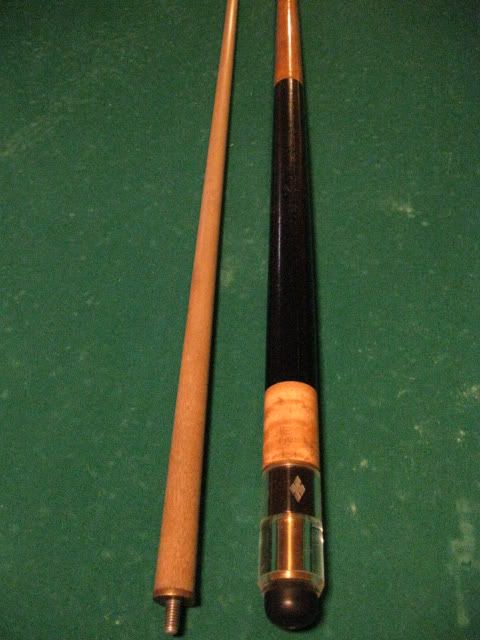
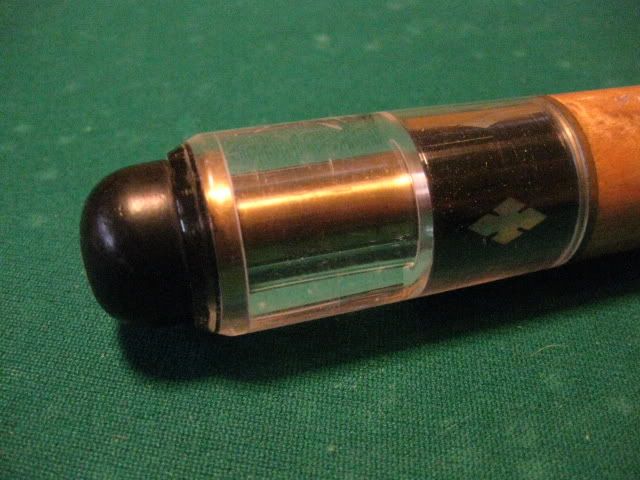
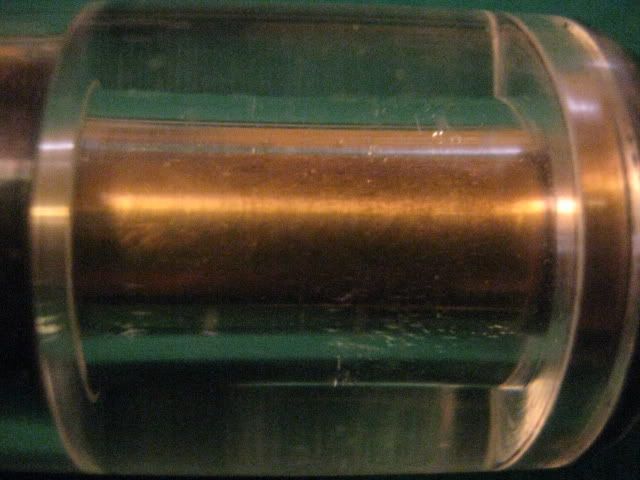
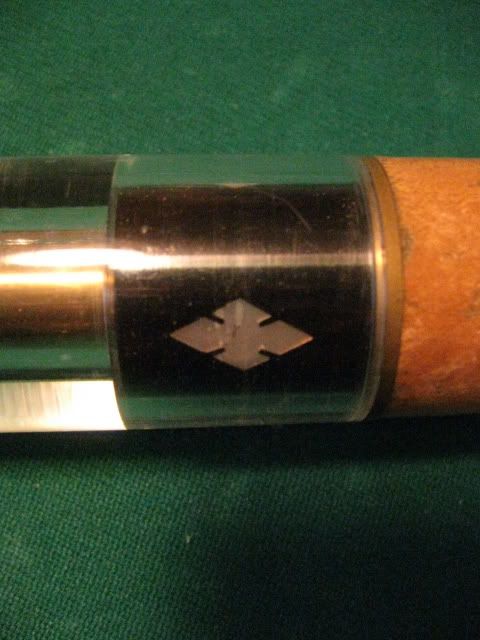
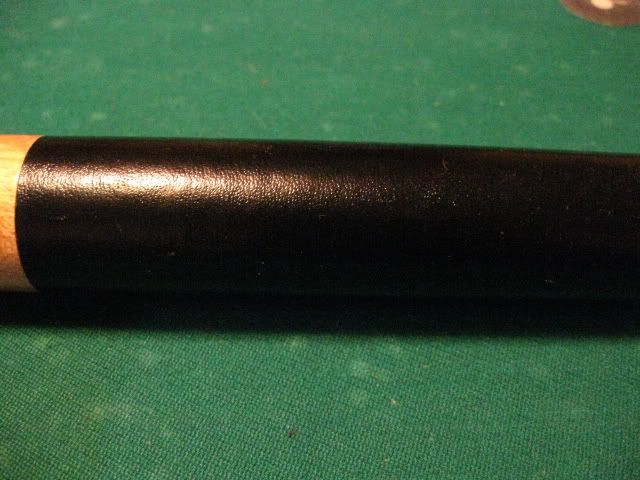
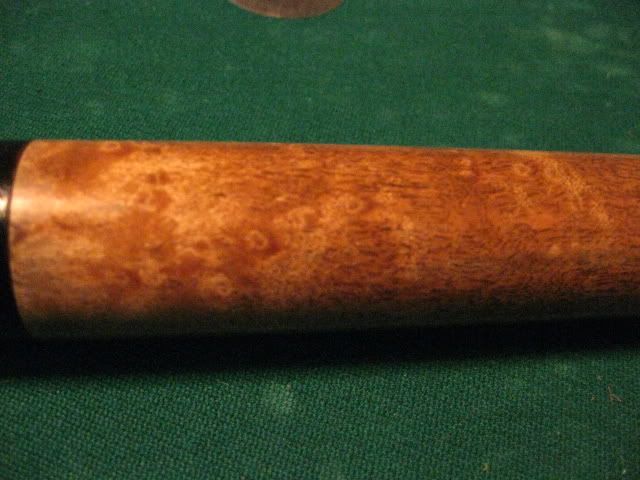
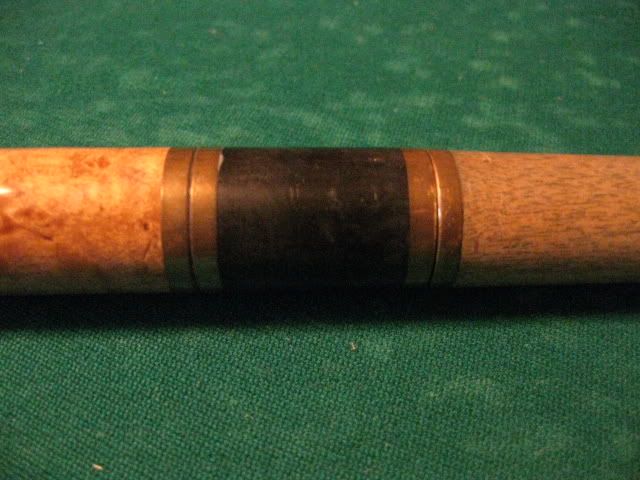
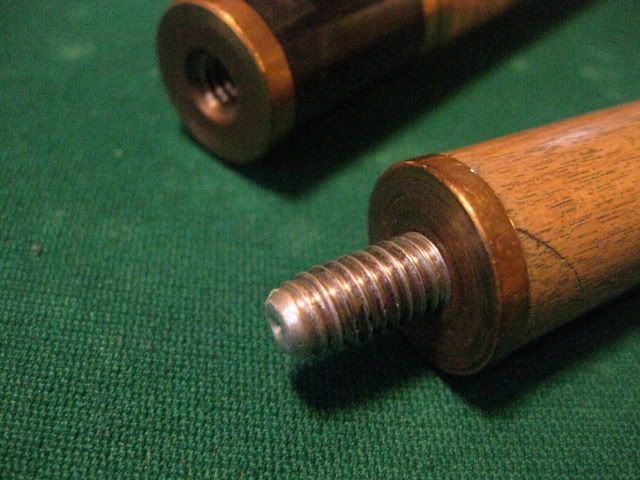
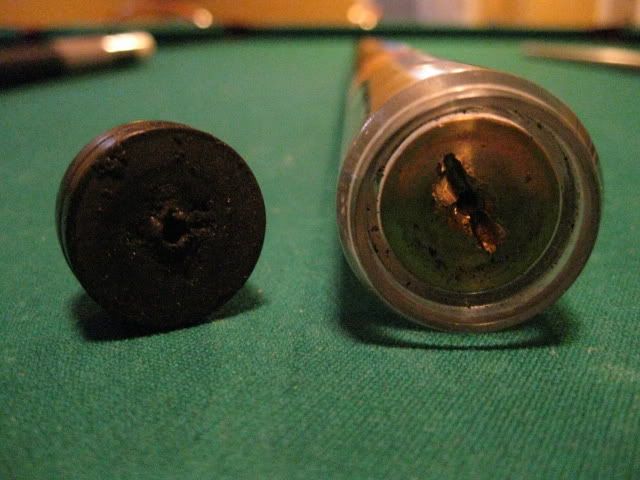
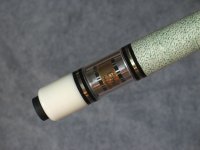
This cue looks like a Palmer, (style wise and the joint) but it has a leather wrap and no Palmer 'label'... Any ideas??? The bumper was held on with and flat head screw. (apparently someone hacked up the bottom trying to get into it through the bumper) :( Thanks!


<br>
IMG_1347.jpg

<br>
IMG_1328.jpg

<br>
IMG_1338.jpg

<br>
IMG_1330.jpg

<br>
IMG_1332.jpg

<br>
IMG_1333.jpg

<br>
IMG_1334.jpg

<br>
IMG_1337.jpg

<br>
IMG_1341.jpg

<br>
Any help is appreciated!!!
 
My first instinct was this was an import, 1970's, Taiwan, especially because of the unusual joint.

However, rarely would a cue like that be made from a quality piece of birdseye. The cue looks like it was re-wrapped and the butt hobbled together - possibly a repair but also possibly to make the cue a little longer.

The only joint I've seen like this, metal to metal, brass, with a screw in the shaft, was a John Robinson cue. John has been making cues a long time. According to the Blue Book, his early cues were 57" . Just as we don't recognize early Tad's, maybe this is an early Robinson.

I've seen later Robinson's but not early ones. It's worth a shot - I would email him john@robinsoncues.com

It's worth looking into - but if not, I think this cue will be a really difficult one to identify.

Chris
 
Last edited:
My first instinct was this was an import, 1970's, Taiwan, especially because of the unusual joint.

However, rarely would a cue like that be made from a quality piece of birdseye. The cue looks like it was re-wrapped and the butt hobbled together - possibly a repair but also possibly to make the cue a little longer.

The only joint I've seen like this, metal to metal, brass, with a screw in the shaft, was a John Robinson cue. John has been making cues a long time. According to the Blue Book, his early cues were 57" . Just as we don't recognize early Tad's, maybe this is an early Robinson.

I've seen later Robinson's but not early ones. It's worth a shot - I would email him john@robinsoncues.com

Chris

It's worth looking into - but I think this cue will be a really difficult one to identify.

Chris

Thanks Tate!!!
 
My first instinct was this was an import, 1970's, Taiwan, especially because of the unusual joint.

However, rarely would a cue like that be made from a quality piece of birdseye. The cue looks like it was re-wrapped and the butt hobbled together - possibly a repair but also possibly to make the cue a little longer.

The only joint I've seen like this, metal to metal, brass, with a screw in the shaft, was a John Robinson cue. John has been making cues a long time. According to the Blue Book, his early cues were 57" . Just as we don't recognize early Tad's, maybe this is an early Robinson.

I've seen later Robinson's but not early ones. It's worth a shot - I would email him john@robinsoncues.com

It's worth looking into - but if not, I think this cue will be a really difficult one to identify.

Chris


WOW Tate... You really know your cues!!! I received this email back last night:

Chris,

I showed the pictures to my Dad and he said it does look like it's one of his, it was probably made in the mid 1960's. I hope I've been of help, if you have any other questions let me know.

Thanks,
Greg Robinson


I am going to see if I can get it authenticated. It is SO nice to finally have a name to put with my 'quality, but no name' cue! ;)

Thanks again for the tip TATE!
 
I've seen a later Robinson and the joint still looks very similar, just more intricate.
 
My first instinct was this was an import, 1970's, Taiwan, especially because of the unusual joint.

However, rarely would a cue like that be made from a quality piece of birdseye. The cue looks like it was re-wrapped and the butt hobbled together - possibly a repair but also possibly to make the cue a little longer.

The only joint I've seen like this, metal to metal, brass, with a screw in the shaft, was a John Robinson cue. John has been making cues a long time. According to the Blue Book, his early cues were 57" . Just as we don't recognize early Tad's, maybe this is an early Robinson.

I've seen later Robinson's but not early ones. It's worth a shot - I would email him john@robinsoncues.com

It's worth looking into - but if not, I think this cue will be a really difficult one to identify.

Chris


Great call kid.

chris G
 
Thanks, but LOL, that was dumb-ass luck.

In fact, I almost didn't post it because I thought I might be ridiculed! :wink:

Anyway, a good old Robinson cue saved from the dumpster.

Chris

Chris

You got lucky like Efren gets lucky.

Nice call, that was way deep baby.

Kevin
 
My first instinct was this was an import, 1970's, Taiwan, especially because of the unusual joint.

However, rarely would a cue like that be made from a quality piece of birdseye. The cue looks like it was re-wrapped and the butt hobbled together - possibly a repair but also possibly to make the cue a little longer.

The only joint I've seen like this, metal to metal, brass, with a screw in the shaft, was a John Robinson cue. John has been making cues a long time. According to the Blue Book, his early cues were 57" . Just as we don't recognize early Tad's, maybe this is an early Robinson.

I've seen later Robinson's but not early ones. It's worth a shot - I would email him john@robinsoncues.com


It's worth looking into - but if not, I think this cue will be a really difficult one to identify.

Chris

Sorry Chris, I don't think so. The shaft looks to me to be Ramin wood. I'm thinking 60's Japan maybe even Adams.
 
Sorry Chris, I don't think so. The shaft looks to me to be Ramin wood. I'm thinking 60's Japan maybe even Adams.

Good eyes for an old guy - the shaft looks like Ramin to me also.
I don't think Adam used Ramin shafts - or that joint.

I'd lean more to a Taiwanilist, later cobbled by some
cuewhacker

Dale<but not even close to wanting to bet on it>
 
Last edited:
Good eyes for an old guy - the shaft looks like Ramin to me also.
I don't think Adam used Ramin shafts - or that joint.

I'd lean more to a Taiwanilist, later cobbled by some
cuewhacker

Dale<but not even close to wanting to bet on it>

That's what I thought at first too. But the owner e-mailed John Robinson and he confirmed it.

These old cues really have to be looked at closely. I think the shaft is just dirty and has a lot of grain. It could also be Amercian ash - they look a lt alike.

Chris
 
Last edited:
Sorry for the rookie question, but what do you mean by "cobbled". Butchery?


I didn't use the word, but yes, they mean "hacked" or messed around with.

But back in the 1960's the tools were limited, and the cue makers used whatever was available to do their thing. I can tell these pictures are not complimentary to the cue. Acrylic windows need to be photographed with the proper reflection or they lose their "edge" and the photos then make the design look awkward.

For example, if you look at the butt in the top photo of the first post, it's not easily seen that the acrylic window slides all the way up to the birdseye ring. Also, since it's missing the name label on the brass tube under the window, the window looks plain and the edges of the brass tube are not defined.

Below is what a typical butt looks like from the 1960's. Compare it to the pictures above and you'll see when they're missing the name label they don't look as cool.

Chris
 

Attachments

  • Model_D_butt800-OPT.jpg
    Model_D_butt800-OPT.jpg
    60.4 KB · Views: 178
Last edited:
Thanks for the info Chris and bravo on identifying it!

What value might this old warrior fetch? Is $250 a good guess?
 
Thanks for the info Chris and bravo on identifying it!

What value might this old warrior fetch? Is $250 a good guess?

Probably a good guess, or possibly a little more. BUT first he has to get a letter and make sure this cue is a Robinson.

Chris
 
Back
Top