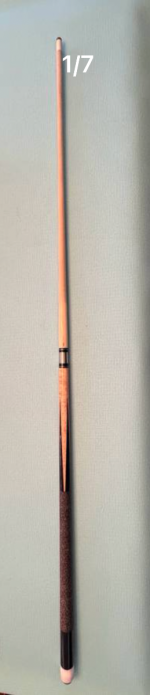
Do cue makers who make wood shafts still use a wood sealer dip?

Here os something that just popped up on my facebook feed…
This is a “dream setup”….
View attachment 911473
Years ago, a Dream setup would have been a Justis or Witten case with a nice custom cue.

So do you really think wood has a chance?
"What's one piece of gear you refuse to play without?"

A wooden shaft! ;)

Do cue makers who make wood shafts still use a wood sealer dip?

I was going to stay out of this thread.....however, figured I'd inject some of my non-wisdom.
I don't believe wooden shafts are going to disappear completely. One reason is the customer can customize a shaft taper and tip size to their liking without needing to go back to the original builder.
Yes, the quality of a wood shaft can vary from builder to builder. It is on the customer to do their research and decide if the builder has a quality reputation for their wooden shafts. As far as needing to send the butt back to the builder to match a shaft, that is an ancient method that should no longer be needed if the builder is set up with mandrels. On rare occasion I may need the butt from earlier cues I have built, however most of the time the customer is looking for a refresh of the butt anyway and they figure why not a few extra shafts also.
A good quality close up photo of the ring is generally all that is needed to match shafts.
My build book is closed, however I make a concerted effort to get additional shafts worked in a timely manner if possible.
As a builder one of the negatives of wooden shafts is it takes many, many sticks in inventory and rotation to stay ahead of the game.
Personally, I've built several CF shafts from different manufacturers to test them out and have tried several different cues with CF shafts and just don't care for them. But, I have played with wood all my time on the the table.
As far as the young generation being introduced to billiards now if they have never played much with wood or are not taught how to care for their wooden shafts of course they will naturally gravitate toward CF. They don't need to worry about humidity, heat because they left their cues in an auto trunk all day and several other factors a wooden shaft owner needs to pay attention to in order to keep their playing equipment in pristine shape.
The younger crowd these days have a much different mind set than us older people. Happens ever generational change.
In close, wooden shafts will never totally disappear although they may go by the way of the muscle car era. There are still many enthusiasts!

Spots on Aramith Tournament balls

The dish soap didn't "eat his clear coat".... It removed the wax and sealant. Quite likely, the clear coat was already sun damaged, and had a subsequent wax/sealant to make it glossy again. I would bet that another wax/buff would have brought the shine right back.

Don't forget that pool balls are a highly polished phenolic resin. It is perfectly safe to CLEAN (not polish) them with Dawn dish soap, without fear of causing any sort of chemical reaction or material degradation. Though, they will still require polishing, to bring back a high luster shine.

That said, I only reserve the Dawn dish soap and warm water for the absolute grimiest balls, before they go into the polisher. I'm talking sets that have been stored in a barn, or have seen years of nicotine stains. Being in the business, I come across all kinds of nasty stuff... The kind of grime that you aren't going to see from typical play in your house.

Check out the before and after photos of the set below. This set was cleaned with Dawn and warm water, then polished in a Diamond ball polisher, using Chem-Pak Ball Cleaner and Polish.
Why not use the Aramith restorer before using Aramith cleaner?? I would rather use something made specifically for doing the job, there have been threads where dudes have washed balls in Dawn and it made them dull and blotchy. I dont know if they had a polisher to run them thru afterword's, I'm guessing not.

Filter

Back
Top