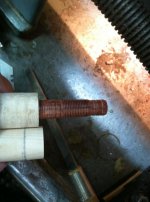
I use jatoba. Strong, hard, heavy, pingy, stable. A plus to that is that it's inexpensive. But never worry about cost. Your cue will only be as good as what you put into it. Use the very best of everything, no matter cost, and if you do a good job then your cues will be great cues. Cheap out & do an awesome job & your cues will only be as good as your budget.
To drive that point home, one of my go to core woods is koa. I choose it because it's relative to maple in weight & hardness, but has a strong smoky tone that brings burls & high figured woods to life. Last board I bought was $550, just to use as cores.
A lot of guys would think that's stupid, crazy, whatever. That's fine. It's not their name going on my cues. It's mine. Coring can be as easy as plugging holes with reject shafts to increase stability, keep consistent weight, and keep a relatively consistent hit. Or it can be a complex science where you factor weight, balance, tonal qualities, and wood compatibility dynamics to tune the cue to play & feel a particular way. Does all the extra actually pay off? In short term, no, the well tuned cue may only hit & feel slightly better than the cookie cutter cue. But in the long run, every cue is better and it won't be long before everybody notices the extra little edge. Once that happens, your cues are worth more, far more. It's not the fact that you cored with different woods. It's the character quality that wanted even the unseen details to be your absolute best. The devil is in the details. Detail is what makes the difference between your cue & the cues of other builders.
I core with koa, use african blackwood for my thin black rings, and only use shafts that were submerged in virgin's urine. I build cues of lauro preto and inlay fleur de lis' with turquoise. Ok maybe not all of that, but you get the idea. Don't skimp....or it'll show in your cues.