
You are using an out of date browser. It may not display this or other websites correctly.
You should upgrade or use an alternative browser.
You should upgrade or use an alternative browser.
What causes glazing on a cue tip??
- Thread starter bbb
- Start date

glazing
The simple answer is friction.
The simple answer is friction.


im not a scientist, and i didnt need to read the other replies to guess that friction causes heat, which in turn cuases the leather tip to glaze over. kinda like the leather pants people wore in the 80s that caused pop culture to glaze over. no idea what that means, i just wanted to post this photo:killingme:
Attachments


Take the inside of a leather belt, where the leather is rough. Pound it with a hammer a few times and see what happens.
It mashes the leather down, closes the pores, and it becomes slick and hard.
It mashes the leather down, closes the pores, and it becomes slick and hard.

Term
Its called work hardened or a material generally deforms elastically under the influence of small forces; the material returns quickly to its original shape when the deforming force is removed. This phenomenon is called elastic deformation. This behavior in materials is described by Hooke's Law. Materials behave elastically until the deforming force increases beyond the elastic limit, which is also known as the yield stress. At that point, the material is permanently deformed and fails to return to its original shape when the force is removed. This phenomenon is called plastic deformation. For example, if one stretches a coil spring up to a certain point, it will return to its original shape, but once it is stretched beyond the elastic limit, it will remain deformed and won't return to its original state.
Elastic Tips of elastic pool players.:thumbup:
Its called work hardened or a material generally deforms elastically under the influence of small forces; the material returns quickly to its original shape when the deforming force is removed. This phenomenon is called elastic deformation. This behavior in materials is described by Hooke's Law. Materials behave elastically until the deforming force increases beyond the elastic limit, which is also known as the yield stress. At that point, the material is permanently deformed and fails to return to its original shape when the force is removed. This phenomenon is called plastic deformation. For example, if one stretches a coil spring up to a certain point, it will return to its original shape, but once it is stretched beyond the elastic limit, it will remain deformed and won't return to its original state.
Elastic Tips of elastic pool players.:thumbup:

Its called work hardened or a material generally deforms elastically under the influence of small forces; the material returns quickly to its original shape when the deforming force is removed. This phenomenon is called elastic deformation. This behavior in materials is described by Hooke's Law. Materials behave elastically until the deforming force increases beyond the elastic limit, which is also known as the yield stress. At that point, the material is permanently deformed and fails to return to its original shape when the force is removed. This phenomenon is called plastic deformation. For example, if one stretches a coil spring up to a certain point, it will return to its original shape, but once it is stretched beyond the elastic limit, it will remain deformed and won't return to its original state.:thumbup:
Well, this pretty much says it all. Goodnight everybody. :smile:
Its called work hardened or a material generally deforms elastically under the influence of small forces; the material returns quickly to its original shape when the deforming force is removed. This phenomenon is called elastic deformation. This behavior in materials is described by Hooke's Law. Materials behave elastically until the deforming force increases beyond the elastic limit, which is also known as the yield stress. At that point, the material is permanently deformed and fails to return to its original shape when the force is removed. This phenomenon is called plastic deformation. For example, if one stretches a coil spring up to a certain point, it will return to its original shape, but once it is stretched beyond the elastic limit, it will remain deformed and won't return to its original state.
Elastic Tips of elastic pool players.:thumbup:
thanks for the detailed explanation
:thumbup:

I'm going to go with "use".What causes glazing on a cue tip?? -
leather
When the cue ball is struck by the cue tip the chalk is impacted into the leather pours.
After a while the chalk has all the pours in the leather full and the chalk .
even though chalk is basically a power it is still a solid material.
Chalk can be hard like concrete if compressed enough
Once the leather pours are full and at the same time the tip is becoming work harden with the chalk in bedded in it it starts to glaze.
At that point the only thing that can be done is that the tip need to be scuffed down enough to get past the work hardened layer.
That's why allot of players when using a layer tip will remove a whole layer worth of leather to get past the work hardened layer that is impacted full of broken down chalk powder..
I would like to know why some tips glaze up faster then others.
I would guess that it would be the age of the animal or the size of the pours in the leather and the glue used to laminate the leather tip.
An the hardness of the leather ....
I know that the sharper my cutting tools are the cleaner the cut I get when trimming the tip to the ferrule.
If my cutting tool is dull the leather will swell like a marsh mellow .
Elk master tips seem to be a problem when trimming they want to get puffy.
Main reason I use a live cutter to trim all my tips to the ferrule.
My point is friction, direction of the force or cutter plus heat will make a tip poof out like a sponge.
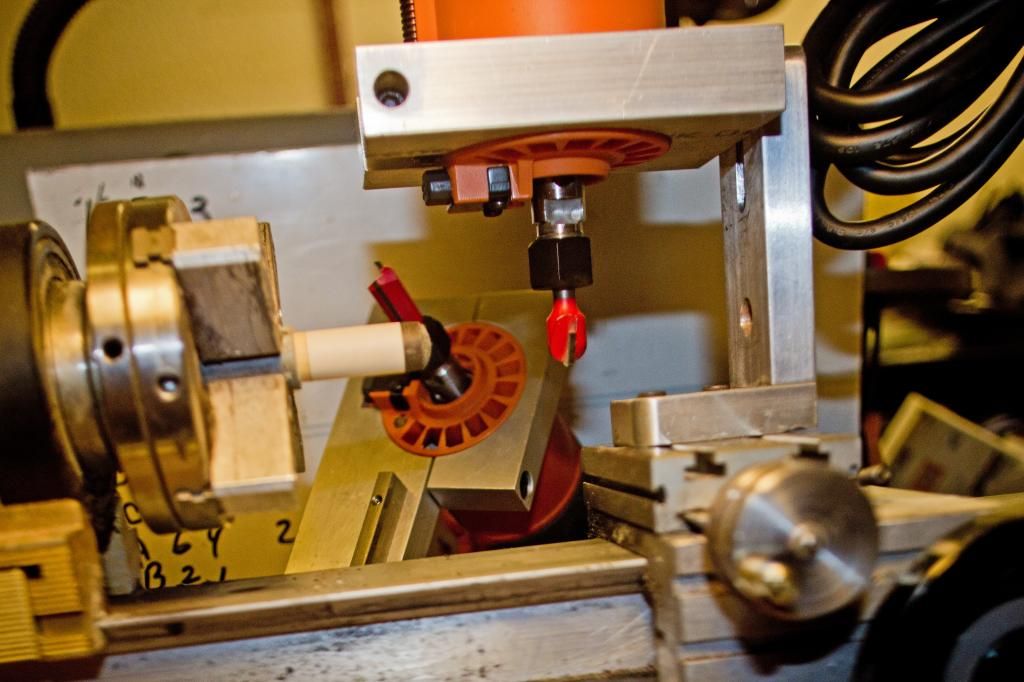
When the cue ball is struck by the cue tip the chalk is impacted into the leather pours.
After a while the chalk has all the pours in the leather full and the chalk .
even though chalk is basically a power it is still a solid material.
Chalk can be hard like concrete if compressed enough
Once the leather pours are full and at the same time the tip is becoming work harden with the chalk in bedded in it it starts to glaze.
At that point the only thing that can be done is that the tip need to be scuffed down enough to get past the work hardened layer.
That's why allot of players when using a layer tip will remove a whole layer worth of leather to get past the work hardened layer that is impacted full of broken down chalk powder..
I would like to know why some tips glaze up faster then others.
I would guess that it would be the age of the animal or the size of the pours in the leather and the glue used to laminate the leather tip.
An the hardness of the leather ....
I know that the sharper my cutting tools are the cleaner the cut I get when trimming the tip to the ferrule.
If my cutting tool is dull the leather will swell like a marsh mellow .
Elk master tips seem to be a problem when trimming they want to get puffy.
Main reason I use a live cutter to trim all my tips to the ferrule.
My point is friction, direction of the force or cutter plus heat will make a tip poof out like a sponge.


Playing one pocket causes a tip to glaze.
It makes my eyes glaze when i watch the game.
Measureman does not like one pocket.
It makes my eyes glaze when i watch the game.
Measureman does not like one pocket.

I'm going to go with "use".
Or, for a more pool hallish answer: Winning. Losers don't use their tip as much as the winners.
Jeff Livingston
Playing one pocket causes a tip to glaze.
It makes my eyes glaze when i watch the game.
Measureman does not like one pocket.
Oh, you do to. You're just saying that.
Why just the other day this guy said that measureman loves to play One Pocket, and I said. "Yeah, as about as much as he likes shit sandwiches."
And the guy says. "I thought he hated bread?"
Does that make any sense? :smile:

I would like to know why some tips glaze up faster then others.
I would guess that it would be the age of the animal or the size of the pours in the leather and the glue used to laminate the leather tip.
An the hardness of the leather ....
IF your original hypothesis is correct then you answered your own question. The larger the pores the long it takes to fill them.
Take open coat sand paper vs closed coat. Open is for wood since the abrasive has a larger percentage of each grain exposed, giving more room for more material to lay in the valleys.
My question is:
Why do some hard tips not glaze faster than some soft tips?
Is it that some hard tips have a faster recovery rate and don't yield as easily? Or what.
Last edited:
Work hardened materials
Where I worked ( mining ) and what I worked on or specialized in ( Hitachi shovel maintenance ) we had a real education in work hardened materials.
https://www.youtube.com/watch?v=010vbd4gV4c
The track pads are cast Iron so the pin holes in the track pads would wear but at the same time work hardened themselves .
After a years worth of use we would install over sized pins .
We also had wooden blocks that we used to keep the hydraulic lines from rubbing against each other, hard to imagine wood as being work hardened but we used it and leather in certain places on machinery.
IF your original hypothesis is correct then you answered your own question. The larger the pores the long it takes to fill them.
Take open coat sand paper vs closed coat. Open is for wood since the abrasive has a larger percentage of each grain exposed, giving more room for more material to lay in the valleys.
My question is:
Why do some hard tips not glaze faster than some soft tips?
Is it that some hard tips have a faster recovery rate and don't yield as easily? Or what.
Where I worked ( mining ) and what I worked on or specialized in ( Hitachi shovel maintenance ) we had a real education in work hardened materials.
https://www.youtube.com/watch?v=010vbd4gV4c
The track pads are cast Iron so the pin holes in the track pads would wear but at the same time work hardened themselves .
After a years worth of use we would install over sized pins .
We also had wooden blocks that we used to keep the hydraulic lines from rubbing against each other, hard to imagine wood as being work hardened but we used it and leather in certain places on machinery.
I'm following you. Been in the tool business for 40 some odd years. I'll be working at a CAT dealer Tuesday replacing track bolts on a D12. They want to know if I gotta enough ass to get the angle they need with only 3000ft/lbs torque available. I can't answer it over the phone. We just gotta try and see.
I'm sure you've been there.
I'm sure you've been there.
You guys still haven't figured out how a tip glazes over, have you? 