Hi,
To precursor my opinion, let me first say, nothing you do after spraying Auto Poly is worth a penny if you do not control the
temperature of your cue, the product, the room, booth and make up air during the process. The product application sheet defines this in a very detailed way along with the exacting time you must wait between coats called "flash time". If you are thinking about trying Auto Clear and don't want to control all of these parameters, do not bother! That's how important it is. This stuff is for pros and believe me if you want it to perform you must act like a pro in every way or you would be far better off with Super Glue and a exhaust fan.
I have found that the longer you wait before you wet sand and buff, the better the results you get with Auto Poly. I wait at least one week whenever possible but never less than 4 days and I dry sand with 1200 to open up the surface after 2 days. This helps the product off gas during the curing process. When I sand that 2nd day I can re smell it off gasing. IMO this help the process.
Also high speed buffing is great after wet sand steps but avoiding heat build up during buffing is very important. I think that not waiting long enough and also too much heat build up during buffing is a factor where shrinking occurs at the rings for many people. After spending many days and weeks building a cue I don't mind waiting the proper time to let a finish cure correctly.
There are many products to try and test for finishing a cue for sure. The real question should be, "how does it stand up in the field over time"? I think that there is an overwhelming ratio where by I have noticed that Auto Poly is used more often than not by the Top "A List" Master Cue Makers. There is a reason, IMO.
I am not knocking any other product or method if it works for people but I feel it is hard to beat Auto Poly when you view all of the overall positive attributes in a comparative matrix evaluation with other stuff. If something is "easy to use", does not always equate to it being the best product. It is very hard to get a high gloss, high luster, durable finish that stands up in the field and looks good for years and years. Auto poly does that and after you get you method down, then it is very easy thing to do.
If you are new to finishing cues, do not rule this Auto Poly Stuff out because you need a booth, have to wear a mask, or it is expensive. In the long run all of the things mean nothing if you are looking for a world class finish on you cues that is a good as the best CMs in the business. Rome was not built in a day you must always try to improve your finish methods. In my experience Auto Poly is the path to follow.
JMO of course,
Rick
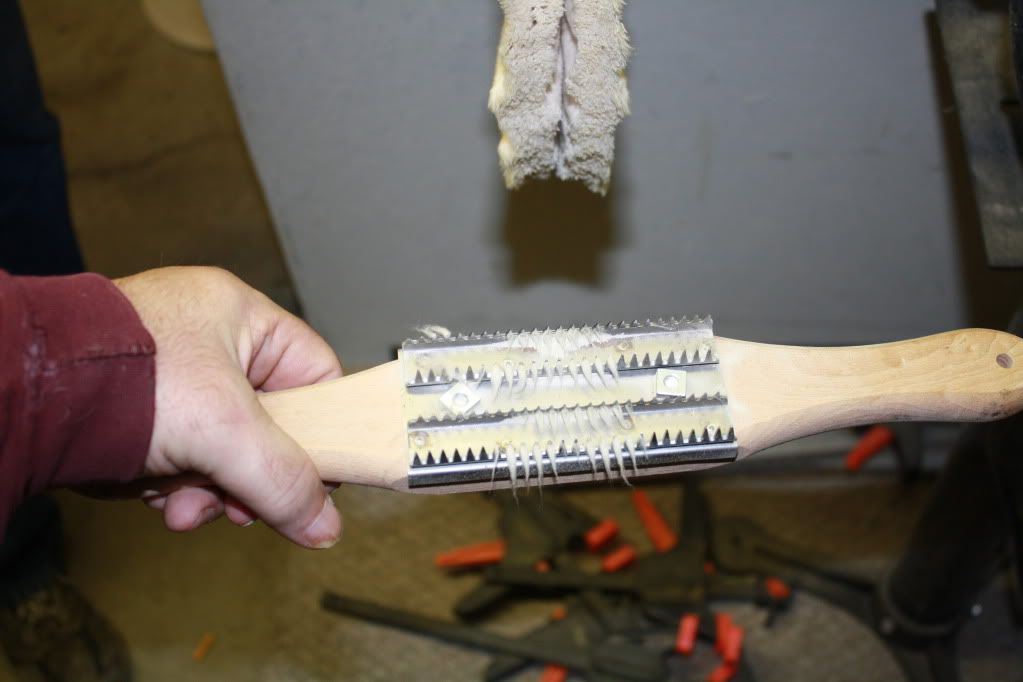
Using a clean flannel buffing wheel with a light pressure on the back side of the wheel and moving the cue up and down prevents pin point heat build up.
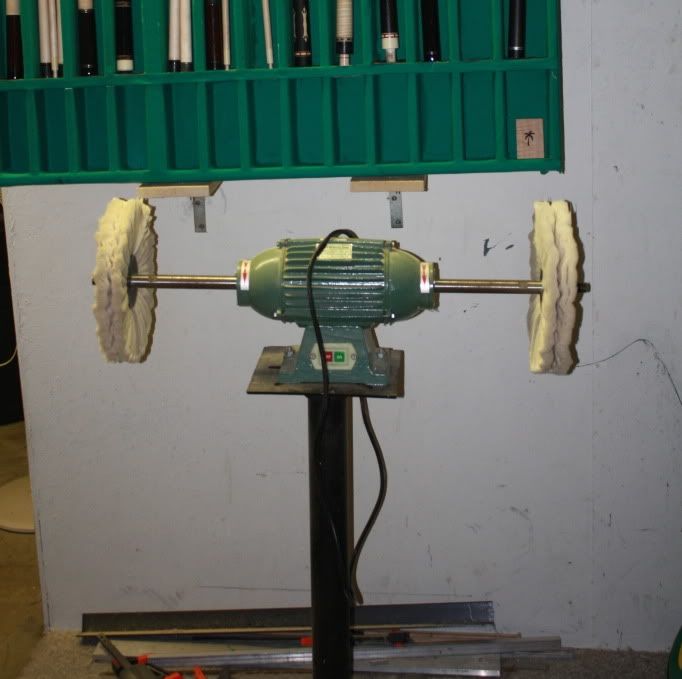
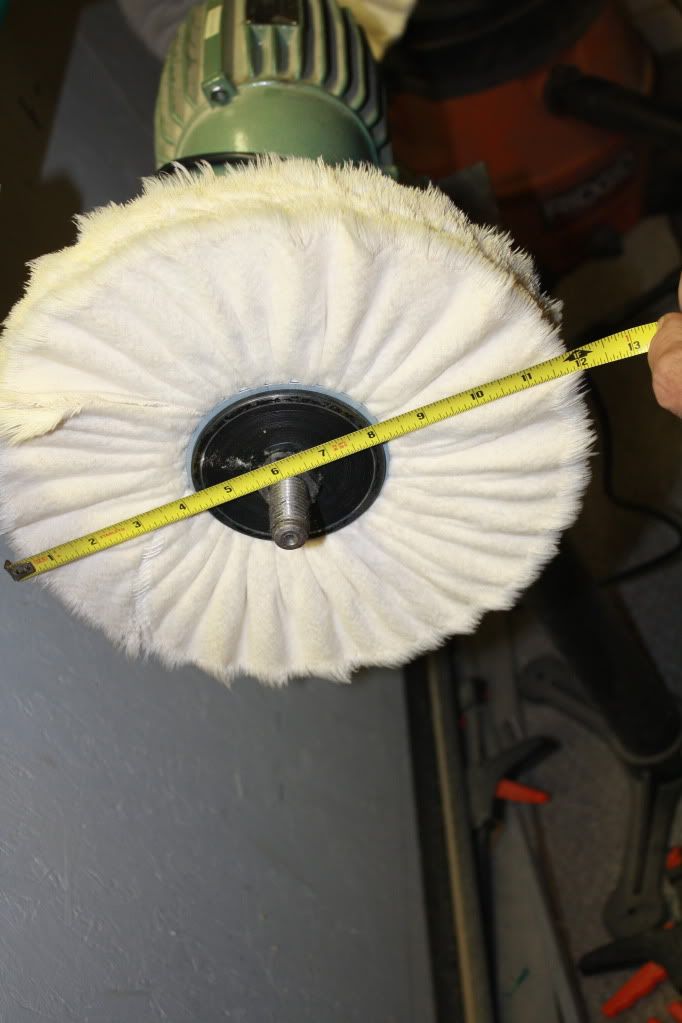
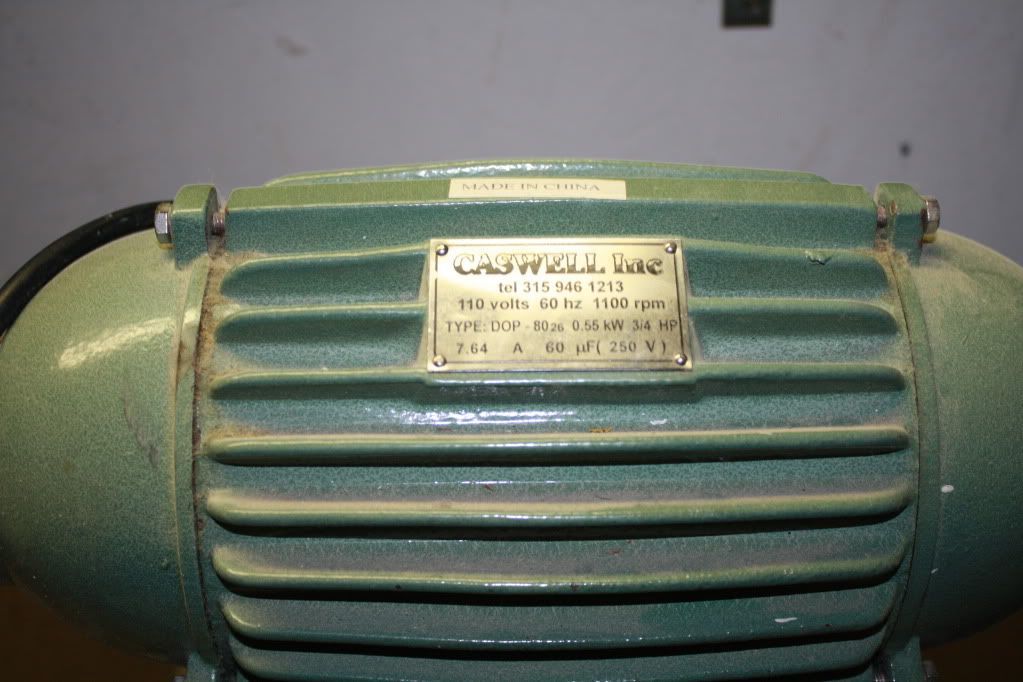
Using a buffer with a reduced RPM also is helpful in heat reduction. Here is a 12 inch wheel with an 1100 RPM Caswell Buffer Motor. The larger wheel with the lower RPM also reduces heat build up due to the surface area and also the spinning wheel creates a cooling effect like a fan that you don't get with a towel pressing on a cue in a lathe. IMO