auto clear question

atta boy! i think you're onto something :thumbup:
certainly cant have one cuemaker telling another one about methods, techniques, procedures, materials , etc. etc. etc. ,
can we?
wouldnt want that kind of thing going on here :scratchhead:

next thing you know, new guys would be private messaging, emailing or calling every cuemaker in the country asking questions . complete anarchy

brent > never stirs the doo doo on here

+1, you said it.

Good grief, holy moly.

Dumbfounding how he of all people would post such a thing...

Kelly
 
I like to thin the Cue Cote considerably with acetone and apply several coats. I don't have a way to slow my lathe down to 60 rpm. Thinning it to around water consistency gets rid of bubbles and it flows out very well. Obviously, it takes several coats, but it works.
 
Last edited:
Id appreciate it if you would refrain from answering any more of my questions, because I have never learned one useful thing from your posts. Good day sir.

You are really something else Joe. I did made the comment on your question.
Don't worry about me then, I will not post anything on your threads. I am just going to sit down, relax and laugh. Good day to you as well.


Sent from my iPhone using Tapatalk
 
Use 105/207 before your clear and pretend it it a Vette! :)

That should work.
I don't know if Joe's finish is " shrinking " or sinking.
With an epoxy base coat, it'd be clinging on epoxy not wood.
I'm not an auto finish expert though.
I only do enduro on epoxy or just epoxy.
 
Hi,

To precursor my opinion, let me first say, nothing you do after spraying Auto Poly is worth a penny if you do not control the temperature of your cue, the product, the room, booth and make up air during the process. The product application sheet defines this in a very detailed way along with the exacting time you must wait between coats called "flash time". If you are thinking about trying Auto Clear and don't want to control all of these parameters, do not bother! That's how important it is. This stuff is for pros and believe me if you want it to perform you must act like a pro in every way or you would be far better off with Super Glue and a exhaust fan.

I have found that the longer you wait before you wet sand and buff, the better the results you get with Auto Poly. I wait at least one week whenever possible but never less than 4 days and I dry sand with 1200 to open up the surface after 2 days. This helps the product off gas during the curing process. When I sand that 2nd day I can re smell it off gasing. IMO this help the process.

Also high speed buffing is great after wet sand steps but avoiding heat build up during buffing is very important. I think that not waiting long enough and also too much heat build up during buffing is a factor where shrinking occurs at the rings for many people. After spending many days and weeks building a cue I don't mind waiting the proper time to let a finish cure correctly.

There are many products to try and test for finishing a cue for sure. The real question should be, "how does it stand up in the field over time"? I think that there is an overwhelming ratio where by I have noticed that Auto Poly is used more often than not by the Top "A List" Master Cue Makers. There is a reason, IMO.

I am not knocking any other product or method if it works for people but I feel it is hard to beat Auto Poly when you view all of the overall positive attributes in a comparative matrix evaluation with other stuff. If something is "easy to use", does not always equate to it being the best product. It is very hard to get a high gloss, high luster, durable finish that stands up in the field and looks good for years and years. Auto poly does that and after you get you method down, then it is very easy thing to do.

If you are new to finishing cues, do not rule this Auto Poly Stuff out because you need a booth, have to wear a mask, or it is expensive. In the long run all of the things mean nothing if you are looking for a world class finish on you cues that is a good as the best CMs in the business. Rome was not built in a day you must always try to improve your finish methods. In my experience Auto Poly is the path to follow.

JMO of course,

Rick

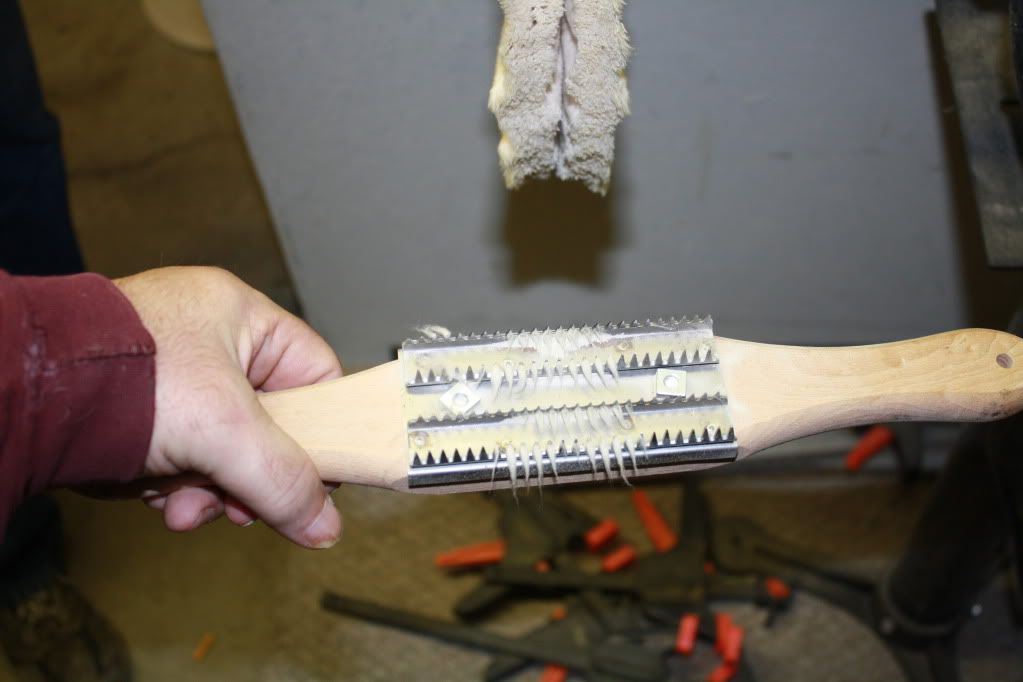
Using a clean flannel buffing wheel with a light pressure on the back side of the wheel and moving the cue up and down prevents pin point heat build up.

IMG_3562.jpg

IMG_3567.jpg


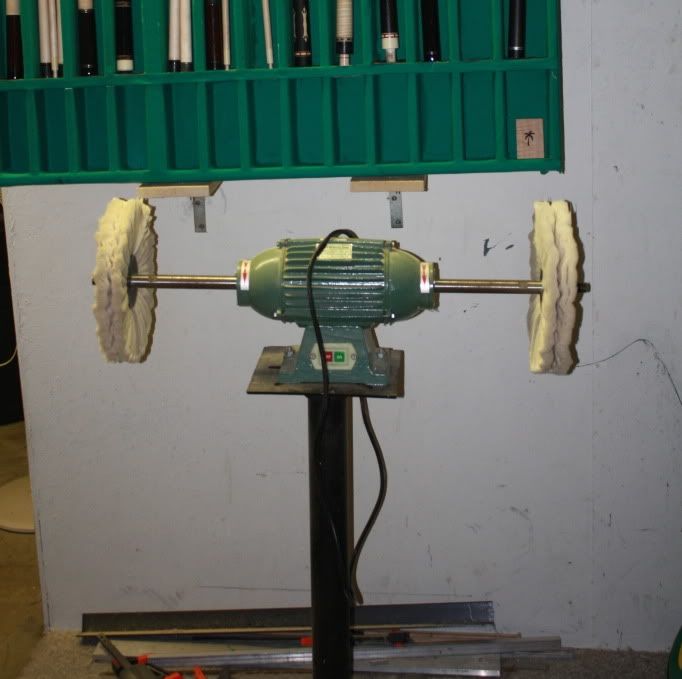
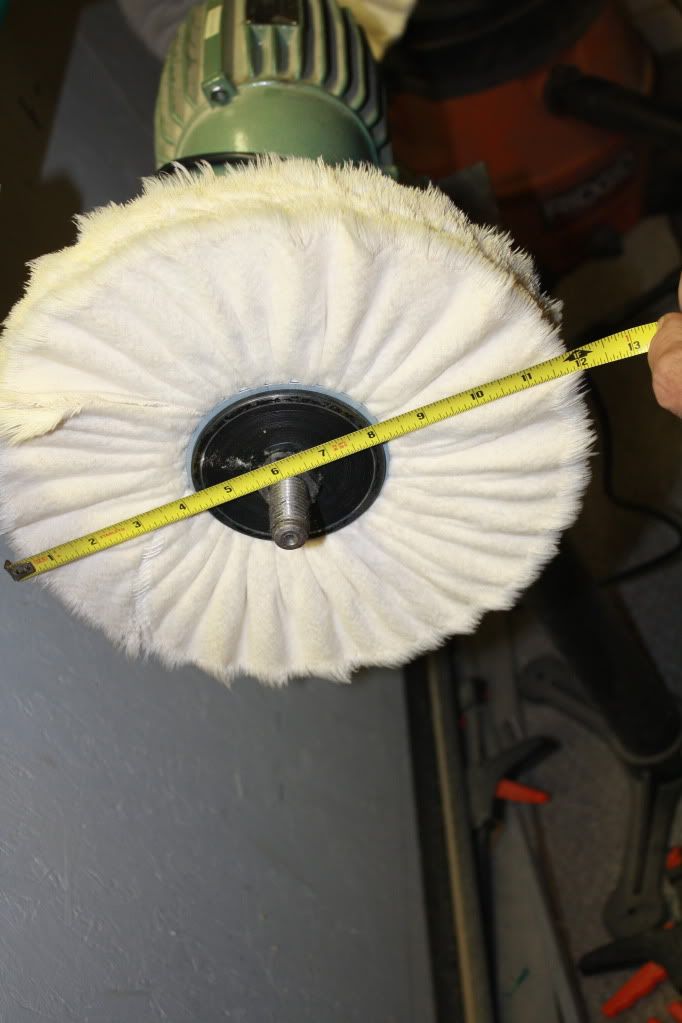
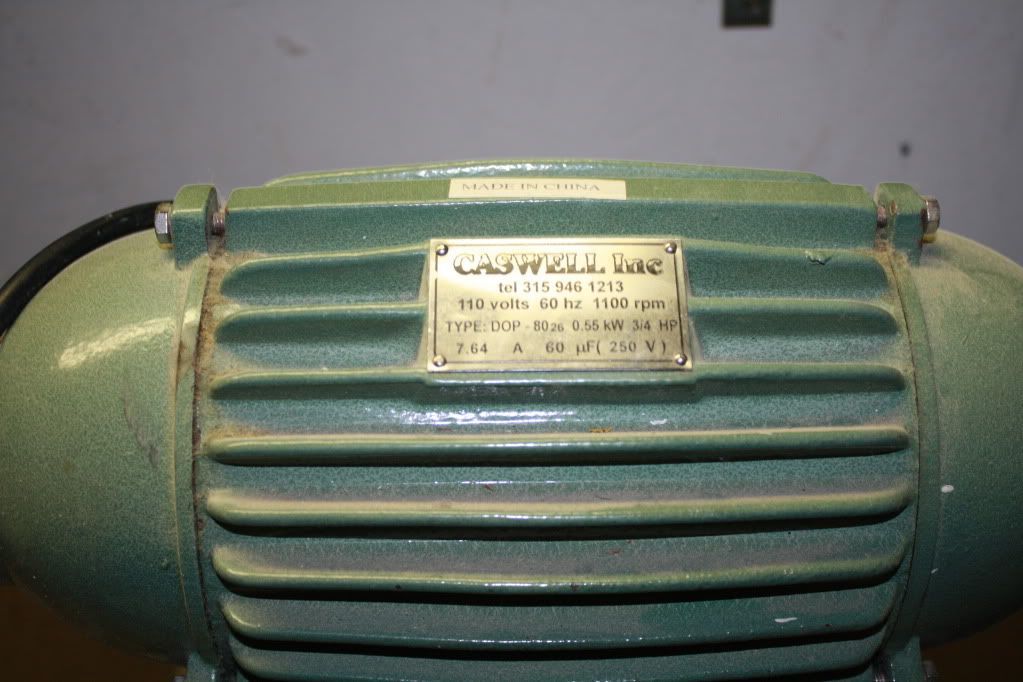
Using a buffer with a reduced RPM also is helpful in heat reduction. Here is a 12 inch wheel with an 1100 RPM Caswell Buffer Motor. The larger wheel with the lower RPM also reduces heat build up due to the surface area and also the spinning wheel creates a cooling effect like a fan that you don't get with a towel pressing on a cue in a lathe. IMO

IMG_3566.jpg

IMG_3565.jpg
 
Last edited:
I also use PPG automotive finish, think it is 2055, very little shrinkage but like all auto or water based finishes it takes time for final curing before buffing. While the Enduro states 24 hours on the instructions if you call General Finishes up and ask the right questions they will tell you that it takes 4 days between coats to off gas completely. The automotive is no different and the example above of sanding after 2 days than waiting another couple of days before final sanding and buffing is a great system. I once heard that Tad hangs his cues for a month once they are finished before sending them out the door. Can only believe he does this to let the finish cure completely and do the final buffing at that point.
As for the OP, wonder if the cheap finish you started doing cues with is the same finish you painted all those cars with?? Your problem on the cues is probably soak in, not shrinkage.

Bob Danielson
www.bdcuesandcomix.com
 
I am not knocking any other product or method if it works for people but I feel it is hard to beat Auto Poly when you view all of the overall positive attributes in a comparative matrix evaluation with other stuff. If some thing is easy to use does not equate to it being the best product. It is very hard to get a high gloss, high luster, durable finish that stands up in the field and looks good for years and years. Auto poly does that and after you get you method down, it is very easy to do.
No question about it.
2-part auto clear are the best.
But, if your after spray is spraying the neighborhood, you better hope EPA doesn't come down and take your house.
In fact, in most places, you aren't legally allowed to spray AUTO CLEAR outside of a licensed body shop.
So, you might wanna spray in a body shop with a booth.
 
Hi Rick,
Not being critical, just looking for clarification.
I noticed that you used the term "AUTO-POLY" 3 times in your post.
I've also known you to use this term in several of your other posts.
To the best of my knowledge, though that's subject to change, I don't believe that poly-urethane is used on cars.
Most car painters and most CMs, as you alluded to, shoot ACRYLIC URETHANE.
Poly urethane & acrylic urethane are two totally different animals.
Poly is used on bar-tops & floors where as acrylic is used on cars & cues.
Don't just take my word for it, ask your paint supplier. He may be able to shed more light on this for you.

To the curing times that some of you are quoting.
If you read the data-sheet, most AUTO-CLEARS, as we sometimes refer to, can be force-cured in 15 to 45 mins.
I do this quite regularly.
I don't wait an additional 3 days after I shoot a shaft to sand & buff that's going to Sey.
It's not necessary. Why make the client wait?
Many times I've shot finish at 11am and delivered it by 2pm.
The can's label states that a natural cure is attained in 12 to 16 hrs.
The data-sheet states that full cure can be forced in 15 to 45 mins. depending on the brand of clear.
UV finish has no advantage over auto-clear in this area.

KJ
 
I am not knocking any other product or method if it works for people but I feel it is hard to beat Auto Poly when you view all of the overall positive attributes in a comparative matrix evaluation with other stuff. If some thing is easy to use does not equate to it being the best product. It is very hard to get a high gloss, high luster, durable finish that stands up in the field and looks good for years and years. Auto poly does that and after you get you method down, it is very easy to do.
No question about it.
2-part auto clear are the best.
But, if your after spray is spraying the neighborhood, you better hope EPA doesn't come down and take your house.
In fact, in most places, you aren't legally allowed to spray AUTO CLEAR outside of a licensed body shop.
So, you might wanna spray in a body shop with a booth.

Joey,

Being from Cali you are at a regulations disadvantage.

Here is a quote from the Ill EPA for small business:

If your shop only applies coatings with spray guns that have a cup size of 3 ounces or less, the EPA autobody rule does not apply to your painting operations. (3 ounces is not very much! It’s about half of a small coffee cup.)

I have 2 filter medias and my discharge piping downcommer is water bathed. I have a halon fire protection deluge system that I have inspected annually by the fire chief. No one is taking my house!

Knowing the local and state rules is something that one needs to investigate in your locality.

Rick
 
Joey,

Being from Cali you are at a regulations disadvantage.

Here is a quote from the Ill EPA for small business:

If your shop only applies coatings with spray guns that have a cup size of 3 ounces or less, the EPA autobody rule does not apply to your painting operations. (3 ounces is not very much! It’s about half of a small coffee cup.)

I have 2 filter medias and my discharge piping downcommer is water bathed. I have a halon fire protection deluge system that I have inspected annually by the fire chief. No one is taking my house!

Knowing the local and state rules is something that one needs to investigate in your locality.

Rick

Hmmmm. I haven't read the proceeding posts so I'm just commenting on this particular post. I have no knowledge of any spray gun that does not have a cup that is smaller than 4 oz other than maybe an air brush.

Dick
 
Last edited:
Hi Rick,
Not being critical, just looking for clarification.
I noticed that you used the term "AUTO-POLY" 3 times in your post.
I've also known you to use this term in several of your other posts.
To the best of my knowledge, though that's subject to change, I don't believe that poly-urethane is used on cars.
Most car painters and most CMs, as you alluded to, shoot ACRYLIC URETHANE.
Poly urethane & acrylic urethane are two totally different animals.
Poly is used on bar-tops & floors where as acrylic is used on cars & cues.
Don't just take my word for it, ask your paint supplier. He may be able to shed more light on this for you.

To the curing times that some of you are quoting.
If you read the data-sheet, most AUTO-CLEARS, as we sometimes refer to, can be force-cured in 15 to 45 mins.
I do this quite regularly.
I don't wait an additional 3 days after I shoot a shaft to sand & buff that's going to Sey.
It's not necessary. Why make the client wait?
Many times I've shot finish at 11am and delivered it by 2pm.
The can's label states that a natural cure is attained in 12 to 16 hrs.
The data-sheet states that full cure can be forced in 15 to 45 mins. depending on the brand of clear.
UV finish has no advantage over auto-clear in this area.

KJ

Hey KJ,

Post Amended

You are right KJ, I use high solids acrylic urethane, it is not polyurethane. Thanks you for the of point of clarification on that.:thumbup:

I have not tried a forced cure and have been given advice from a 30 year automotive pro friend of mine on the normal cure method. He did a show car last year in black with many coats of clear and he did not sand or buff that baby for 30 days. It's wet look was incredible! He told me for my use and method 4 days would be good but one week is would be a prefered wait. I have not seen the difference for the 3 extra days.

Rick
 
Last edited:
Hmmmm. I haven't read the proceeding posts so I'm just commenting on this particular post. I have no knowledge of any spray gun that does not have a cup that is smaller than 4 oz other than maybe an air brush.

Dick

Hey Dick,

I cut 1.5 inches off my small Jam Gun Hopper using the bandsaw to be compliant to the volummetric requirements.

Rick
 
Hi Rick,
Not being critical, just looking for clarification.
I noticed that you used the term "AUTO-POLY" 3 times in your post.
I've also known you to use this term in several of your other posts.
To the best of my knowledge, though that's subject to change, I don't believe that poly-urethane is used on cars.
Most car painters and most CMs, as you alluded to, shoot ACRYLIC URETHANE.
Poly urethane & acrylic urethane are two totally different animals.
Poly is used on bar-tops & floors where as acrylic is used on cars & cues.
Don't just take my word for it, ask your paint supplier. He may be able to shed more light on this for you.

To the curing times that some of you are quoting.
If you read the data-sheet, most AUTO-CLEARS, as we sometimes refer to, can be force-cured in 15 to 45 mins.
I do this quite regularly.
I don't wait an additional 3 days after I shoot a shaft to sand & buff that's going to Sey.
It's not necessary. Why make the client wait?
Many times I've shot finish at 11am and delivered it by 2pm.
The can's label states that a natural cure is attained in 12 to 16 hrs.
The data-sheet states that full cure can be forced in 15 to 45 mins. depending on the brand of clear.
UV finish has no advantage over auto-clear in this area.

KJ

Here is a little info on curing/forcing the finish -

"Forced Air Drying

Forced air drying involves the use of infrared heat lamps and air jet heaters to accelerate the drying and curing process. Before any forced air drying can take place, the initial 15 to 20-minute natural air dry must be employed. For forced air drying to be effective, the natural air drying it must be an ambient temperature of approximately 70 degrees Fahrenheit. Manufacturer's recommendations might vary from brand to brand, even with similar acrylic paints. Forced air drying should last for at least 40 minutes and produce a temperature of approximately 140 degrees Fahrenheit."

And - "Curing

The curing process happens after the drying process, which can be either air, forced air or bake drying. The vehicle component or metal structure must reside inside the containment area, insuring a stabilized and consistent temperature for 24 to 48-hours. During this time the paint can be touched and tested for curing speed. The complete curing processes involves the chemical reaction inside the molecular structure inside the paint, which contains the ingredients that make it harden in solid form. A complete cure can take anywhere from 2 to 6-weeks, depending upon the manufacturer's recommendation. No solvents, wax, acids or harsh chemicals should come in contact during a complete cure."


After posting this I see it is for acrylic enamel and not urethane and the process for each may will be different.


The first part about force curing somewhat scares me as blowing 140* air at the cue for 40 minutes is not going to do the cue much good. Also, a question, are you letting the cue naturally cure for the first 15-20 minutes as suggested above??
Thanks

Bob Danielson
 
Hi Bob,
Yes, there are some stipulations and particulars involved and these may vary with the brand.
Yeah, 140F for 45 mins scares me too that's why I do it in stages.
You have to wait until the finish is dry to the touch, usually 20/30 mins. otherwise, bad things happen.
Trapped air or other gas under the decal will cause it to lift or bubble. Screwed.
My process is that I 'cook' the shaft for a few mins. then let it cool. Then cook it again.
Not at high heat & not a full 45 mins at a time. I sneak-up on it.
It will get progressively harder with each cycle until it's hard enough to w/sand & buff.
The 'full cure' is another subject. That can take 3 to 6 mos and that's the reason a car painter will
tell you not to wax or otherwise seal the surface. The trapped gases need to escape and they do it over time.
I've used this finish enough that I've learned some of it's characteristics.
'Pinch-down' is a very real phenomena. When I shoot a shaft for Sey, I usually bring it in at .002/.003" oversize.
After about 6mos or so the finish will have contracted enough that the shaft now mates perfectly.
Experience is a good teacher.

KJ
 
You state how your doing it on shafts... are you also doing the same on butts???

My paperwork for the DCU2055 calls for up to 15 minutes before heating to 140 for 30 minutes, so about the same as what you are doing. Sheet never does say anything about complete cure times.
 
Ivd tried 3 different epoxies including west system 105/207 and have failed at all of them. I love the hardness and clarity of the 207, but its so thick, I couldn't get the lumps out of it after it cured. Maybe I should try brushing it on? I'm familiar with spraying so that's why I thought id give it a shot. That's for all the info. Rick, Bob, Larry, Joey, and almost everyone else, thanks a ton. I appreciate it :thumbup: Hey Joey, what's the difference between shrinking and sinking? Is sinking like soaking in?

Joe
 
Ivd tried 3 different epoxies including west system 105/207 and have failed at all of them. I love the hardness and clarity of the 207, but its so thick, I couldn't get the lumps out of it after it cured. Maybe I should try brushing it on? I'm familiar with spraying so that's why I thought id give it a shot. That's for all the info. Rick, Bob, Larry, Joey, and almost everyone else, thanks a ton. I appreciate it :thumbup: Hey Joey, what's the difference between shrinking and sinking? Is sinking like soaking in?

Joe

Sinking, soaking and wicking, all same to me. :grin-square:
Try RAKA as basecoat. It's very thin.
Use no powder latex glove.
 
You state how your doing it on shafts... are you also doing the same on butts???

My paperwork for the DCU2055 calls for up to 15 minutes before heating to 140 for 30 minutes, so about the same as what you are doing. Sheet never does say anything about complete cure times.

Well, you caught me. No, I don't cook the butt/handle of a cue, there's no rush there.
They can hang until I'm (& the finish) are good and ready.
However, when I'm building shafts for Sey, we try to keep a 3 day turn-around.
Order the shaft, 3 days later it's shipping. Except when I'm swamped, like now.
The point being, any time you can get the temp up on the finish, within reason, you shorten the drying time.

KJ
 
Back
Top