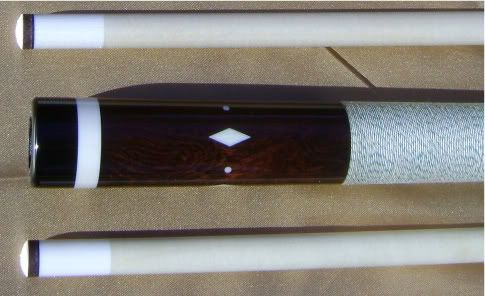
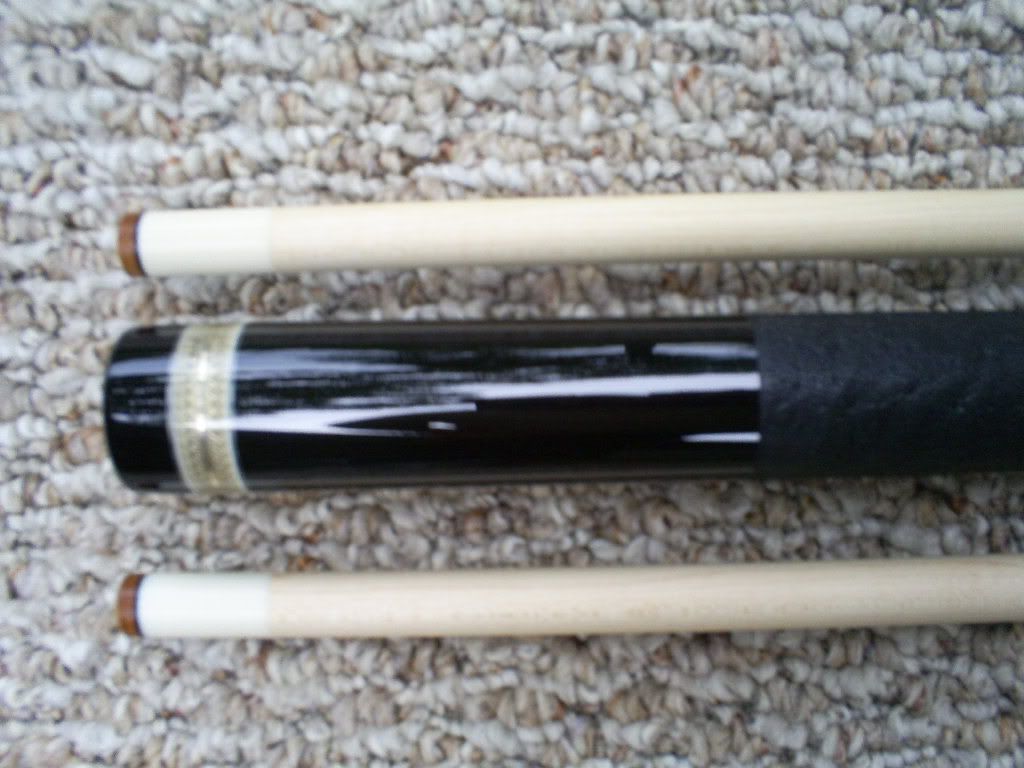
Hoppe ring etiquette pt. 2: What size is "right"?

i completely agree, sometimes i see hoppe rings that are more like a band than anything else and imo doesnt even look good. also seen hoppe rings with silver rings on either side etc. imo that shouldnt happen. it should just be the hoppe ring by itself and thats it.
 
The Webb cue looks to be proportioned just right. See other thread.
Glen
 
Last edited:
my rule when building a hoppe is the black it tiwce the size and the ivory. i give two options .200 and .400 or .250 and .500.
 
Nice Hoppe butt...

...a Brazilian Rose wood Thoroughbred.

DSC00674-1.jpg
 
dave sutton said:
.250 ring and .500 buttcap

sometimes .200 ring

thats what i do

the scruggs is prob. .250 and .500

how about inlays in hoppes.


hated it


in-living-color.jpg

LMFAO!!!:rotflmao1:

Well done, sir!
 
I know what I like in a cue's design but I don't build cues for me. It is all about what the customer wants and finds beautiful. If he wants a 3/4 inch wide white ring and wants to call it a Hoppe ring that ok with me. It is his cue and my job is to please the customer not anyone else.

Who are you to decide what is right or wrong in a cue's design?

Pay the bill and you can decide.
 
I love it when somebody who doesn't build cues decides they should tell people who do what is right and what is wrong.

What are your thoughts on coring? How about piloted joints? Should the tenon on the A joint go into the forearm or into the handle? Should we be using capped or uncapped ferrules? What glues are used for each operation? Are rounded inlays appropriate?
 
Arnot Wadsworth said:
I know what I like in a cue's design but I don't build cues for me. It is all about what the customer wants and finds beautiful. If he wants a 3/4 inch wide white ring and wants to call it a Hoppe ring that ok with me. It is his cue and my job is to please the customer not anyone else.

Who are you to decide what is right or wrong in a cue's design?

Pay the bill and you can decide.


bc ultimately its my work and my decision what i want to put my name and for others to see. if i think i looks goofy i wont do it. they can go elsewhere and im fine with that.
 
Personally I feel the cuemaker because he is making the Cue, and do as he wished with, to, etc. to his hoppie ring. We as the consumer of his product are free to buy, or not buy said product if we do not like the looks, signaturem, etc.

YES Ross there are some UGLY Example of Hoppiy Ring IMHO, but that is only my personal taste.

I would love to have a Titlist Conversion like Shorty's with Hoppie Ring Signed Bill Schick.
 
Arnot Wadsworth said:
I know what I like in a cue's design but I don't build cues for me. It is all about what the customer wants and finds beautiful. If he wants a 3/4 inch wide white ring and wants to call it a Hoppe ring that ok with me. It is his cue and my job is to please the customer not anyone else.

Who are you to decide what is right or wrong in a cue's design?

Pay the bill and you can decide.
I'm not surprised in the least by this response coming from you. Thanks, though.
 
Tony Zinzola said:
I love it when somebody who doesn't build cues decides they should tell people who do what is right and what is wrong.

What are your thoughts on coring? How about piloted joints? Should the tenon on the A joint go into the forearm or into the handle? Should we be using capped or uncapped ferrules? What glues are used for each operation? Are rounded inlays appropriate?
Tony, the day I post "Let's discuss piloted joints" and "My thoughts on coring", you'll know. I think everything I've discussed thus far has been asthetics, no?

Stick to the topic, please.
 
Personally, I like Hoppe rings to be somewhere in the .200 - .325 range....only ivory or buckhorn....with a butt plate that is no larger than 1.25 times the thickness of the ring. Perfection in that look, imho, is .250 with a .300 butt plate, no bumper. Also, I generally prefer Hoppe rings plain....not gunked up with inlays, logos, or sigs. Sometimes they look nice and appeal to me visually, though, but the bare, clean, traditional has always been my favorite. :)
 
cueaddicts said:
Personally, I like Hoppe rings to be somewhere in the .200 - .325 range....only ivory or buckhorn....with a butt plate that is no larger than 1.25 times the thickness of the ring. Perfection in that look, imho, is .250 with a .300 butt plate, no bumper. Also, I generally prefer Hoppe rings plain....not gunked up with inlays, logos, or sigs. Sometimes they look nice and appeal to me visually, though, but the bare, clean, traditional has always been my favorite. :)
Sounds good to me!! Thanks for your opinion, Sean. :thumbup:
 
1pRoscoe said:
That Scruggs is probably every bit of .250 and .750 - there is no way in hell it's under .700...

as for inlays? I was skeptical until I was convinced it would look good. I'm beyond pleased with how it turned out....


I think part of what works here is knowing just what went into those small meticulous inlays...there was certainly no epoxy fills with these!! :thumbup:

Lisa ======> thinks that particular Hoppe ring/butt is as close to perfection as one may ever get. :yeah:

Lisa
 
Tony Zinzola said:
I love it when somebody who doesn't build cues decides they should tell people who do what is right and what is wrong.

What are your thoughts on coring? How about piloted joints? Should the tenon on the A joint go into the forearm or into the handle? Should we be using capped or uncapped ferrules? What glues are used for each operation? Are rounded inlays appropriate?

I CAN'T BELIEVE THAT I'M ABOUT TO TAKE ROSS' SIDE.....

A HOPPE RING, BY "OLD SCHOOL DEFINITION" IS AN IVORY RING, .250 IN WIDTH, WITH A PHENOLIC BUTTCAP BELOW IT OF THE SAME SIZE TO DOUBLE THE RINGS SIZE. ANYTHING ELSE TO ME, ISN'T REALLY A "HOPPE" BUTT

NOTHING WRONG WITH THE OTHER STYLES, BUT THE TERM "HOPPE" SHOULDN'T BE USED TO DESCRIBE IT.

OF COURSE, THIS IS JUST MY OPINION, AND YOU KNOW WHAT THEY SAY ABOUT OPINIONS.........
 
Last edited:
Back
Top