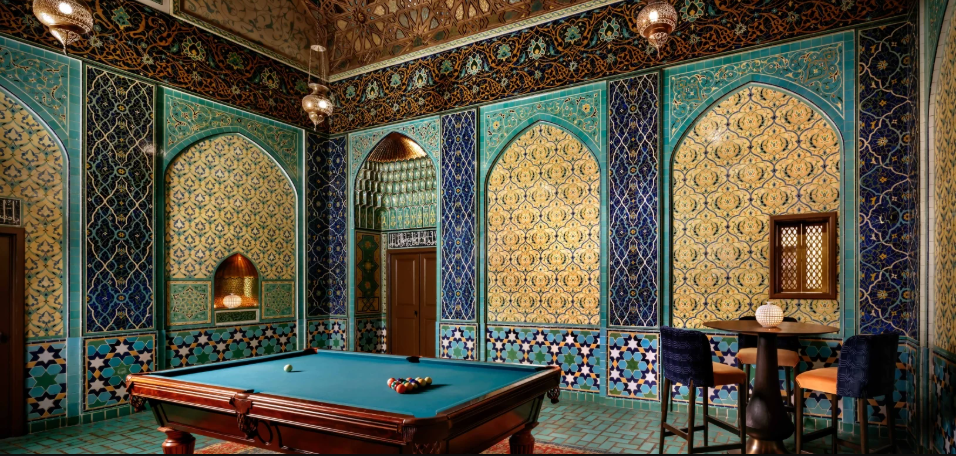
Midwest Billiards & Cue Expo- Big Dog Billiards • Des Moines, Iowa- July 15–19, 2026

Congratulations to Shane Van Boening on capturing the 2026 Making It In America One Pocket Championship at the 12th Annual Midwest Billiards & Cue Expo at Big Dog Billiards in Des Moines, Iowa!

With the victory, Shane successfully defends his title, making it back-to-back One Pocket championships at the Midwest Billiards & Cue Expo.

Congratulations as well to Brandon Shuff on an outstanding tournament and a well-earned 2nd-place finish.

Great shooting, guys


jyy.png

Joel Hercek ~ Silver Hoppe

Here is one I haven’t shared.
It’s a Hoppe style with 4 points of ebony into super curly maple.
The cue has many intricate inlays in silver and is a super player.
I absolutely love it, and as always Joel’s execution is out of this world, great.
Hope you enjoy it.
Thanks

Ps - I think it fits in perfect with its cousins. 😁 (Last Pic)
IMG_2175.jpeg
IMG_2172.jpeg
IMG_2176.jpeg
IMG_2170.jpeg
IMG_2177.jpeg
IMG_2174.jpeg
IMG_2173.jpeg


IMG_2171.jpeg
IMG_2169.jpeg
IMG_2571.jpeg

Lowest deflection kielwood

I think that Kielwood to shafts is like Custom pool cue to butts.
They look nicer but they don't really play nicer compared to a high performance shaft/cue. It's mostly all in our head.
If Kielwood was such a great option, I think that we would have seen more pros and top players use them, but they choose carbon fiber.
Dealer's take here, and I mostly agree with that comparison. Kielwood is dense and tight-grained, so it looks amazing under a clear coat, but density alone doesn't determine deflection. Shaft taper, tip diameter, and construction (solid vs. laminated vs. the segmented low-deflection designs) matter way more than the wood species. I've had customers bring in Kielwood shafts expecting a huge feel upgrade over their old house cue, and it's subtle at best, more of a hit and aesthetics thing than a tip-squirt thing. If you want lower deflection specifically, look at the actual shaft specs (front taper length, tip size, radial vs. solid) rather than the wood name on the label. For newer players especially, spending extra on exotic wood before you've settled on your stroke is putting the cart before the horse.

Single layer tip in between an Elkmaster and Triangle or Lepro?

I hate to be this guy (sorry) 🥺 but my friend is requesting a single layer tip in between an Elkmaster and a Triangle or Lepro.

Any good candidates?

He wants something soft-medium to medium.
Been through this exact search a few times on my own cues. Elkmasters are great when you get a good one, but consistency out of the box is a coin flip; some are dead solid, and some are mushy after a rack or two. Triangles are the more reliable middle ground; they hold shape longer, and the hit is a bit more predictable rack to rack. Ki-Tech is a fine shout too; a lot of guys on tour switched to those for the durability without losing much feel.

If you want a single layer that splits the difference, try a Triangle first since parts and replacements are easier to find than ElkMaster's these days. Whatever you land on, get it installed by someone who does a lot of tips; a bad install ruins a good tip fast.

Gold Crown II

I have a chance to buy A Gold Crown II, but cannot find any information on this particular model. Does anyone have any experience or playing time with this tabe? Would it be worth $1500, with the though that the felt will need to be replaced? From the pictures I have seen,the table itself looks too be in real good condition if I decide to restore it. I think that would be a real nice project for a retired do it yourself.
Thank you,
John
Dealer here, though this is a Brunswick-specific question, so verify against the serial number tag under the apron before you trust anyone's memory, including mine. The GC II ran from the early 70s through the mid 80s, and the rosewood aprons with bronze pedestal feet and that ball tray bezel you're describing match the later runs pretty well. The biggest thing to check is the slate seams and whether it's the three-piece, 1-inch slate, since some early GC IIs got swapped slate over the decades by previous owners. Also look at the pockets; the GC II used a distinct drop pocket casting that differs from the GC III, so if someone's telling you the III features on a II-labeled table, that's a red flag on provenance. It's worth posting the serial number here; this forum has guys who can date these things to the month. Once it's set up, get your light height dialed in too; low-quality lighting kills a nice table's look. A fuller guide is here if that's useful: https://billiardhome.com/blog/pool-table-light-height

Does Being Tall Offer Advantages in Pool?

FYI, I just posted a new video with Samm Diep that discusses and demonstrates advantages and disadvantages of being tall or short in pool. Check it out:


Contents:
0:00 - Intro
0:13 - Stance Comfort
1:48 - Reach
---- 1:51 - long shots
---- 3:40 - mechanical bridge
---- 4:50 - jump shot
5:07 - Bridging
6:21 - Stroke Length
7:29 - More Info

As always, I look forward to your feedback, comments, questions, complaints, and requests.

Enjoy!
Dealer/service tech here, so I see a lot of players of all heights on tables I install and level. Standard height (29.25" to 31" playing surface, most sit around 30") does favor mid-range height; that 5'8" to 5'10" window isn't wrong. Really tall guys end up bending over more for shots down near the rails, and really short players fight reaching across for shots at the far side. That said, I've seen 6'4" players with beautiful fundamentals because they just bend at the knees more and keep their bridge arm long, and I've seen 5'5" players run tables because their stroke mechanics are clean. Height matters way less than stance consistency and a level table; honestly, a table that's off level by even a few thousandths messes up more shots than a few inches of height ever will. If your lighting is also bugging you while you're bent over the table, it's worth checking your fixture height too; a fuller guide is here.

30 Minute Practice structure…

I do 4-5 drills for 7-10 mins each. I take a couple mins. break in between drills and watch one of the big screen TVs in the pool room before resuming. It prepares me since I can vary the cue ball distance in the drills and cut angles so that there’s variety in the same shot. Before I even start, I practice lagging with a Elephant Training Cue Ball (1/2 white & 1/2 Red CB) and have to make a lag shot up & down a 9’ pool table seamlessly without any wiggle or wobble whatsoever.

It is harder than is seems and I have to do it 3 X in a row since doing it once could be mere luck. Repeating it again also could be a mere coincidence. Complete this shot 3x in a row and your stroke is dialed in the way you wanted it to be. But keep in mind that any CB wiggle or wobble after being stroked from the kitchen as a lag shot is disqualified and you must start over.

Help identifying vintage 57” piloted brass-joint cue

I spent time in Abe’s shop very late in his cue building life- early 90s to mid 90s . He had all kinds of stuff in there - I don’t recall a drill press or not but he was handling lots of pre made cue butts and even selling Stratford cues and Kotlin cue cases- the mid west gun case mfg.
Yes.

So how do we tell whether it is Abe Rich or Rich Q?

Same butt cap, bumper, rings, and joint parts either way. We see lots of Rich Qs with plastic dots, as yet I have not seen an Abe cue with plastic dots.

Filter

Back
Top