What is more important when buying Cues and Cases who built it or who signed it!!!

Is it more important who built something or which shop it came from

  • Yes it is important

    Votes: 12 12.2%
  • Doesn't matter to me so long as it signed by the Craftsman

    Votes: 5 5.1%
  • I only want the Craftsman to build my Cue or Case

    Votes: 43 43.9%
  • I don't really care if I like what I purchased

    Votes: 30 30.6%
  • Not Important at all

    Votes: 8 8.2%

  • Total voters
    98

manwon

AzB Gold Member
Gold Member
Silver Member
Hello Az, what is more important who made a product or which shop it came from and who signed it. Is it important when spending hundreds of dollars that the actually craftsman who signed the cue or case actually built it. For instance, if you ordered a cue from a famous Cue maker or Case maker would it matter to you that his apprentise actually made your Cue or Case? This has happened to members on the forum, they have paid three figures and later found out that the item was made by an apprentise. Are you really getting what you paid for, or is the item less meaningful or even less valuable? In the same thought, is their a differance between items made by multiple people and items made by a single person?

To me if I buy something from an indiviual I am buying it because I like that persons Craftsmanship, and I want thier hands to build my purchase, is this unreasonable?

Please post your thoughts on this subject!!!!

Thanks Craig
 
So far the only customs I've bought are Ginacues and Ernie has no apprentices so it is not an issue. Every cue out of his shop is made by him 100% from start to finish.

But I don't think you are unreasonable. However, if you are dealing with a maker that is known to have others working for him it stands to reason that he is not doing all the work unless he is paying the other guys to stand around and watch.

As far as value goes some of the dealers will hopefully post up and shed some expertise on this but when I look through the for sale stuff on AZB I don't really hear many people inquiring about whether a particular brand of cue that is for sale was actually made by the "main man" or by one of the hired help. So I would suggest that if it came out of his shop and he has signed it that is more or less good enough. It may be that a maker's older work, when he was on his own, may have more value because of the fact the he himself built it.

Good question.
 
The basic issue is if the craftsman doesn't publicly let you know you are buying an apprenticed cue or attempts to get full value out of the item as if they had made the item by their own hand.

The best example of this would be the DPs on ebay. I have seen several of the apprenticed cues and can tell you all of their owners were extremely pleased with their purchases. What the signature on these cues mean to me is that I know that the craftsman's knowledge, design and tools were used in the manufacture of the cue. While his hands didn't actually do the manufacturing he is attesting to the tolerances and guaranteeing that the quality of the item is what he feels is upto his standards.

One could argue that apprenticed cues are in essence no different than production cues but in true apprentice programs the attention to detail and the element of hand craftsmanship should provide a product that is high quality and still has the elements of a custom cue in that the designs and wood selections will help to insure that your cue will be somewhat unique or at least 1 of a small number and will have it's own character.

For someone on a budget the apprentice model is perfect. Just my $.02
 
I get what you're saying manwon, I really do... you want the master's touch on your product, because he has a known track record for excellence and you can be assured you're getting the amount of care put into your cue/case that he's known for.

But, honestly, I can't get over how people worry about their cue (or case)...
What is MOST important is the guy shooting with the cue. You aren't going to miss any balls just because the apprentice put 2% less love and patience into building your cue. You sure as heck won't miss a ball because of the case lol... it just needs to look good and not fall apart.
 
I get what you're saying manwon, I really do... you want the master's touch on your product, because he has a known track record for excellence and you can be assured you're getting the amount of care put into your cue/case that he's known for.

But, honestly, I can't get over how people worry about their cue (or case)...
What is MOST important is the guy shooting with the cue. You aren't going to miss any balls just because the apprentice put 2% less love and patience into building your cue. You sure as heck won't miss a ball because of the case lol... it just needs to look good and not fall apart.

You aren't going to miss any balls just because the apprentice put 2% less love and patience into building your cue. You sure as heck won't miss a ball because of the case lol... it just needs to look good and not fall apart.[/

I agree that it is the person using it that will determine how well it will play. But, the question is are you getting what you have paid for. If you only care about playability it may not matter all, but if you are a collector you want something made by the Masters hands it makes a world of difference. Also should the work of an apprentice cost the same as the work of a master, again I have to say I do not think so. I mean is the name apprentice says it all, and just like an apprentice in any other field they are not paid the same for the work completed. For those who think that the Craftsman most likely checks the cue or case in all steps of building you may want to think about that again. While I agree that the shop or the Craftsman is ultimately responsible for the finished product, however, if he did not build it, is it deceptive that he signs it?

In my opinion there is a very fine line between Custom and Production. Many custom cue makers of Yesteryear have operations today that are not truly custom operations any longer because of the number of people who build any given cue or case. Then when the Craftsman come to the point were they no longer build anything only supervise, but sign the products being produced how can they continue to call the work Custom or even truly theirs.

Just my thoughts.

Thanks for everyone responses so far.:)
 
If the man himself lays out the procedures, tolerances, quality standards, etc., oversees the operation from start to finish and closely inspects the product before shipment, then I would have no problem knowing that apprentices did the work. The maker of my cue, Ray Schuler, worked that way. Jim Murnak has openly said that his "ready to ship" cases are made by his employees but supervised by him. If a firm wants to grow that's what has to be done. In fact, if they really want to grow, eventually the hands-on supervision is delegated also.

But I hear what you're saying. It's kind of nice to know that my Justis case was made by Jack in his garage. But if I learned that his daughter had helped him, that would be OK too.

In the end, it's the final product that counts.
 
As long as there is full disclosure, I am more than likely going to be ok with the name not doing all the work. I would have slight issues if said person does none of the work, and I would have HUGE issues if I only found out later that an apprentice had made it. I am personally more interested, and concerned with, how the cue plays. I don't buy cues for their resale value. But others do. And as far as that goes, the sig is probably the most important thing. I think it is fine to have and use underlings:p, just make it clear to the paying customer. If I was going to shell out, say, 3k for a cue, I would want to know who made it, even though it would likely have no bearing on whether or not I wanted the cue. It is more about trust, I guess.
 
My TAD was made in the Mid 80's and at that time i am almost certain that TAD himself had his hand in the majority of my cue's construction. Today i also believe that fred does most if not all of the construction of TAD cues. So with that being said if someone were contemplating buying a TAD today would that matter? In other words would they want an older 1 made by the master instead of a new (newer) one built by the student? I will still call the cues being made today a TAD even if others might call them a FRED instead. :p
 
Manwon, I see it a little better now. I am such a strong advocate of "it's the indian not the arrow" that sometimes I forget people want a cue for something OTHER than playability. I can accept that cues can be works of art and someone may not even hit a ball with it.

Like Muttley said, full disclosure is important. If someone IMPLIES a cue is made by certain maker, then it absolutely has to be made by that person. It's fraud otherwise.
If it might be made by an apprentice then they have to say so, and it has to be very clear (not in the fine print).

Signature is a little debatable... I guess it depends on whether people subconsciously assume a signed piece is made by the actual signer. A buyer should not be duped into thinking buying a "signature" cue means the master is making it... if there's a chance that's not true. Certainly that's the case with a painting.

I see signature is sort of like a brand name. If I want such-and-such's pretty design and I won't be hitting a ball with it, then I won't mind if he signs an apprentice's work... I see it as the master's design and choice of materials, just someone else's labor. The signature here is more a statement of who's responsible for the look rather than who's responsible for the hit (or labor).

Pricing is up to them, that's the beauty of capitalism. If they want to charge full price for work made by an apprentice, that's their right, but see if I haul out my wallet to get a lesser product for full price. Getting it made by the master should be an option that you can pay extra for, that makes more sense than everything priced the same, but some are made by the master and some aren't.
 
I think this is a very good question.

I agree that, if a cuemaker oversees the construction of a cue that comes from his shop, his signature represents his assurance that the work is up to his standard and should be given the same respect as his cues.... HOWEVER.... If the actual cuemaker did not build the cue and the apprentice does not have some sort of mark or identifying detail on it, how is anyone to know who the true cuemaker is for that cue? To me, that would devalue one's cues, because it is not clear who actually built the cue.

I believe the builder of the cue should sign it or have some sort of identifying mark that is publicly known, so buyers can one day identify early cues built by someone now famous, or who faded away.

A Crown Cue always has at least one crown built into and is always signed by the builder, except some of the early cues and also if a customer requests no signature on a custom order. There are 2 cuemakers in the family. Only 3 cues were built by the son and his mark/signature is on each of those 3 cues, plus, his name is listed as the actual maker on the certificates. The only reason he stopped at 3, is because he joined the military shortly after he began building cues.

Anyway, with a Crown Cue, you can rest assured that the actual maker of a cue will be signing that cue and his name will be listed on the accompanying certificate.

I generally buy a cue for the way it looks and feels. If I am buying something for the name, I want to know my money is buying work that is actually done by the person with that name.

There is a fine, often muddied line between what is considered custom and production. I believe custom should have some sort of standard to go by, but there will always be an exception to the rule. Buyers just have to make sure they are educated about the cues they are after.
 
depends

Craig,

If I am paying a premium for one man's name then I expect him to build what I am purchasing, definitely all of the critical work. Sometimes I do know that the work is coming out of a very good small shop and every piece every step of the way will be done by a master craftsman or checked over by one. If I know that going into the deal I am fine with that. I am buying the shop's reputation, not just one man's.

However, when we get far away from the above, we are buying a production item in my opinion. It may be a small production shop or a large one but when you have grunts doing more than grunt work then I had just as soon go buy from a factory and get a written guarantee.

I knew a man who made perfect knives. Nothing less. An apprentice could cut the blank out and maybe rough a few things but nothing else was going to be done by an apprentice. Plus the maker was going to inspect every piece every step of the way even after he did it himself. The result was absolute perfection. Anything less hit the cull pile. I'd be an unhappy camper to buy a knife with his name on the blade and find out that he personally didn't build it.

Hu

Hello Az, what is more important who made a product or which shop it came from and who signed it. Is it important when spending hundreds of dollars that the actually craftsman who signed the cue or case actually built it. For instance, if you ordered a cue from a famous Cue maker or Case maker would it matter to you that his apprentise actually made your Cue or Case? This has happened to members on the forum, they have paid three figures and later found out that the item was made by an apprentise. Are you really getting what you paid for, or is the item less meaningful or even less valuable? In the same thought, is their a differance between items made by multiple people and items made by a single person?

To me if I buy something from an indiviual I am buying it because I like that persons Craftsmanship, and I want thier hands to build my purchase, is this unreasonable?

Please post your thoughts on this subject!!!!

Thanks Craig
 
I think this is a very good question.

I agree that, if a cuemaker oversees the construction of a cue that comes from his shop, his signature represents his assurance that the work is up to his standard and should be given the same respect as his cues.... HOWEVER.... If the actual cuemaker did not build the cue and the apprentice does not have some sort of mark or identifying detail on it, how is anyone to know who the true cuemaker is for that cue? To me, that would devalue one's cues, because it is not clear who actually built the cue.

I believe the builder of the cue should sign it or have some sort of identifying mark that is publicly known, so buyers can one day identify early cues built by someone now famous, or who faded away.

A Crown Cue always has at least one crown built into and is always signed by the builder, except some of the early cues and also if a customer requests no signature on a custom order. There are 2 cuemakers in the family. Only 3 cues were built by the son and his mark/signature is on each of those 3 cues, plus, his name is listed as the actual maker on the certificates. The only reason he stopped at 3, is because he joined the military shortly after he began building cues.

Anyway, with a Crown Cue, you can rest assured that the actual maker of a cue will be signing that cue and his name will be listed on the accompanying certificate.

I generally buy a cue for the way it looks and feels. If I am buying something for the name, I want to know my money is buying work that is actually done by the person with that name.

There is a fine, often muddied line between what is considered custom and production. I believe custom should have some sort of standard to go by, but there will always be an exception to the rule. Buyers just have to make sure they are educated about the cues they are after.


I believe the builder of the cue should sign it or have some sort of identifying mark that is publicly known, so buyers can one day identify early cues built by someone now famous, or who faded away.


I totally agree with you here, but in far to many cases it is not happening. There are too many cases that have been brought up right here on the forum that clearly show us that this is still happening even om high end items. I am not bringing this up to Flame anyone, only to get the opinion of others to see if I am the only who feels this way, because this is an issue that really bothers me.

The same thing happens with cue cases many times apprentices build the cases and one individual offers them as Custom cases, however, the individual who's name is on the cases doesn't build any of them himself. They are made by a number of people in a factory setting, that is tooled for this purpose specifically. Now many of the case makers today are doing business in this manner, and they are up front about what they are doing which in my opinion is the right way to do business. Most of the cases being produced in this manner also reflect that they are made in this manner by their price tag, however, not all of them.

For me when I spend $700 plus for a cue case it had better be a Custom Case that is tooled and completely made by the Case Maker in question. While quality can be accomplished just as well by a number of hands as it can be by a single pair of hands, I think a craftsman's unique touch is what it takes to make something truly custom. In my opinion if they are made any other way they are nothing more than production one of a kind items and they should be represented as such.

In my opinion if individual Cue or Case makers want to compete with each other they need to build the products that are going to be used as a representation of their work or for raising the so called bar themselves . Design is one thing, and assembly and craftsmanship are another and I find it hard for some one to expect to compete when their hands are not dirty!!!!!:)

Just my thoughts
 
Well Craig, since I am the person you want to FLAME with this latest "poll" let's get it out on the table then.

Wow, you really can't stand it can you?

First off let's let everyone know what the trigger is for this latest opinion poll and thanks for the opportunity to show it off in the main forum.

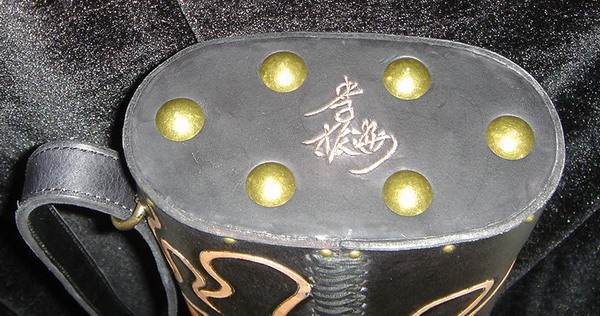
This is the case that Craig is talking about and here is the thread. http://forums.azbilliards.com/showthread.php?p=1799685#post1799685

palacegarden002.jpg

palacegarden003.jpg


And this is the signature that Craig is so upset about.

palacegarden026.JPG


And these are ALL the people who built this ONE OF A KIND ABSOLUTELY CUSTOM CASE

palacegarden099.jpg


And this is what I told Craig in our private discussion about this subject;

"As for signing it? This case would not exist if I did not "build" it. Without me the people in the picture are a a random bunch of people whose hands would be doing something else and would never ever put a case like this together. If you put my customer and these people together without my guidance and design then no product that is anywhere close to this would result.

Who gets the credit for a building? The architect, not the construction crew. It's the architect that takes pile of rocks and group of laborers and makes a beautiful thing."

And this is how I see the subject from my perspective and based on my own career only:

When something is made it is a product first of the imagination and secondly of the labor. The driving force behind any type of thing is the thought that devises a way to make it and the willpower to get it done. Not every person has all the skills they need to build the things that they can imagine but without the creation of things in the mind first nothing would progress.

Stephen Covey says, "everything is created twice, first in the mind and then in reality".

For me, I can build things, I can sew, I can tool, I can dye, I can do all the tasks one needs to be able to do to build cue cases or any type of case really. But the one thing that I really do well is create new ways to build cases. Because of that I do not have the patience or desire to do the "grunt" work if you want to call it that when I could be working something new and innovative. So I hire and train people to do that work for me and tell them EXACTLY how I want it. They don't come off the street as "expert cue case makers". They come to me either with no skills at all other than a desire to learn OR they have skill sets I hire for like knowing how to sew or knowing how to tool leather. Once they are in my shop I hone their skill to a high degree because I will accept nothing less than the best from them.

I literally invent new ways to do things and teach them these techniques. I create jigs and templates to insure that repetitive tasks are done accurately and well.

My staff IS the extension of my brain and they do what I want them to and create what I design. As such every case that comes out of MY shop, where I own every piece of equipment and where the people who work for me do it MY way bears MY signature. Because without ME there would be no JB Case and nothing to sign.

So that's how I see it. I chose deliberately to build my shop the way I have because this is how I want to create cue cases. Other people are one man bands and they also make beautiful music. At the end of the day the art stands or falls on it's own no matter what signatures are on it.

For the record though Craig, my toolers who do custom work sign their work. IF my work ever became collectible then there is a record on each piece of who did the tooling. If the tooling is repeated pattern work then it is unsigned.

This is signed by the tooler:
www.jbcases.com/hotrod.html - and NOT by me as I was gone when it was made and actually the design was done by my wife and our staff.
DSC03472.jpg


I for one have ALWAYS been up front about how our cases are created and what our processes are.

My thoughts as it relates to OTHER people's work are this:

If I buy something based on the reputation of the NAME on it then I expect it to contain ALL the quality that the name represents. I don't care if it was made by the person who's NAME is on it or made by 50 people he never met. I am ONLY purchasing it because of the reputation the NAME has earned.

If am purchasing something based on the QUALITY of the work and I KNOW that there is a clear difference between the quality of one person's work vs. another then I want the better one to make my thing.

Nothing in this world is created from scratch without help from others.

Craig, we had this discussion in private but I will conclude with another point. The case maker you use as a counter point here, Rusty, used a Chan Geer pattern on one of his masterpieces. Rusty builds a FANTASTIC CASE, he does all or most of the work by himself. But the foundation for at least one of the cases was Master Leather Worker Chan Geer's pattern. So you can see that everyone at some point gets help in some way or another with the things they create.
 
Last edited:
doing something so well that you have more orders than you can produce....to the point where you need help to fill orders....

that's called a blossoming business..

maintaining the quality that blossomed your business...

That's called being successful...

McDermott for example... they still turn and cure shafts the same way they did when it wasn't "they" back to when it was "him" and quite frankly the method WORKS it produces quality warp resistant shafts.. the wood to wood big pin joint is still there.. they back it up... and do what they claim to do..

it's not custom anymore.. and they are not signed anymore

but they ARE built right and they DO maintain the quality..

they are a successful cue company..

I have dealt with enough collectors.. to know that collectors are never satisfied

they need that one little detail to slightly out jump one another..

My "private limited exclusive brand name" is just a little better than yours because I got it just a touch farther up the food chain than you did
SO THERE!!!!

how far back do we want to go??

the tree that grew my maple had more leaves than the one yours was made from.....

it has to end somewhere right??
 
You aren't going to miss any balls just because the apprentice put 2% less love and patience into building your cue. You sure as heck won't miss a ball because of the case lol... it just needs to look good and not fall apart.[/

I agree that it is the person using it that will determine how well it will play. But, the question is are you getting what you have paid for. If you only care about playability it may not matter all, but if you are a collector you want something made by the Masters hands it makes a world of difference. Also should the work of an apprentice cost the same as the work of a master, again I have to say I do not think so. I mean is the name apprentice says it all, and just like an apprentice in any other field they are not paid the same for the work completed. For those who think that the Craftsman most likely checks the cue or case in all steps of building you may want to think about that again. While I agree that the shop or the Craftsman is ultimately responsible for the finished product, however, if he did not build it, is it deceptive that he signs it?

In my opinion there is a very fine line between Custom and Production. Many custom cue makers of Yesteryear have operations today that are not truly custom operations any longer because of the number of people who build any given cue or case. Then when the Craftsman come to the point were they no longer build anything only supervise, but sign the products being produced how can they continue to call the work Custom or even truly theirs.

Just my thoughts.

Thanks for everyone responses so far.:)


Well what is that you "think" you are paying for? Value is always subjective in these situations. The "worth" you assign to something might not be the same that someone else assigns to it.

The other issue where you are mixing concepts is "custom". Custom is not related to how many people work on something. Custom means made to the specifications of the customer.

If you look at Ernie Gutierez's (sp) - Ginacue's shop you will see a shop that is in fact a cue factory and Ernie is quite proud of the fact that he has made all the machines himself to automate almost every process. It is a one man cue making facility because Ernie chooses it to be that way but it is a "factory" none the less. In fact one could very well make the case that the "art" of making cues is in essence the ability to make an instrument over and over that is highly consistent in it's performance.

So in that case "custom" only applies to the decoration in the cue as to what the customer can choose to have done.

If I call Viking and order a cue with all my decorative choices and they build it then it is every bit as much of a "custom" cue as any Ginacue is. Will it have the same value? No because the market places a much higher value on the rarity of Ginacues vs. the bountiful abundance of Viking cues.

I really truly HATE to use this word to describe a person but in fact an apprentice or worker is a tool that the designer/maker uses to produce the work that will bear his name. There is NO NEED for makers to disclose ANYTHING related to WHO did what work on a cue or a case because as long as it bears the name of the maker it should stand up to the quality that the name has earned a reputation for.

I do however feel that a person who is contemplating the purchase of a custom anything should investigate who they want to do the work and do whatever it takes to feel secure in their choice.
 
Hey John,
Nice case but I don't care for the flowers.

Glen

Thanks Glen. You will have to take it up with the owner about the flowers, they were his choice. You would not believe the next concept he has for a case - philosophically a completely other direction. I can't discuss it specifically but it should be something way out there as well.
 
The same thing happens with cue cases many times apprentices build the cases and one individual offers them as Custom cases, however, the individual who's name is on the cases doesn't build any of them himself. They are made by a number of people in a factory setting, that is tooled for this purpose specifically. Now many of the case makers today are doing business in this manner, and they are up front about what they are doing which in my opinion is the right way to do business. Most of the cases being produced in this manner also reflect that they are made in this manner by their price tag, however, not all of them.

For me when I spend $700 plus for a cue case it had better be a Custom Case that is tooled and completely made by the Case Maker in question. While quality can be accomplished just as well by a number of hands as it can be by a single pair of hands, I think a craftsman's unique touch is what it takes to make something truly custom. In my opinion if they are made any other way they are nothing more than production one of a kind items and they should be represented as such.

In my opinion if individual Cue or Case makers want to compete with each other they need to build the products that are going to be used as a representation of their work or for raising the so called bar themselves . Design is one thing, and assembly and craftsmanship are another and I find it hard for some one to expect to compete when their hands are not dirty!!!!!:)

Just my thoughts

You make a lot of assumptions here. Let's start with the last one, the one about the designer not getting their hands dirty;

Do you really know ANYTHING about how this works in real life Craig? Do you think that the designer sits in an office and sends off sketches and magically products just appear?

Do you have any CLUE at all what it takes to create something of substance and how much WORK is involved by everyone in the process?

Let's continue to use MY latest case as an example and I will run it down for you;

First the customer contacts me with his concept. We discuss it and I provide sketches and mockups that I do. This goes back and forth until we settle on a basic design - in this case that means about 20ish emails back and forth and four or five drafts on the concept.

Then I have the tooler do a rough sketch of the tooling pattern to go on the case and with him I work on that until I feel it's good to present to the customer - in this case that worked out to about three revisions BEFORE I sent it to the customer.

After the customer sees it we make any changes that they want to see. In this particular instance that equated to many changes throughout the process. I am the conduit for any and all changes - tack on another 20ish emails back and forth.

I designed the way the case would be constructed, if you know anything AT ALL about case construction then you will recognize how hard it is to build a case the way we did here. So this meant that I had to work out the methods and prototype them BEFORE applying them to the customer's case. I have a wall full of case sections where my concepts and ideas have been tested and refined.

On this case I developed a brand new way to do the handles that I have never seen before on anyone else's work. This cost me several hours of thinking about it plus more time spent researching handles BECAUSE I really wanted to do a tooled handle that was ALSO comfortable in the hand.

At every single step on this case I was right there either working on it or telling my staff what to do. I have photos of the case in every stage of development after construction finally began.

There are many other things that you cannot see on this case where I designed features here and there on the fly. For example, instead of using black fabric for the jump handle compartment I elected to use butterscotch deerskin and also to line the lower pocket with it. The idea to tool inside the rim was decided on the fly by me and required ME to sit down and re-engineer the overall pattern of the case.

I could go on with more things but the POINT of all this is that the "dirty work" IS done by the designer, especially in my shop. Unless I allow it NOTHING is done in my shop without my approval. And the only time I allow things to be done without my supervision is when I am satisfied that they are able to do those things to my standards, which is rare.

So enough about "dirty hands" - mine are black from leather dye by the way.

------------------------------------------------------------------------

Let's move on to assumption number two where you state;

The same thing happens with cue cases many times apprentices build the cases and one individual offers them as Custom cases, however, the individual who's name is on the cases doesn't build any of them himself. They are made by a number of people in a factory setting, that is tooled for this purpose specifically.

You make this statement as if you KNOW this to be a true fact. I highly doubt that you have visited ANY case maker's operation to ascertain how and why they build they way they do.

You don't even know if the staff are "apprentices" or employees. Do you even know the difference? I am the "individual" you refer to to so quit being mealy mouthed about it. We already had the discussion about what custom is and there is NO DOUBT Craig that the cases coming out of my shop are CUSTOM CASES in every sense and definition of the word.

But let's talk about the last sentence in your above statement. What purpose SHOULD a shop be "tooled" for? Really Craig any one who makes anything on a continuous basis that is worth their salt sets up their shop to be able to PRODUCE things in a quick and consistent manner.

Are you suggesting a LIMIT on the number of tools and jigs a person can use in order to be able to call their work "custom" I know you already think there should be a limit on how many people work on it but now you want to limit the tools and processes as well?

Or do you mean to imply that I basically have a cue case factory and that the cases are made by throwing a bunch of leather on the table at one end and the other end spits out a case? A case assembly line of sorts? Is that what you mean?

It's really hard to tell when you make statements like this that are presented as fact but in fact are just opinion that is ignorant of the actual process.

---------------------------------------------------------------------------

And the final point - I could go on for days but I need to go watch some WORLD CLASS pool instead of debating this and two, it's just not important in the grand scheme of things.

you said:
I think a craftsman's unique touch is what it takes to make something truly custom. In my opinion if they are made any other way they are nothing more than production one of a kind items and they should be represented as such.

Again you are misusing the word custom. Custom only applies to things that are made to order according to the CUSTOMER'S specification. The craftsman's touch, the designer's design are the things that make items DIFFERENT from other people's similar items. By your logic the only thing that makes a case "worthy" is who did the labor to actually build it.

Does a Jack Justis case cease to be worthy to be called a Justis case if someone else were to go into Jack's home and build a case using exactly his tools and methods and the case came out exactly as he would build it? In that situation the CREATOR of the case is Jack Justis, the builder could be anyone. Jack created all the jigs, he created all the patterns, he defined the method.

You did start this thread specifically to FLAME me.

If you cannot see my unique touch in the cases I build then I have to say you are blind or being deliberately contrary just to advance your position.

Have a great day - I am off to watch someone win $20,000

 
Back
Top